Introduction: The Dining Room Problem Nobody Talks About
Picture the scene. The dining room doors open for the first evening seating. Groups of passengers stream in together, already laughing. Couples settle into their reserved spots. Families arrange themselves around the corner table by the window. And then there is you — scanning the room for somewhere to sit that will not feel awkward. That moment is one of the most common and least discussed experiences in solo cruise travel.
The food on a cruise ship is genuinely excellent. Most major lines invest heavily in their dining programmes, from themed formal nights to specialty restaurants that rival anything on shore. But excellent food eaten alone, surrounded by the hum of other people’s conversations, hits differently from excellent food shared with people you actually like. That gap — between what the dining room offers and what a solo traveler experiences — is exactly what this guide addresses.
Learning how to Meet People on a Cruise before your departure specifically for dining is one of the most practical and underrated travel strategies available today. It does not require luck or extroversion. It requires a small amount of preparation and the right tools. This guide walks through both. We cover the shift in how cruise dining works, how to find compatible cruise friends before you board, and how to make the most of shared meals once you are at sea.
What this guide covers: Why cruise dining companions matter beyond the food itself. How to find compatible dining partners before sailing. What makes a good match at the table. How to navigate shared dining etiquette. And how modern tools have made the whole process genuinely straightforward.
How Cruise Dining Has Changed — and Why It Matters for Solo Travelers
For most of cruise history, the dining room operated on a simple assigned seating model. Passengers were placed at large tables with strangers. They saw the same people every evening for the duration of the voyage. That system had one unintentional social benefit: it forced connection. You had to speak to the people next to you. Some of those accidental relationships became genuine friendships.
Modern cruise lines have largely moved away from fixed seating toward open, flexible dining. Passengers choose their own times, their own tables, and their own venues from a broad selection of options. This is better in almost every practical sense. It gives you freedom, spontaneity, and the ability to eat whenever hunger dictates rather than whenever a schedule permits. For couples and groups, it works wonderfully. According to the Cruise Lines International Association (CLIA), flexible dining is now among the most requested features in passenger satisfaction surveys across all major lines.
For solo travelers, the shift creates a quiet problem. With fixed seating, the dining room automatically gave you a social structure each evening. With open seating, you have to create that structure yourself. Walking into a busy restaurant alone and choosing a table is a different kind of social experience from being guided to a shared one. The freedom that benefits groups can isolate individuals if they have not planned ahead.
This is why making friends before sail dates has become so valuable for solo cruisers. Knowing in advance that you have a group meeting for dinner at seven o’clock on formal night changes the experience entirely. You walk into the dining room with purpose. You have people waiting for you. The freedom of open seating becomes an advantage rather than a source of low-level social anxiety. Pre-arranged cruise companions are the missing ingredient that makes flexible dining work properly for independent travelers.
Why Having Cruise Dining Companions Changes the Whole Voyage
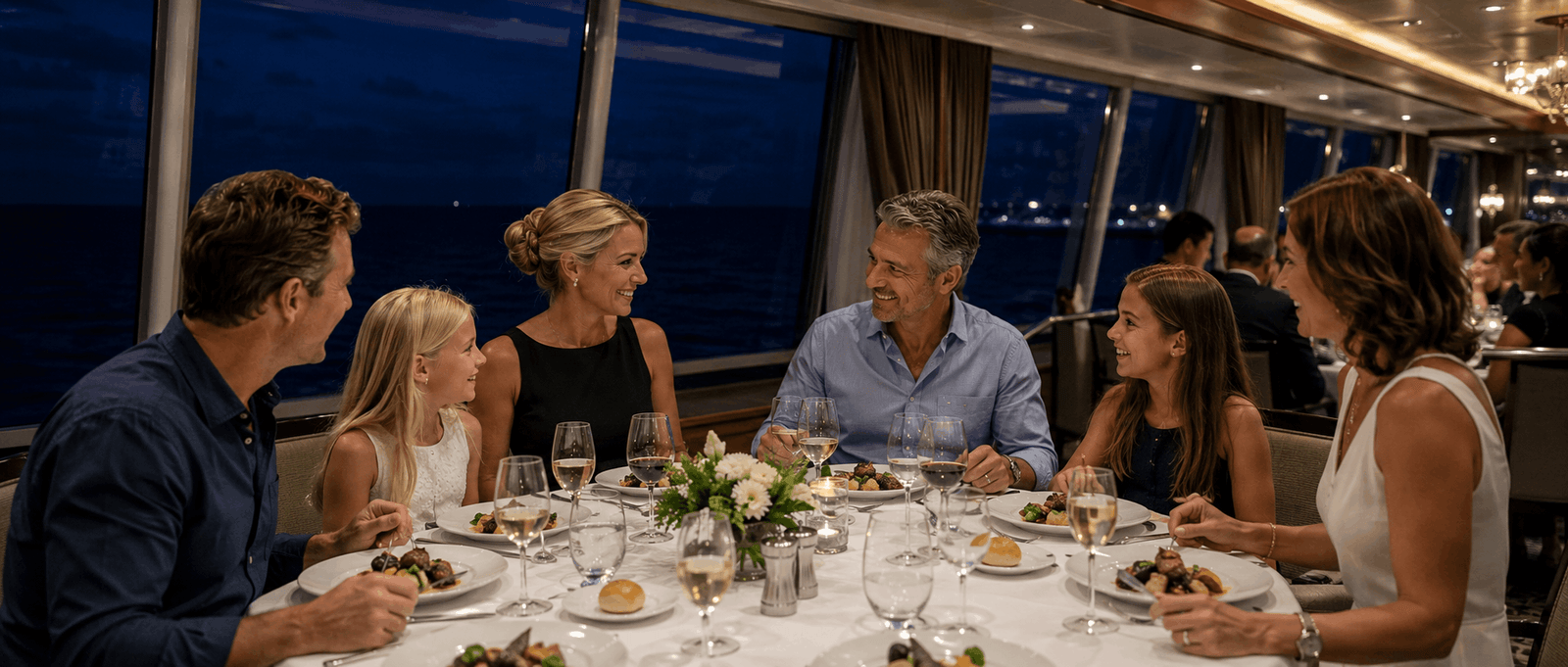
Shared meals do something that other social activities on a ship do not quite replicate. Sitting across a table from someone for an hour, working through multiple courses, creates a natural rhythm for conversation. You move from polite small talk to genuine exchange. You hear about each other’s backgrounds, travel histories, and plans for the next port. By the time dessert arrives, you have a relationship that feels far older than the time you have actually spent together.
Research in social psychology consistently supports what travelers experience intuitively. A study published by the Journal of Consumer Psychology found that people who eat with others report significantly higher enjoyment of the food itself, not just the company. The experience of dining is genuinely enhanced by social context. That enhancement is available on every cruise ship in the world. It just requires someone to share the table with.
For travelers pursuing cruise with friends experiences, the dining table is also where shore excursion plans solidify, where cost-sharing arrangements form, and where the decision to become cruise cabin mates on a future sailing sometimes gets made. Many lasting travel partnerships begin over a dinner conversation in the main dining room on night two or three of a voyage. The table is where trust builds. That process simply cannot happen if you are eating alone.
Having regular dining companions also changes how you experience ports and activities during the day. When you know you are meeting your best cruise buddies for dinner that evening, every experience during the day becomes something worth sharing. You collect observations, funny moments, and interesting finds throughout the day with a specific audience in mind. That anticipation of sharing gives even ordinary port experiences a richer quality. Meals become the anchor points that give the whole voyage its social structure.
How to Find Cruise Dining Companions Before You Sail
The most effective approach to building a dining circle starts before embarkation day. Waiting until you are on the ship and hoping to fall into a comfortable group naturally works occasionally. More often it leads to a week of solo meals and polite but shallow conversations at the breakfast buffet. Taking two or three hours before your departure to make genuine connections is a far better investment of time.
Start With a Dedicated Cruise Social App
The right Cruise Meetup Apps solves the core problem that forums and Facebook groups cannot. It filters your connections by sailing date and ship, so every person you speak to is actually heading to the same ports at the same time. It verifies that users are real travelers with real upcoming bookings. And it keeps your communication private within the platform until you are comfortable sharing more. That combination of relevance, verification, and privacy is what general social networks cannot reliably provide.
This is where Seaya has built something genuinely useful for dining-focused connection. Seaya was designed specifically for cruise travelers who want to build social circles before they board. You create a profile tied to your actual sailing — ship name, departure date, and travel preferences. The platform then surfaces compatible passengers from the same voyage. You can start conversations about dining preferences, specialty restaurant plans, and formal night arrangements weeks before departure. All of it happens privately within the app, with no need to share personal contact details until you choose to.
What makes Seaya particularly well-suited for dining companion searches is how naturally it accommodates the specific questions that matter at the table. Dining timing, culinary interests, and dress code preferences are all things you can discuss within the platform before committing to a shared booking. By the time you board, you are not trying to figure out if the person you just met prefers early or late seating. You already know. Visit seaya.io to see how the sailing-specific matching works in practice.
Use Traditional Roll Calls as a Secondary Tool
Dedicated cruise mate finder platforms are the most efficient route to pre-sailing dining companions. But traditional forum roll calls still play a useful supporting role. Cruise roll call boards allow passengers to post on threads for specific sailings. You can announce that you are looking for dining companions, describe your timing and style preferences, and invite interested travelers to connect directly. Roll calls work best when you treat them as a starting point for a conversation rather than a complete solution — move promising connections quickly to a dedicated platform or a video call where you can establish real compatibility.
Consider Specialty Restaurant Group Bookings
Many cruise lines allow small groups to book specialty restaurants together in advance. If you have confirmed a dining group through your pre-sailing connections, booking a shared specialty restaurant evening before departure is a natural next step. It gives your group a specific shared experience to look forward to, removes the uncertainty of whether you will all find each other in the main dining room, and signals a level of commitment that strengthens the connection. Most major cruise lines allow online pre-booking of specialty dining up to 90 days before sailing.
What to Actually Look for in a Cruise Dining Companion
Finding compatible dining companions requires a slightly different kind of matching than finding a cruise mate finder or a shore excursion partner. The relationship is specifically about shared mealtimes. Someone who is wonderful company for a hike ashore might have completely different dining habits and preferences that make shared meals uncomfortable. Thinking clearly about what actually matters at the dinner table saves a great deal of frustration.
Dining Timing Preferences
This matters more than most travelers initially realize. On ships that still offer traditional assigned seatings, the choice between early and late service is a real commitment for the voyage. On flexible dining ships, your natural eating rhythm still determines when you want to sit down. A traveler who wants to eat at six-thirty to catch the early show is functionally incompatible for nightly dining with someone who never eats before eight. Ask about this early. It is a practical detail, not a personal preference, and misalignment here will create friction every single evening of the voyage.
Culinary Curiosity and Dining Style
Some cruisers are dedicated food explorers. They want to work through every specialty restaurant on the ship, try the chef’s tasting menu, and spend formal night in the main dining room dressed to the nines. Others prefer the flexibility of the buffet, casual poolside lunches, and the freedom to skip dinner entirely if shore food was good enough. According to Bon Appétit’s cruise dining coverage, the gap between food-focused and convenience-focused cruise travelers is one of the most consistently cited sources of companion mismatches in group travel. Know which camp you are in and find someone whose approach aligns.
Conversation Style and Social Energy
Dinner is an hour or more of conversation every evening. How that conversation flows matters. A traveler who processes their day verbally and wants rich, involved discussion at the table will find a quieter, more contemplative dining companion exhausting — and vice versa. This is harder to assess from a profile than timing or culinary preferences, which is exactly why a video call before committing to nightly shared dining is worth the fifteen minutes it takes. A brief call reveals conversational rhythm in a way that no amount of messaging fully captures.
Financial Comfort With the Dining Setup
Specialty restaurants on cruise ships typically carry a cover charge of fifteen to fifty pounds per person on top of the standard cruise fare. If your group plans to eat at specialty venues regularly, that cost adds up across a seven-day sailing. Be clear upfront about your budget for dining extras. Which? Travel’s cruise dining guides suggest that specialty dining costs are among the most commonly overlooked pre-cruise budget items for first-timers. A brief honest conversation about expectations before you board prevents the awkwardness of one person ordering the tasting menu while another quietly wishes they had not agreed to come.
How to Use Solo Travel Apps to Build Your Dining Circle Effectively
The best solo travel apps for cruise connection reward specific, consistent effort. Creating a profile and waiting for messages to arrive rarely produces meaningful results. The passengers who build genuine dining circles before sailing share a small number of habits that are worth adopting from the moment you download the app.
Lead With Your Dining Preferences in Your Profile
Most cruise social profiles focus on general travel interests. Stand out by being specific about what you are looking for at the table. Mention whether you have already booked any specialty restaurants. Note whether you are excited about the formal nights or planning to skip them. Say whether you prefer long, leisurely dinners or efficient meals that free up the evening for shows and activities. Specific dining preferences attract compatible dining companions far more reliably than general travel enthusiasm. On a platform like Seaya, where sailing-specific details power the matching, the quality of your profile information directly determines the quality of your matches.
Start Conversations With Dining-Specific Questions
When you reach out to a potential cruise friend through any platform, open with something specific to dining rather than a generic introduction. Ask whether they have pre-booked the specialty steakhouse. Mention that you are trying to put together a group for formal night. Invite them to share their thoughts on the ship’s dining options. Specific openers signal that you are a real, thoughtful traveler rather than someone sending identical messages to dozens of profiles. They also immediately surface compatibility — someone who responds enthusiastically to a specialty restaurant question is likely a better dining match than someone who says they mostly eat at the buffet.
Build a Small Group Rather Than a Single Companion
A dining circle of three or four travelers is often more resilient than a pairing. If one person is tired after a long shore day and skips dinner, you still have company at the table. The conversation is naturally more varied. And coordinating a small group specialty restaurant booking becomes genuinely easy. TripAdvisor’s cruise forum data suggests that cruise travelers who form groups of three to five before sailing report higher social satisfaction scores than those who arrange only one-to-one dining partnerships. Build a small circle rather than a single dependency.
Confirm Plans With a Video Call Before Boarding
This step matters as much for dining companions as it does for cabin mates. A video call confirms identity, reveals conversational energy, and gives you a genuine sense of whether sharing a table every evening is something you will enjoy. Keep it short and casual — fifteen minutes talking about your excitement for the itinerary and your dinner plans is enough. A comfortable, easy video call is the clearest signal available that your pre-sailing connection will translate into a good onboard dining relationship.
Dining Etiquette for Pre-Arranged Cruise Companion Groups
Having a pre-arranged dining group changes the social dynamic at the table in subtle but important ways. You are not strangers making polite conversation — you are people who chose each other deliberately. That context creates a slightly higher set of expectations and a slightly lower tolerance for friction. A few simple principles keep shared meals comfortable and enjoyable throughout a long voyage.
Keep the Conversation Inclusive and Light
Dinner is a decompression ritual on a cruise. After a full day of ports, excursions, and ship activities, the evening meal is where people unwind. Heavy or divisive topics — politics, religion, and highly charged personal subjects — work against that atmosphere. This is not about avoiding real conversation. Depth and warmth are not the same as controversy. The best dinner table conversations on a ship move naturally between genuine personal exchange and shared observations about the day. Keep the tone warm and the topics generous.
Respect Independence Between Meals
A dining group is not a full-time travel group. People who share excellent dinners together may spend their days on completely different schedules. Some will do structured ship excursions. Others will explore ports independently. Some will spend sea days at the pool. Others will read in their cabins. Respecting that independence between meals actually strengthens the dining relationship. Coming to the table with a full day of your own experiences to share is far more interesting than spending every hour together and arriving with nothing new to say.
Handle the Bill Transparently From Day One
Specialty restaurant covers, drinks packages, and gratuity arrangements differ from table to table. Establish from your very first shared meal how you are handling costs. Most cruise ships make this straightforward — each passenger scans their room card independently. But assumptions about who is covering what can create quiet resentment if they are not addressed directly. A brief, friendly “shall we just scan our own cards?” at the start of the first dinner clears this up permanently and lets everyone relax for the rest of the voyage. According to the European Consumer Organisation, unclear financial expectations are among the most commonly cited reasons that travel companion arrangements break down mid-trip.
From Dining Companions to Best Cruise Buddies: How Friendships Grow at Sea
Many of the most durable travel friendships in existence began at a cruise ship dining table. The combination of shared meals, shared ports, and shared experiences compressed into a single week creates a social intensity that most ordinary settings cannot replicate. Relationships that would take months to develop in a home environment can feel genuinely established within a few days at sea.
The dining table is where trust builds fastest on a ship. You see the same people across multiple evenings. Conversations reveal how they talk about their lives back home. Their treatment of the waiting staff often says a lot about their character. Small moments of humor show what makes them laugh. All of that adds up quickly to a picture of who someone actually is, not just who they present themselves as in an online profile. Best cruise buddies are almost always people who started as dining companions—not activity partners or shore excursion groups.
The connection that begins at the table often extends naturally into other parts of the voyage. A dining companion becomes a trivia team partner. A trivia partner becomes a shore excursion companion. A shore excursion companion becomes someone you correspond with for months after the ship docks. And on the next booking, they become a confirmed cruise with friends partner whose company you have already chosen rather than hoped for. That progression is how genuine long-term travel relationships work. It almost always starts with a shared meal.
For solo travelers who arrive without pre-arranged companions, this same arc is possible — it simply starts slightly later and moves slightly slower. The principles are identical. Show up consistently. Be genuinely interested in the people around you. Invest in the conversation. The dining room rewards patience and presence far more reliably than any other space on the ship.
Key Takeaways
The shift to open dining on modern cruise ships has made pre-arranged cruise dining companions more valuable, not less. Without fixed seating, the social structure of the dining room no longer forms automatically. You have to create it yourself. Doing so before departure — through the right cruise social app — is far more reliable than trying to build it onboard from scratch.
Compatibility for dining is specific. Timing preferences, culinary interests, conversation style, and financial expectations all matter at the table. Discussing these before you board takes minutes. Discovering incompatibilities mid-voyage takes the rest of the sailing to manage. A brief video call and an honest profile are both worth the small effort they require.
Shared dining produces better voyages in ways that go beyond the meals themselves. Research consistently shows that food shared with compatible company is enjoyed more than food eaten alone. The dining table is where cruise friends become best cruise buddies, where excursion plans are made, and where future sailing partnerships sometimes form. Protecting that space with compatible, pre-arranged company is one of the highest-value investments a solo traveler can make before departure.
Conclusion: The Best Cruise Meals Are the Ones You Share
The dining room on a cruise ship is one of the most reliably social environments in leisure travel. The food is excellent, the setting is beautiful, and the atmosphere encourages conversation in a way that few other venues can match. What it cannot do on its own is guarantee you someone cruises worth sharing it with. That part is yours to arrange — and the tools to do it well have never been better.
Using a dedicated cruise mate finder to identify compatible dining companions before your sailing removes the biggest uncertainty from cruise dining entirely. You stop wondering whether tonight will be another solo dinner. You start looking forward to specific people, specific conversations, and specific plans that begin with a shared meal and often extend well beyond it. The preparation takes an afternoon. The benefit lasts the entire voyage.
Seaya were built precisely for this kind of intentional pre-sailing connection. The sailing-specific matching means every person you speak to is genuinely heading to the same ports on the same ship. The privacy-first communication model means you build trust at your own pace. By embarkation day, your dining table is already confirmed. Walking into that dining room on the first evening with a group waiting for you is a completely different experience from scanning the room alone.
Head to seaya today. Build your profile. Search your specific sailing. Find your dining circle. The best meals of your next cruise are waiting — you just need someone to share them with. Your cruise companion is already out there, planning the same voyage, hoping for exactly the same thing.

For Christian, Seaya is the culmination of a career-long obsession with innovation. By leveraging his deep technical expertise to dismantle legacy constraints, Christian is transforming the way travelers connect at sea. He is dedicated to keeping Seaya at the vanguard of the “what’s next,” proving that the most powerful innovations happen when world-class tech meets a completely new frontier.
SUBSCRIBE NOW
Your Next Cruise Adventure Awaits
- News & articles
Related Blog