Key Takeaways
- Gen Z chooses cruises largely for their predictable, all-inclusive pricing — not just the destinations.
- Social connection has become a primary driver of cruise satisfaction, not a side benefit.
- Experience-first travel is replacing luxury-first travel as the measure of a good vacation.
- Solo cruising is growing quickly among younger travelers, partly because cruises reduce the isolation that comes with solo trips.
- Pre-cruise planning increasingly includes connecting with fellow passengers, not just booking logistics.
- Cruise communities — group chats, forums, and dedicated platforms — are reshaping how travelers prepare for their trip.
- Cruise lines are redesigning ships and programming specifically to encourage social interaction.
- The future of cruising points toward deeper personalization and community-building as core parts of the product, not add-ons.
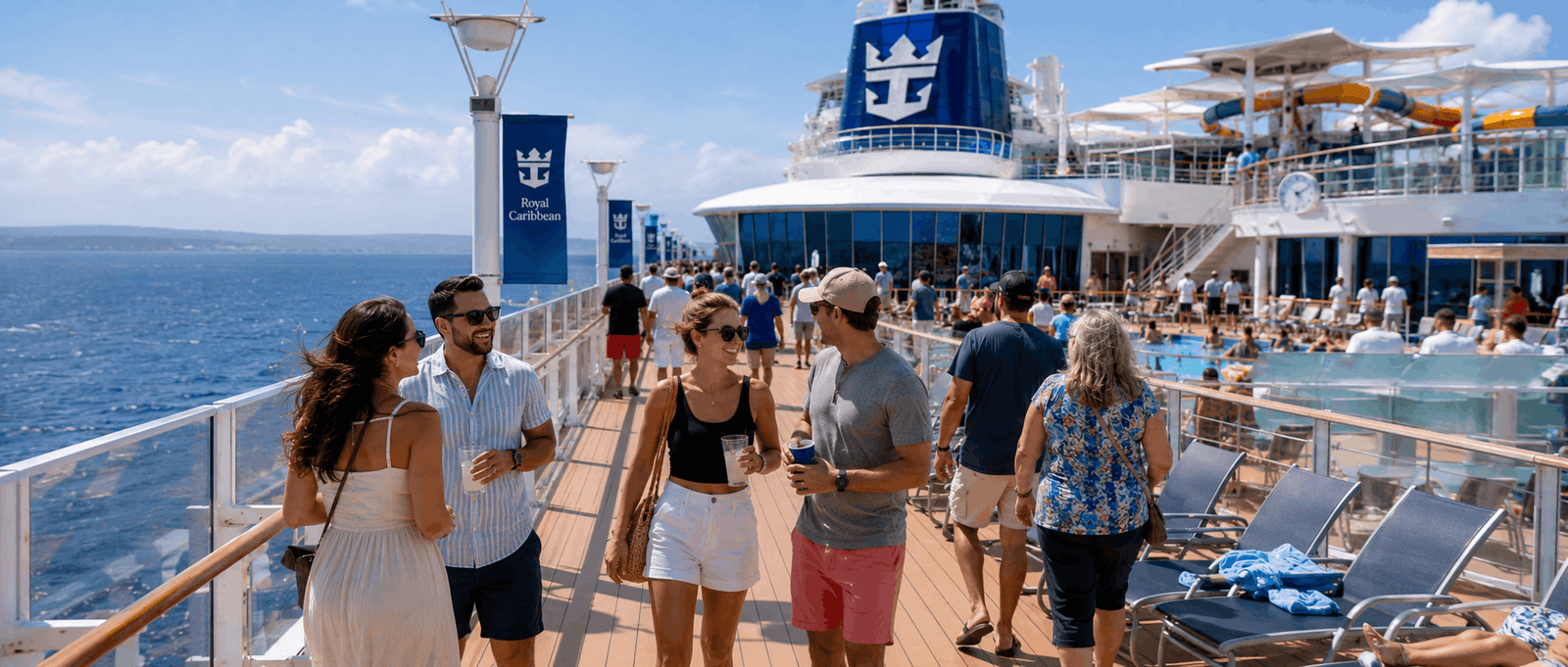
Walk down the promenade deck of a major ship today and that picture doesn’t hold up anymore. Twenty-somethings compare shore excursion plans they made in a group chat weeks before departure. Solo travelers are already sharing drinks with new friends by day two because they connected online before ever stepping onto the gangway. Around every corner, trivia nights are packed shoulder to shoulder, silent discos spill onto the open decks, and the pool area feels more like a lively music festival than a traditional cruise.
This isn’t a small trend confined to a few viral TikToks. It’s a structural shift in how an entire generation thinks about vacation, connection, and what actually makes a trip worth taking. Understanding why requires looking past surface-level explanations like “young people like parties” and into something deeper: how Gen Z relates to community, technology, and the idea of a shared experience in the first place.
Why More Gen Z Travelers Are Choosing Cruises
For a generation that grew up watching airfare prices swing wildly and budgeting for everything down to the dollar.
cruises solve a problem that other cruise vacation ideas formats don’t: predictability. When Gen Z travelers book a cruise, they know almost exactly what the trip will cost before they leave home. Lodging, food, entertainment, and transportation between destinations are bundled into one price. There’s no scrambling to book a hotel in a fourth city.
That predictability matters more to younger travelers than it might seem on the surface. Many Gen Z travelers are managing entry-level salaries, freelance income, or the tail end of student loans. A cruise lets them see multiple countries — sometimes four, five, or six on a single itinerary — without the constant financial guesswork that comes with backpacking or city-hopping.
A few of the biggest draws show up again and again in traveler interviews and booking trends:
Affordable vacations. Per-day costs on cruises are often lower than a comparable land-based trip covering the same number of destinations, especially once meals and lodging are factored in.
Flexible travel. Shorter three- and four-night itineraries have become popular entry points for younger travelers who don’t have two weeks of vacation time to spend, but still want a real getaway.
Multi-destination trips. Instead of choosing one city and staying put, a single cruise can stop in three or four ports, giving travelers a taste of several places without the logistics of separate bookings.
None of this is new information to the cruise industry. What’s new is who’s responding to it. Cruise lines that once built their entire marketing strategy around retirees and honeymooners are now investing heavily in itineraries, ship features, and pricing structures aimed squarely at travelers in their twenties.
Why Social Experiences Matter More Than Luxury
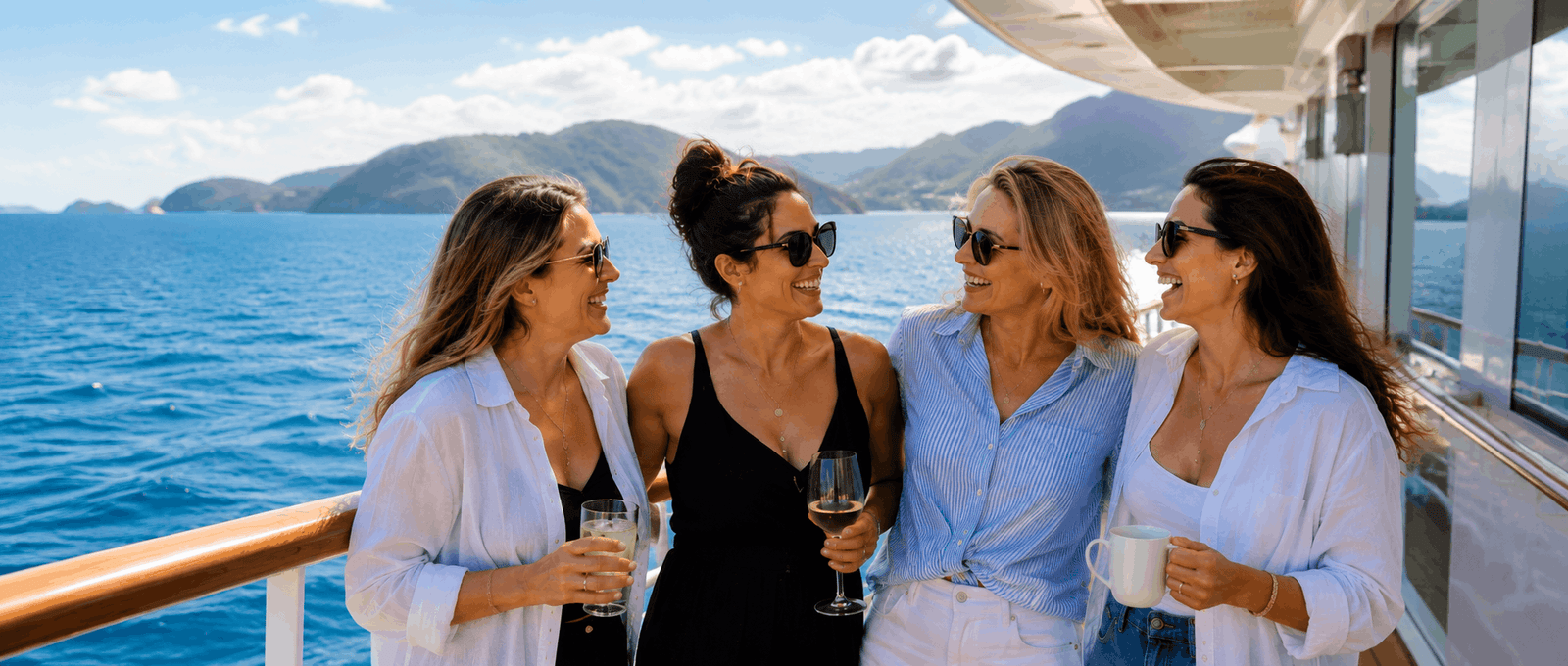
Ask a Gen Z traveler what made their last vacation memorable, and you’ll rarely hear about thread count or marble bathrooms. You’ll hear about the people. The stranger they met at the pool bar who ended up joining them for the rest of the trip. The group they found through a shared excursion. The late-night conversation on the top deck that turned into a real friendship.
This is one of the clearest shifts happening in travel right now: experience-first travel has replaced status-first travel as the priority for younger generations.
Previous generations often treated luxury as the marker of a successful vacation — the nicer the suite, the more exclusive the lounge, the better the trip. Gen Z tends to measure a trip differently. The questions aren’t “how impressive was it” but “how connected did I feel” and “what will I actually remember in five years.”
A few patterns show up consistently:
Shared adventures over solo indulgence. A group excursion to snorkel a reef or explore a historic site tends to rank higher in traveler satisfaction than a private cabana, simply because it’s something experienced with people rather than for an audience.
Community over status. Gen Z travelers are less likely to choose a trip because it signals wealth or exclusivity, and more likely to choose it because it offers a chance to be part of something — a themed cruise, a community of like-minded travelers, a group planning a trip together.
This doesn’t mean luxury has disappeared from cruising — plenty of Gen Z travelers still book balcony cabins and specialty dining. But when researchers.
cruise lines ask what actually drives satisfaction and repeat bookings, the answer increasingly points to the people on board, not just the amenities.
How Gen Z Is Changing Cruise Culture
Gen Z didn’t just start booking cruises — they’ve started changing how cruises work, at least culturally. A few shifts stand out.
Digital planning has replaced the travel agent phone call. Where past generations might have relied on a travel agent to build an itinerary, Gen Z travelers research everything themselves: comparing ships, reading reviews, watching walkthrough videos, and increasingly, connecting with other passengers before the trip even begins.
Group travel looks different now. It’s less about extended family reunions and more about friend groups, loosely connected communities, or people who met online and decided to sail together. Group bookings among younger travelers are often assembled from people who didn’t know each other a year earlier.
Solo travel is thriving. Solo cruising has grown significantly among younger travelers, partly because cruises solve the biggest fear of solo travel — being alone in an unfamiliar place — by putting thousands of other travelers on the same ship, many of whom are also looking to meet people.
Shared activities are prioritized over passive relaxation. Escape rooms, trivia competitions, group fitness classes, and interactive shows tend to outperform purely passive entertainment options among younger cruisers, because they create natural opportunities to interact with other passengers.
Interactive over observational. Gen Z travelers gravitate toward experiences where they’re participants, not just spectators — cooking classes, mixology sessions, dance lessons — activities that double as natural icebreakers.
Cruise lines have taken notice. Newer ships increasingly include social lounges, communal firepits, interactive game decks, and programming specifically designed to help strangers become friends over the course of a sailing.
The Rise of Cruise Communities
One of the most interesting developments in cruise travel has nothing to do with the ships at all — it’s what happens before boarding.
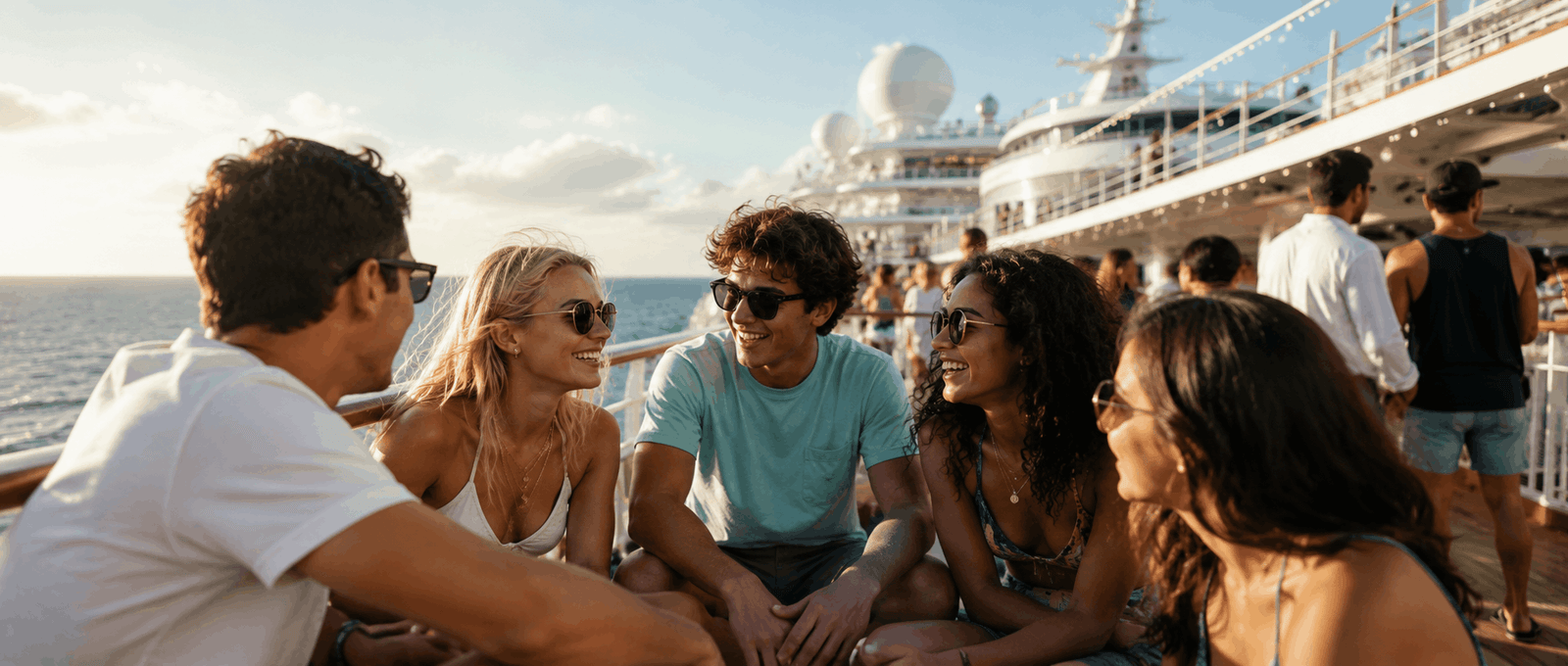
A growing number of travelers, especially younger ones, don’t wait until they’re on the ship to start meeting people. They connect weeks or even months in advance, through group chats, cruise-specific communities, and social platforms built around a shared sail date.
Here’s why that pre-cruise connection has become so popular:
Reducing first-day anxiety. Boarding a massive ship full of strangers can feel intimidating, especially for solo travelers. Knowing a handful of people before you even arrive at the terminal takes the edge off.
Better excursion planning. Group excursions are often cheaper and more fun than solo or ship-organized tours. Travelers who connect in advance can pool together, split costs, and choose activities that match their interests rather than settling for a generic tour group.
Shared logistics. From splitting a specialty dining reservation to coordinating meet-up times at the first port, having contacts before the cruise starts makes the whole trip run more smoothly.
Built-in friend groups. Travelers who meet online before their cruise often report having an instant friend group the moment they step on board — no awkward “hoping I meet someone at the pool” energy required.
Deeper Community, not just a trip. For some travelers, the relationships formed before and during a cruise last well beyond it. Group chats that started as trip-planning tools sometimes turn into long-term friend groups who plan future cruises together.
This is where the modern cruise experience starts to look less like a single vacation and more like joining a temporary — sometimes lasting — community.
Why Cruises Are Becoming More Social Than Ever
Step onto a modern ship and the design itself tells you something about who it’s built for. Cruise lines have redesigned public spaces, dining formats, and daily programming specifically to encourage interaction between passengers.
Interactive onboard activities. Game shows, competitions, and audience-participation entertainment have expanded significantly, replacing some of the more passive, sit-and-watch programming of the past.
Community events. Sail-away parties, themed deck parties, and meetup events for specific groups (solo travelers, first-time cruisers, particular age ranges) have become standard programming on most major ships.
Group dining. Shared table dining, once seen as a quirky holdover from older cruise traditions, has actually grown in popularity among younger travelers who see it as an easy way to meet new people over a meal.
Entertainment as a social event. Comedy shows, trivia nights, and karaoke aren’t just entertainment — they’re structured opportunities for strangers to end up laughing together at the same table.
Shore excursions built for groups. Excursion options increasingly favor small-group, activity-based experiences (hiking, snorkeling, food tours) over large, impersonal bus tours, because they create more natural social interaction.
Social spaces by design. Newer ships include lounges, sports decks, and communal areas explicitly designed to get people mingling — from adult-only social decks to game rooms built around group participation.
None of this happened by accident. Cruise lines track booking data and satisfaction surveys closely, and the data has been clear for several years: passengers who make social connections during their cruise report higher satisfaction and are significantly more likely to book again.
Technology Is Helping Travelers Connect
If digital planning is how Gen Z books a cruise, digital connection is how they experience it. Technology now plays a role at almost every stage of the social cruise experience.
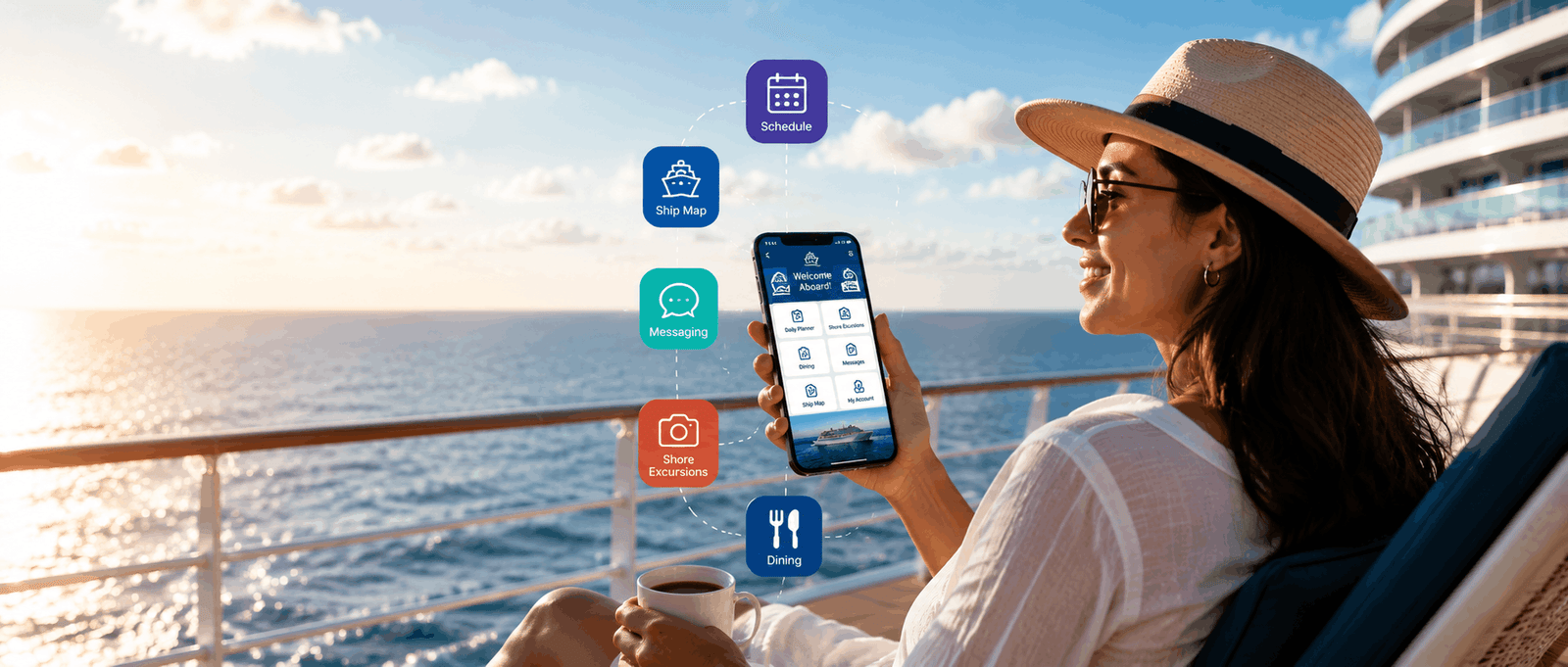
Cruise apps. Most major cruise lines now offer apps that let passengers see the day’s schedule, message other passengers, and even coordinate meetups — a huge shift from paper daily newsletters slipped under cabin doors.
Social planning platforms. Beyond the cruise line’s own app, dedicated platforms have emerged specifically to help travelers connect with others sailing the same ship, on the same dates, with similar interests — well before departure.
Digital communities. Social media groups, forums, and community apps built around specific sailings or cruise lines let travelers ask questions, share tips, and start conversations with future shipmates months in advance.
Messaging without international fees. Onboard messaging systems let passengers stay in touch throughout the ship without relying on expensive cellular data, making it easier to coordinate plans on the fly.
Activity coordination tools. From splitting excursion costs to organizing a group dinner reservation, digital tools have made the logistics of group travel dramatically easier than they were even five years ago.
This is the piece that ties everything together: cruise travel didn’t become more social by accident. It became more social because technology finally caught up to what travelers — especially younger ones — actually wanted: an easier way to find their people.
How Seaya Helps Gen Z Travelers Build Better Cruise Experiences
This is exactly the gap that Seaya were built to close.
Instead of waiting until boarding day to hope for a good table assignment or a friendly face at the pool, Seaya gives travelers a way to start building their cruise community before they ever leave home. Passengers sailing on the same ship or the same dates can find each other, discover shared interests, and start conversations weeks in advance — turning what used to be a matter of luck into something travelers can actually plan for.
For solo travelers, that means showing up at the terminal already knowing a few faces instead of navigating a massive ship alone. Friend groups can find other travelers with similar interests to join excursions, split costs, or simply hang out at the same trivia night. Anyone who’s ever wished they’d met someone earlier in a trip instead of the last night before disembarkation will appreciate how this removes the guesswork entirely.
A few of the practical ways travelers use Seaya include:
- Meeting fellow passengers before sailing, rather than hoping to cross paths on board
- Discovering travelers with shared interests — whether that’s scuba diving, live music, food tours, or simply wanting company at dinner
- Coordinating shore excursions and activities together in advance, which often means better group rates and more personalized plans
- Joining broader cruise communities built around specific sailings, cruise lines, or travel styles
- Building genuine friendships before boarding, so the social side of the trip starts before the ship even leaves port
The goal isn’t to replace the spontaneity of meeting someone new on deck. It’s to make sure that spontaneity has a head start — so travelers spend less time hoping they’ll find their people, and more time actually enjoying the trip with them.
What Older Travelers Can Learn From Gen Z Cruise Habits
You don’t have to be a twenty-something to benefit from how Gen Z approaches cruise travel. Several of the habits driving this shift are worth adopting no matter your age.
Openness to meeting people. One of the simplest but most powerful shifts is a willingness to strike up a conversation with a stranger at the bar, join a group excursion instead of going solo, or say yes to an invitation from someone you just met.
Flexible planning. Gen Z travelers tend to build loose plans rather than rigid, hour-by-hour itineraries, leaving room to say yes to spontaneous invitations — a habit that consistently leads to better trip stories.
Experience-focused travel. Prioritizing what you’ll actually remember over what looks impressive tends to produce more satisfying trips, regardless of generation.
Community participation. Signing up for that trivia night, joining the group excursion, showing up to the sail-away party — these small choices are often what separate a forgettable cruise from a memorable one.
The underlying lesson isn’t really about age at all. It’s about treating the people on your trip as part of the experience, not background noise to it.
The Future of Social Cruising
The direction cruise travel is heading points toward one consistent theme: connection as the core product, not just a nice bonus.
Growing demand for community-based travel. Cruise lines are increasingly designing entire itineraries and ship features around community-building — from themed sailings built around specific interests to dedicated social spaces on newer ships.
Digital-first planning becoming the norm. As younger generations age into a larger share of the cruise market, digital planning tools, cruise social platforms, and app-based coordination will likely become standard expectations rather than added features.
Personalized experiences at scale. Cruise lines are using data and technology to match passengers with activities, dining options, and even fellow travelers who share their interests — a level of personalization that was impossible a decade ago.
Cruise technology continuing to evolve. Expect continued investment in onboard connectivity, app-based coordination, and tools that make it easier for passengers to plan together, both before and during the sailing.
The evolution of social travel more broadly. Cruising is arguably ahead of the curve compared to other travel formats when it comes to building social connection into the product itself — something other parts of the travel industry are likely to borrow from in the years ahead.
If current trends hold, the ships of the next decade won’t just be bigger or more luxurious. They’ll be built, programmed, and marketed around one central idea: the best souvenir from any trip is the people you met along the way.
Comparison Tables
Traditional Cruise Travelers vs. Gen Z Cruise Travelers
| Category | Traditional Cruise Travelers | Gen Z Cruise Travelers |
|---|---|---|
| Planning style | Often booked through a travel agent, planned far in advance | Self-researched, booked online, often planned around flexibility |
| Technology use | Minimal use of apps; relies on printed schedules | Heavy use of cruise apps and pre-cruise social platforms |
| Social interaction | Mostly organic, happens on board | Starts before boarding, continues through group chats and communities |
| Vacation priorities | Relaxation, luxury, and scenery | Connection, shared experiences, and memorable moments |
| Activity preferences | Passive entertainment, quiet lounges | Interactive activities, group excursions, social events |
Experience-First vs. Luxury-First Cruise Travel
| Category | Experience-First Travel | Luxury-First Travel |
|---|---|---|
| Goals | Meaningful memories and connection | Comfort, exclusivity, and status |
| Spending priorities | Excursions, activities, shared experiences | Cabin category, specialty dining, private amenities |
| Social experiences | Central to trip satisfaction | Secondary to comfort and privacy |
| Vacation memories | Built around people and moments | Built around amenities and settings |
Frequently Asked Questions
1. Why is Gen Z choosing cruises?
Gen Z is drawn to cruises largely because of predictable, all-inclusive pricing that covers lodging, food, and entertainment in one booking. Combined with the ability to visit multiple destinations on a single trip and built-in entertainment, cruises offer strong value for travelers managing tighter budgets.
2. Are cruises becoming more popular with younger travelers?
Yes. Booking trends and industry data consistently show an increase in younger passengers, particularly solo travelers and small friend groups, as cruise lines adjust itineraries, pricing, and onboard programming to appeal to this demographic.
3. Why does Gen Z value social travel?
Younger travelers tend to prioritize meaningful experiences and connection over status or luxury. Shared adventures and genuine friendships create memories that last longer than a nice cabin or an impressive itinerary, which shapes how this generation evaluates a good trip.
4. How can Gen Z travelers meet people on a cruise?
Travelers can meet people through onboard activities like trivia, group excursions, and social lounges, or by connecting with fellow passengers before the cruise even begins through platforms built around pre-sail connections, like Seaya.
5. Are cruises good for solo Gen Z travelers?
Cruises are particularly well-suited to solo travelers because they combine independence with built-in opportunities to meet people, structured social activities, and a safe, contained environment — all of which reduce the common anxieties associated with solo travel.
6. What makes cruise vacations social?
Group dining, interactive entertainment, shared excursions, themed parties, and communal social spaces all contribute to making cruises inherently social. Newer ships are increasingly designed with these interactions in mind.
Conclusion
Cruising has always been about the destinations. Now it’s just as much about the people you meet along the way — and for Gen Z, that shift isn’t a passing trend, it’s simply how travel makes sense to them.
They’re not booking cruises because they’ve suddenly discovered shuffleboard. They’re booking them because a cruise solves real problems: predictable pricing, multiple destinations in one trip, and — maybe most importantly — a built-in way to meet people who end up mattering more than the itinerary itself. The friend made at trivia night, the group chat that started three weeks before boarding and never really ended, the stranger at the pool bar who became the person you text a year later about booking the next trip together.
None of this means luxury or relaxation have gone out of style. It just means the definition of a “good” cruise has expanded. It’s no longer only about the size of the cabin or the view from the balcony. It’s about whether you left the ship with people you actually want to stay in touch with.
That’s the real story behind Gen Z and cruise travel. It’s not that a new generation discovered cruising. It’s that cruising finally caught up to what younger travelers were already looking for — connection, community, and a trip that feels like it was shared, not just taken.
If you’re planning your next cruise and want that side of the trip to start before you even board, that’s exactly the gap platforms like Seaya are built to close. Find your people first. Let the rest of the trip follow.

For Christian, Seaya is the culmination of a career-long obsession with innovation. By leveraging his deep technical expertise to dismantle legacy constraints, Christian is transforming the way travelers connect at sea. He is dedicated to keeping Seaya at the vanguard of the “what’s next,” proving that the most powerful innovations happen when world-class tech meets a completely new frontier.
SUBSCRIBE NOW
Your Next Cruise Adventure Awaits
- News & articles
Related Blog