Key Takeaways
- Global cruise passengers hit 37.2 million in 2025, a new all-time high, with further growth forecast for 2026.
- 21.7 million Americans are projected to cruise in 2026 — the fourth consecutive record-breaking year.
- Cruise demand is growing faster than capacity, meaning popular sailings are selling out months ahead of departure.
- Solo cruising is one of the fastest-growing travel trends, with major cruise lines adding dedicated solo cabins and social programming.
- New mega-ships launching in 2026 — including Royal Caribbean’s Legend of the Seas and Norwegian Luna — are adding capacity but also driving unprecedented interest.
- Caribbean routes remain dominant, capturing 72% of U.S. cruise passengers, while Mediterranean and Alaska sailings are growing quickly.
- Younger travelers are changing the industry, with roughly one-third of cruisers now under 40.
- Booking timelines are getting longer — travelers who wait until the last minute face fewer cabin choices and higher prices.
- Multigenerational travel is booming, with approximately one-third of all cruises now involving multiple generations traveling together.
- Connecting with fellow passengers before departure is becoming a core part of the cruise experience, fueled by cruise communities and social apps.
There’s a quiet revolution happening at sea. Cruise terminals are busier than they’ve ever been. Ships are filling faster than cruise lines can build them. And the travellers stepping onboard in 2026 don’t look anything like the stereotype you might have in your head. Many are millennials and Gen Z travelers chasing adventure. Others are retirees finally taking the trip they always promised themselves. Solo travellers are discovering that a cruise ship might be the best social environment on earth. Multigenerational families are also choosing cruises because they offer a vacation that works for everyone—from the six-year-old to the seventy-six-year-old.
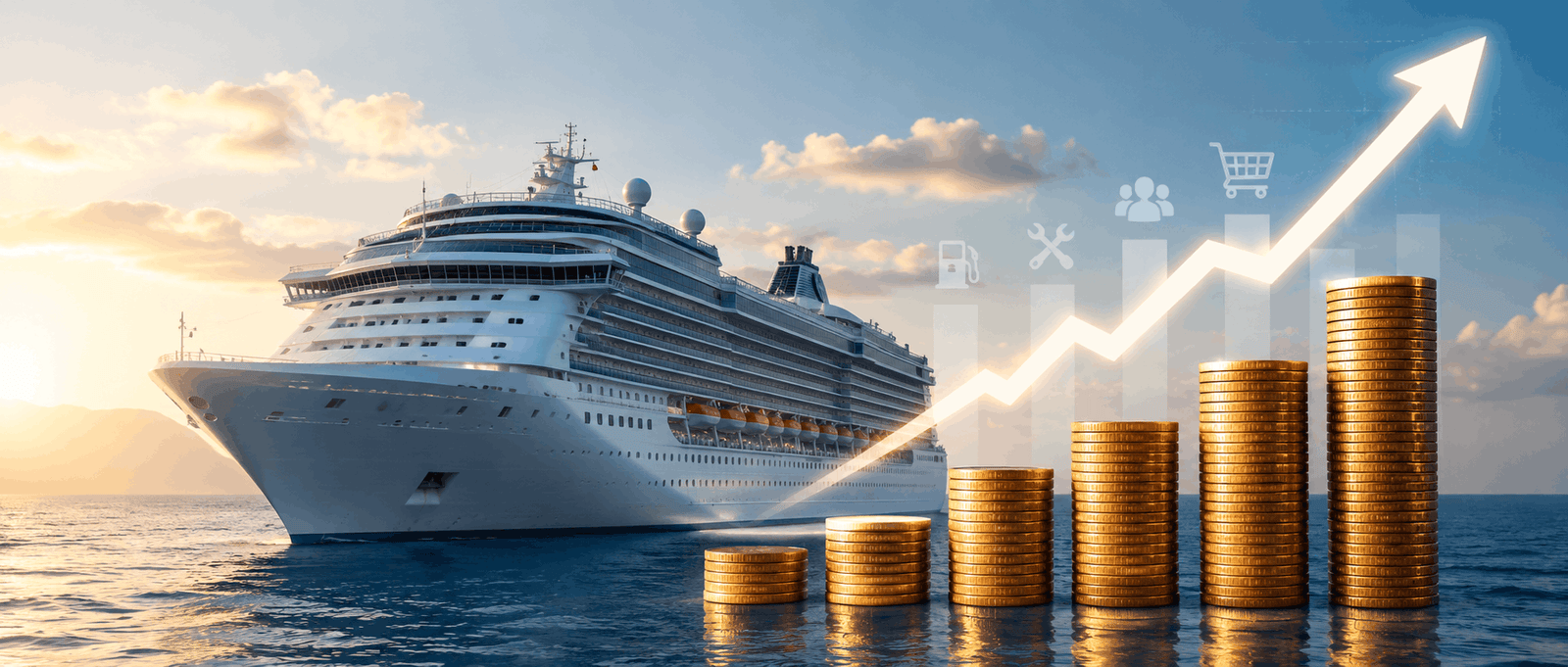
The numbers tell a story that’s hard to argue with. According to AAA, approximately 21.7 million Americans are projected to take ocean cruises in 2026, setting an all-time record for the fourth consecutive year. Globally, the Cruise Lines International Association (CLIA) reported that 37.2 million people cruised in 2025 alone — up from 34.6 million in 2024 and 31.7 million in 2023. The growth isn’t slowing down. It’s accelerating.
Why are ships filling up faster than ever? Why is the cruise industry growing when many other travel sectors are wrestling with uncertainty? And what does all of this mean for you, if you’re planning a cruise in 2026?
That’s exactly what this article covers.
Cruise Bookings Reach Record Highs in 2026
The cruise industry has a term for what’s happening right now: sustained demand. It means people aren’t just returning to cruising after the pandemic pause — they’re choosing it over other types of vacations, sometimes for the first time, and coming back again and again.
CLIA’s 2026 State of the Global Cruise Industry report, released in April 2026, confirmed that global cruise passenger volume reached a historic high of 37.2 million in 2025. That’s up nearly 8% from 2024’s record of 34.6 million. Both figures comfortably exceed pre-pandemic levels, which peaked at around 29.7 million passengers in 2019.
The trajectory is clear: the pandemic didn’t just pause cruising. It reset expectations. When ships returned to sea, cruise lines responded with bigger, bolder, more technologically advanced vessels. Travelers who had spent two years reconsidering their priorities decided a cruise was exactly what they wanted — all-inclusive, multi-destination, flexible, and easier to plan than a complex land-based itinerary.
Norwegian Cruise Line posted record Q2 revenue of $2.5 billion, up 6% year-over-year, and reported advance ticket sales reaching an all-time high of $4 billion — a metric that signals future demand as much as current performance. Royal Caribbean continues to outperform analyst expectations on virtually every booking indicator. Carnival Corporation, which operates the largest fleet of cruise brands globally, has consistently reported higher occupancy and pricing compared to the same periods pre-pandemic.
For travelers, what this means practically is straightforward: cabins are selling out earlier, popular itineraries are being snapped up months in advance, and the window between booking and departure is getting shorter if you want the best cabin selection.
Typically January through March — remains the best time to find deals, but it’s increasingly competitive. Ships that might have had availability close to sailing a few years ago are now booking solid six to nine months out.
Why More People Are Choosing Cruises
It’s worth stepping back and asking the obvious question: why cruises? When land-based vacations exist, when all-inclusive resorts compete aggressively, when international flights are accessible to more travelers than ever — what is it about the cruise experience that keeps pulling people in?
Value, first and most. A cruise bundles lodging, meals, entertainment, and transportation between destinations into a single, predictable cost. For families comparing the logistics of booking flights, hotels, restaurants, transfers, and activities in three or four countries, a cruise can easily be more affordable — and dramatically less complicated. AAA surveys consistently find that travelers perceive cruises as better value than comparable land vacations, especially when the itinerary involves multiple destinations.
More destinations than ever. The modern cruise network spans every continent except Antarctica (though expedition cruise lines are increasingly active there too). In 2026, you can cruise the Norwegian fjords, explore the temples of Japan from a floating hotel, trace the coastlines of the Adriatic, or spend a week hopping between private islands in the Caribbean. The range of experiences available on a single ship has expanded just as dramatically — from world-class culinary venues to live Broadway productions to onboard waterparks.
Family and multigenerational travel. Cruises are remarkably good at satisfying people of different ages simultaneously. Approximately one-third of all cruises in 2025 were multigenerational trips, according to CLIA data. When grandparents, parents, and children with completely different interests and energy levels need to find common ground, a modern cruise ship offers enough variety that everyone stays happy — without anyone being dragged to something they hate.
Solo travel growth. More on this shortly, but solo cruising deserves its own section because the growth numbers are significant enough to reshape how cruise lines design their ships.
Work-from-anywhere reality. Remote work hasn’t disappeared. A substantial segment of cruise passengers in 2026 combines work and travel in ways that would have been logistically difficult a decade ago. Cruise ships now invest heavily in Wi-Fi infrastructure. Some itineraries are marketed specifically to remote workers who want to experience multiple destinations without sacrificing professional obligations.
How Rising Cruise Demand Affects Travelers
Record demand has practical consequences for anyone planning a cruise, and understanding those consequences can save you significant money — and frustration.
Popular itineraries sell out faster. This isn’t marketing language. On Norwegian Cruise Line, Studio Cabins — the dedicated solo cabins aboard ships like Norwegian Aqua and the newly launched Norwegian Luna — regularly sell out six to nine months before departure. Royal Caribbean’s Icon-class ships, which include Icon of the Seas, Star of the Seas, and the just-launched Legend of the Seas, are posting record forward bookings. Caribbean sailings during school holidays and Mediterranean departures in peak summer months are routinely sold out well before travelers would historically have started planning.
Cabin selection narrows quickly. The best cabins at the lowest prices go first. By the time many travelers start browsing, the only available options are the least desirable interior cabins or premium categories at full price. Cruisers who book early — particularly during Wave Season — access the widest selection and the most competitive rates.
Shore excursions require earlier planning than ever. Popular excursions — private snorkeling tours, shore excursion packages at private islands, vineyard visits in Santorini — have always filled up. In 2026, the window is shorter. If you wait until you’re onboard to book, many of the best experiences in port will already be full.
Pricing trends upward. More demand, constrained capacity, and higher operating costs all push cruise prices higher. The cruise industry is not immune to inflation. While cruises remain excellent value relative to comparable land-based vacations, the days of finding deeply discounted last-minute sailings on premium ships are increasingly rare. Travelers who plan ahead consistently pay less.
The Rise of Solo Cruising
Solo cruising is having a moment that’s beginning to look less like a moment and more like a permanent shift.
For years, the biggest structural obstacle to solo cruising was the single supplement — essentially a penalty charged to solo travelers for occupying a cabin designed for two. It wasn’t unusual for cruise lines to charge solo travelers 150% to 200% of the per-person double occupancy rate, meaning a solo traveler could pay nearly as much as a couple for the same cabin.
That model is breaking down, and the cruise lines that broke it first are seeing the results.
Norwegian Cruise Line pioneered dedicated solo cabins with its Studio concept — purpose-built staterooms priced for one person, with no supplement added. In 2026, NCL has expanded this across its fleet, with Norwegian Aqua and the newly launched Norwegian Luna both featuring Studio Cabins and access to the exclusive Studio Lounge, a social space where solo travelers gather, connect with fellow passengers, and form the kind of friendships that turn a solo cruise into anything but a lonely experience.
Virgin Voyages takes a different approach. Its adults-only fleet — which added the Brilliant Lady in 2025 — eliminates the solo supplement on select voyages, pricing Sea Terrace cabins for one person without financial punishment. The onboard environment, with open-seating dining across more than twenty restaurants and a festival-like social atmosphere, naturally facilitates connection.
Royal Caribbean offers Studio cabins on Quantum-class ships, and Celebrity Cruises has introduced some of the most spacious dedicated solo cabins in the industry on its Edge-class vessels.
Why Cruise Communities Matter More Than Ever
There’s a particular kind of anxiety that comes with stepping onto a ship carrying thousands of strangers. Who will you eat dinner with? Who might you want to share a shore excursion with? Is there anyone else onboard with remotely similar interests?
This anxiety is one reason why cruise communities — online groups, forums, and apps that connect passengers before departure — have grown alongside the industry itself.
The logic is simple. When you know someone before you board, the first day feels completely different. You’ll already have plans for dinner, a partner for shore excursions, and someone to share the unforgettable moment of standing on the bow as the ship pulls away from port.
Roll calls — passenger-organized forums tied to specific sailings — have existed for decades on platforms like Cruise Critic. They serve a genuine purpose: connecting people who will share the same ship for the same dates. But traditional roll calls can be difficult to navigate, slow to build, and limited in what they can organize.
Cruise social apps like Seaya are changing this dynamic. Seaya is specifically built for cruise travelers — helping passengers find cruise friends, shore excursion partners, dining companions, and cruise cabin mates before embarkation. Rather than wading through forum threads, travelers can connect directly with people on their specific sailing, plan excursions together, and arrive at the port knowing exactly who they’ll meet onboard.
For solo travelers especially, this kind of pre-cruise community can transform the experience. Meeting a group of fellow passengers before you board — knowing there will be familiar faces at the dock — removes much of the social uncertainty that might otherwise make solo cruising feel daunting.
For more on how cruise social apps compare to traditional roll calls, the Seaya blog covers Cruise Roll Calls vs Cruise Apps in detail. There’s also a useful guide to What Is a Cruise Mate? for anyone new to the concept of finding travel companions specifically for a cruise.
Best Tips for Booking a Cruise in 2026
Given everything covered above, here’s practical advice for anyone planning to cruise this year.
Book early. In a demand environment like 2026, this is the most important thing you can do. Wave Season (January through March) offers promotional pricing and broad cabin selection. But any booking made six or more months before departure puts you ahead of the curve.
Be flexible on dates if you can. Shoulder season sailings — departures that fall just outside peak holiday windows — offer better pricing and more cabin availability without sacrificing the destination or the onboard experience. A Caribbean sailing in late October or early November is meaningfully cheaper than the same itinerary over the holiday weeks.
Compare itineraries before ships. It’s tempting to book based on which ship has the tallest waterslide. But the itinerary determines your actual ports and experiences. Research what you’ll actually see and do in each destination before committing.
Join a cruise community before you depart. Finding people on your specific sailing who share your interests — whether that’s shore excursions, dining preferences, or simply having company for sea days — significantly enhances the experience. Platforms like Seaya let you do this before you even set foot on the gangway.
Book shore excursions before departure. For popular ports and high-demand activities, waiting until you’re onboard is risky. Many of the best private tours and curated experiences sell out weeks before sailing. Book what matters to you early.
Reserve specialty dining now. On most major cruise lines, specialty dining venues have limited capacity and fill quickly. Booking your preferred restaurants at the time you make your cruise reservation — or immediately after — ensures you get the times and venues you want.
What Travelers Should Expect in 2026
The cruise industry in 2026 is not the same industry it was even five years ago. Here’s what’s shaping the experience right now.
New ships, bigger and bolder than ever. Norwegian Luna launched in April 2026 as the second Prima Plus-class ship, featuring the Aqua Slidecoaster, a ten-storey free-fall slide called The Drop, and a 46,000 square-foot Ocean Boulevard that wraps around the entire vessel. Royal Caribbean’s Legend of the Seas — the third ship in the Icon class — debuts in July 2026 as the first Icon-class vessel to sail Europe, carrying over 5,600 passengers with more than 40 bars and restaurants and a full Broadway production of Charlie and the Chocolate Factory. Viking Libra is expected to launch later in 2026 as the world’s first hydrogen-powered cruise ship, capable of zero-emission sailing.
Sustainability as a real priority, not just marketing. LNG-powered ships are becoming the standard for new builds. Viking Libra’s hydrogen propulsion represents the next frontier. Cruise lines are investing in shore power connectivity, waste reduction programs, and sustainable sourcing. Travelers increasingly ask about a cruise line’s environmental commitments before booking.
Technology improvements onboard. The gap between what you can do on a cruise ship and what you can do at home has largely closed. High-speed satellite internet now allows remote work from sea. Onboard apps let travelers book dining, excursions, and entertainment before they board. Wearable technology — keycards, payment devices, onboard navigation — has been integrated into the physical design of ships.
Personalization at scale. The mega-ships launching in 2026 are designed with distinct neighborhoods and zones that let different types of travelers occupy the same vessel without ever feeling like they’re in the wrong place. Families gravitate toward one section of the ship; adults without children toward another; adventure seekers toward a third. This zoning approach makes large ships feel more manageable and personal.
Social travel continues to grow. The trend toward connecting with other travelers before and during a cruise — finding companions for shore excursions, organizing group dining, meeting people on a cruise the same sailing — shows no signs of slowing. Cruise lines have responded by designing more communal spaces into new ships and programming more structured social events. The culture of cruising is increasingly social in an intentional way.
2024 vs. 2025 vs. 2026: How the Cruise Market Has Changed
| Category | 2024 | 2025 | 2026 |
|---|---|---|---|
| Global Passengers | 34.6 million | 37.2 million | Forecast to exceed 38 million |
| U.S. Passengers | ~19.6 million | ~20.7 million | ~21.7 million (projected) |
| Solo Travel Share | ~6% of U.S. passengers | ~7% of U.S. passengers | Growing — cruise lines adding capacity |
| Average Booking Lead Time | 4–6 months | 5–7 months | 6–12 months for peak sailings |
| New Ships Entering Service | Several Oasis/Icon-class ships | Star of the Seas, MSC World America, Norwegian Aqua, Disney Destiny | Norwegian Luna, Legend of the Seas, Viking Libra (hydrogen), Seven Seas Prestige |
| Average Cruise Pricing | Rising post-pandemic | Continued upward trend | Higher on peak itineraries; deals available off-peak |
| Multigenerational Travel | ~30% of sailings | ~33% of sailings | Continuing to grow |
| Cruise Community Adoption | Early adopters | Mainstream awareness | Growing as pre-cruise planning becomes standard |
| Traveler Satisfaction | 90%+ rate experience good/very good | 91% have taken multiple cruises | Repeat rates remain among highest in travel |
Frequently Asked Questions
Why are cruise bookings so high in 2026?
Several forces are converging: post-pandemic enthusiasm, new ships with innovative features, a younger generation discovering cruising as a value-packed way to see multiple destinations, and the fundamental appeal of an all-inclusive vacation that requires less planning than a comparable land-based trip. AAA projects 21.7 million Americans will cruise in 2026, the fourth consecutive record year.
Are cruises selling out faster in 2026?
Yes, meaningfully so. Popular itineraries, cabin categories like solo studios, and sailings during school holidays or peak summer months are booking out months earlier than they did even three years ago. Norwegian’s Studio Cabins and Royal Caribbean’s Icon-class sailings are among the fastest-selling in the industry.
When should I book a cruise in 2026?
For peak sailings — Caribbean holidays, Mediterranean summer, Alaska — book six to twelve months ahead. Wave Season (January through March) traditionally offers the best combination of pricing and cabin selection. For off-peak sailings, three to six months is workable, but choices narrow quickly.
Will cruise prices increase further?
Pricing continues to trend upward on popular itineraries, driven by demand and higher operating costs. That said, off-peak sailings, shoulder season departures, and last-minute promotions from cruise lines filling remaining inventory can still offer strong value. Booking early remains the most reliable way to secure competitive pricing.
Why is solo cruising becoming more popular?
Solo cruising is growing because cruise lines have removed the biggest obstacles — the financial penalty of the single supplement and the social isolation of traveling alone. Norwegian Cruise Line’s Studio Cabins, Virgin Voyages’ reduced supplements, and hosted solo social events have made solo cruising both more affordable and more socially vibrant than it’s ever been.
Is 2026 a good year to cruise?
By almost any measure, yes. New ships launching in 2026 include some of the most impressive vessels ever built. The industry has invested heavily in onboard experience, sustainability, and personalization. The main caveat: book early, because demand is outpacing capacity on the most sought-after sailings.
Final Thoughts
Cruise demand in 2026 isn’t a bubble. It’s not a bounce-back from the pandemic that will correct itself once pent-up demand is satisfied. The structural conditions driving this growth — better value than comparable land vacations, more destinations, more ship types, an industry that has finally learned to serve solo travelers well, and a younger generation discovering what cruising actually is — are durable.
What this means for travelers planning a cruise is that the window for the best experiences at the best prices is getting shorter every year. The travelers booking cruises twelve months in advance aren’t paranoid. They’re just getting the cabin they want at the price they want on the sailing they want.
The other thing that’s becoming clear is that the best cruise experiences are rarely entirely solo endeavors. Even the most committed solo traveler tends to have a better time when they arrive at the gangway knowing someone. The social dimension of cruising — the chance encounters, the shared excursions, the friendships that form over four nights at sea — is part of what keeps the repeat rate at 91%.
As more travelers book cruises earlier than ever, planning ahead is becoming essential. If you’d like to meet people on your sailing, organize shore excursions, connect with cruise companions, or make friends before embarkation, Seaya makes it easy to start building your cruise community before you even step onboard.

For Christian, Seaya is the culmination of a career-long obsession with innovation. By leveraging his deep technical expertise to dismantle legacy constraints, Christian is transforming the way travelers connect at sea. He is dedicated to keeping Seaya at the vanguard of the “what’s next,” proving that the most powerful innovations happen when world-class tech meets a completely new frontier.
SUBSCRIBE NOW
Your Next Cruise Adventure Awaits
- News & articles
Related Blog