Booking a cruise is one of life’s great decisions. The anticipation builds quickly. You start imagining sunsets from the deck, new ports to explore, and the kind of easy laughter that only comes from a good vacation.
But here is something many travelers discover too late. The best experiences on a cruise rarely happen by accident. The people who seem to have the most fun are the ones who came prepared — not just with sunscreen and suitcases, but with connections already in place.
If your goal is to truly meet people on a cruise and turn a standard sailing into something memorable, the preparation starts long before embarkation day.
Why Cruise Socializing Has Changed
A decade ago, cruising was simpler. You showed up, you mingled at dinner, and you either met great people or you did not. Most passengers trusted the ship to handle the social side of things.
That model worked well enough — but it left too much to chance. Today’s travelers think differently. They book shore excursions weeks in advance. They research dining menus and onboard entertainment before departure. Social planning has become part of the same process.
The shift makes complete sense when you consider how packed cruise schedules actually are. Families travel in tight groups. Couples have their own agendas. Solo cruisers may feel hesitant to approach strangers repeatedly. Without some groundwork, it is surprisingly easy to finish a seven-day sailing without building a single meaningful connection.
According to CLIA’s latest cruising trends report, solo cruising continues to grow year over year. More travelers than ever are choosing to sail alone — not because they want isolation, but because they want the freedom to travel on their own terms while still enjoying real social experiences.
The Problem With Leaving It to Chance
Imagine walking onto a ship with 3,000 strangers. The atrium is loud. Families are rushing to cabins. Couples are checking in at restaurants. The first few hours of any sailing are chaotic by nature.
If you are hoping to find a cruise companion naturally in those early moments, the odds are not in your favor. Most people are already settled into their routines by day two. Groups have formed. Dinner tables are fixed. Shore excursion bookings are locked in.
The window for organic connection is narrower than it looks. Solo cruisers feel this most acutely, but it also affects couples and small groups who want to expand their circle beyond their existing party.
That is the core problem with leaving it to chance. You are not just gambling on meeting the right people. You are gambling on meeting them at the right moment, in the right setting, with enough time left in the voyage to actually build something.
How Cruise Friendships Actually Form
People who cruise regularly will tell you something interesting. Cruise friendships form fast. Faster than most other social environments. The combination of shared space, shared meals, and shared excitement creates a natural shortcut to connection.
A conversation at breakfast can turn into a shore excursion partnership by afternoon. A quick chat at the pool bar can lead to a dinner group that lasts the entire voyage. The environment is unusually conducive to genuine human bonding.
This is exactly why a small head start matters so much. Even a brief message exchange before departure — a quick introduction through a cruise buddy platform — is enough to make that first in-person moment feel familiar rather than awkward.
Research from the Journal of Consumer Psychology shows that shared anticipation of an experience creates stronger social bonds. Cruise travelers who connect before boarding are already sharing that anticipation — giving their friendships a meaningful head start.
The Old Way: Forums and Roll Calls
For years, the standard tool for pre-cruise networking was the online forum roll call. Cruise line message boards hosted threads where passengers on the same sailing could introduce themselves, share cabin numbers, and plan group meetups.
These roll calls served a genuine purpose and many travelers still use them. But they come with real limitations. Threads can span hundreds of pages. Profiles are anonymous. There is no way to filter by interest or personality. Finding a compatible cruise partner through a forum is possible — but it requires significant time and patience.
The format also tends to attract a narrow demographic. Younger travelers, solo cruisers, and first-timers often find forum culture unfamiliar or intimidating. Many give up before finding a worthwhile connection.
Even Cruise Critic, one of the most established cruise communities online, acknowledges that the roll call model has its limitations for modern travelers looking for faster, more targeted connections.
A Better Way to Find Cruise Friends
The gap between what travelers want and what traditional forums offer has created space for something better. Dedicated cruise social platforms have emerged to serve exactly this need — tools built specifically around the experience of finding cruise friends before departure.
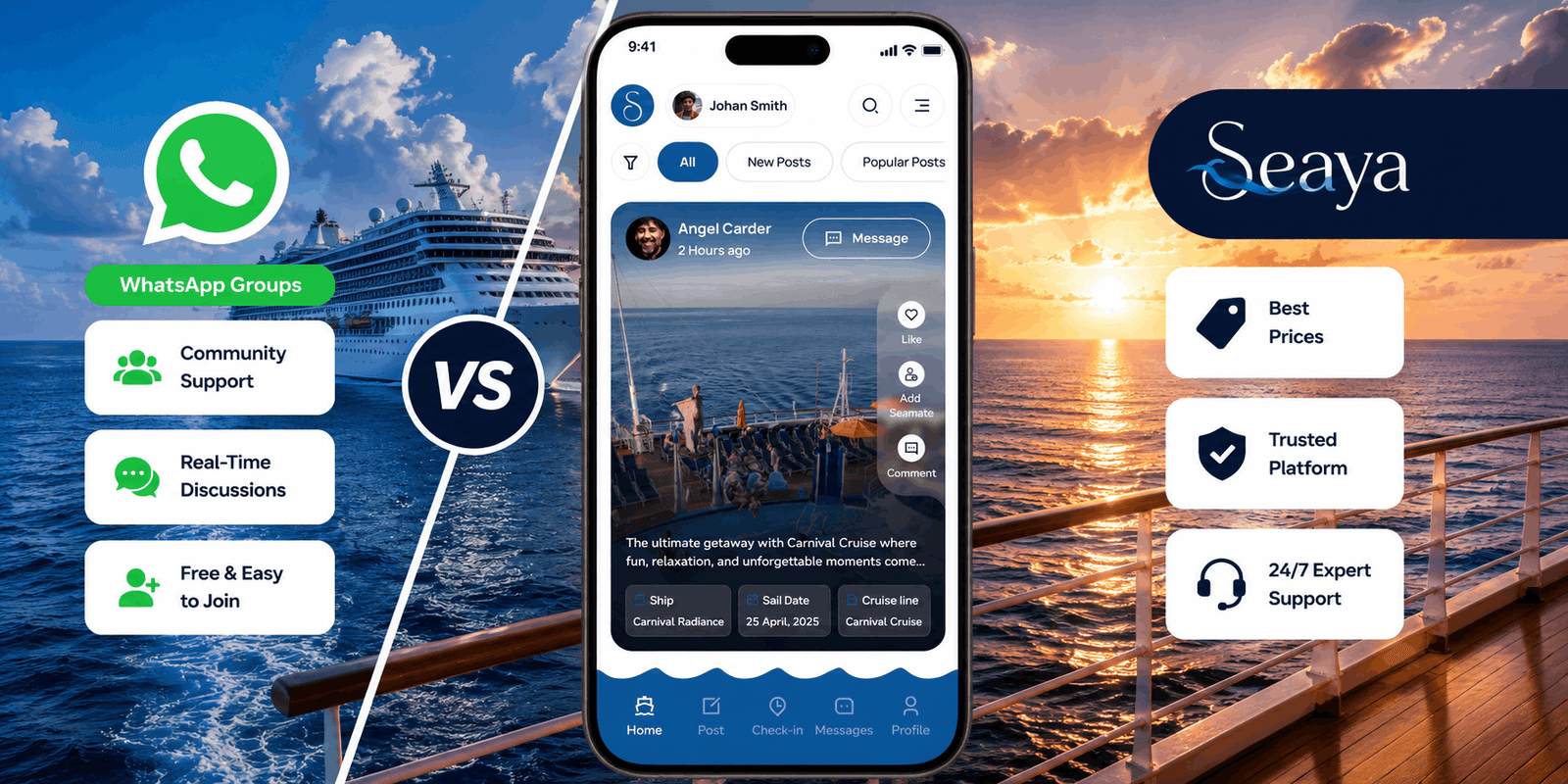
Seaya is one platform that has been gaining attention in this space. Rather than relying on sprawling text threads, it offers a streamlined mobile experience. Travelers create profiles, search by sailing date and ship, and connect directly with people on cruise ship voyages who match their interests and travel style.
The appeal is practical. Instead of scrolling through pages of anonymous usernames, you can browse real profiles of verified passengers on your exact itinerary. Whether you are looking for a cruise carnival friends group for onboard events, a cruise partner for shore excursions, or simply a cruise buddy to share meals with, the filtering tools make the process fast and intuitive.
You can explore the platform at seaya and see how it works before your next sailing.
Who Benefits Most From Pre-Cruise Networking
Solo travellers are the most obvious beneficiaries of any cruise friend finder approach. Sailing alone offers genuine freedom — you eat when you want, explore when you want, and answer to no one. But most solo cruisers are honest about wanting meaningful social moments alongside that independence.
Arriving with even one or two pre-established connections transforms the experience. There is someone to message when you dock at a new port. Someone to share a meal with on a sea day. Someone whose face you recognize when you walk into a crowded lounge.
But solo travelers are not the only ones who benefit. Small groups looking to coordinate larger shared excursions find value in expanding their circle before boarding. Couples who enjoy meeting other travelers find pre-cruise networking makes those introductions easier. Even large family groups sometimes want to find a cruise mate for younger adult members who would otherwise be stuck between the kids’ clubs and the adults-only deck.
The Solo Travel Society regularly publishes advice for independent cruisers, and pre-departure networking consistently appears as one of their top recommendations for a more fulfilling voyage.
Practical Steps for Building a Pre-Cruise Circle
Start your search early. Ideally four to six weeks before departure. This gives you enough time to have real conversations, not just rushed introductions in the final days before boarding.
Use a cruise app or platform that filters by your specific ship and sailing date. Generic social media groups can help, but they are rarely organized well enough to connect you with people on your exact voyage. A dedicated cruise companion finder cuts that process down significantly.
Keep early conversations light and genuine. Share what excites you about the trip. Ask what they are looking forward to. Talk about shore excursion plans or onboard interests. The goal is not to lock in a friendship — it is to create enough familiarity that meeting in person feels natural.
When you do arrange a first in-person meeting, keep it simple and low-stakes. A fifteen-minute coffee after the safety drill. A quick hello at the pool deck on the first afternoon. Easy, pressure-free, and easy to extend if the connection is good — or gracefully exit if it is not.
Safety and Sensible Boundaries
Building connections online before any trip requires the same common sense you would apply anywhere. Never share your cabin number, home address, or financial details with someone you have only just met digitally. Keep early conversations on the platform until you feel comfortable.
Good cruise companion finder platforms take this seriously. Seaya, for example, is built with safety and profile transparency as core priorities. The platform creates a verified environment so you know the people you are speaking with are actually booked on the same sailing — not anonymous internet users with no accountability.
Trust your instincts as you would with any new acquaintance. Most people joining cruise social platforms are simply travelers who want a better experience. But sensible caution is always the right starting point.
Cruising With Friends: Why the Experience Feels Different
There is a meaningful difference between cruising with a group and cruising alone. Not better or worse — just different. Cruising with friends, even newly made ones, tends to unlock parts of the experience you would otherwise miss.
Shared excursions are richer when you have someone to debrief them with at dinner. Trivia nights are more fun with a team. Specialty restaurants feel worth the splurge when you split the experience with people you enjoy. Even quiet sea days feel different when there is someone you want to sit beside on the deck.
The people you meet on a cruise ship often become some of the most memorable parts of the whole trip. That is not a marketing claim — it is something experienced cruisers say consistently. The destination matters, but the community you build around it often matters more.
Conclusion
The truth about meeting people before a cruise is not complicated. Travelers who arrive with connections in place simply have a better time. They feel more confident on day one. They explore more fully. They leave with friendships that sometimes last long after the ship has returned to port.
You do not need to engineer every social moment of your voyage. But giving yourself a head start — a cruise people finder tool, a few genuine introductions, a handful of familiar faces waiting on the other side of the gangway — changes everything about how you step onto that ship.
Whether you are a first-time solo cruiser or a seasoned traveler looking to expand your circle, the investment is small and the return is real. Your next voyage is already filling up with interesting people heading to the same destinations you are.
Platforms like Seaya make it easier than ever to find them before you sail. The connections are already out there. All you have to do is start the conversation.

For Christian, Seaya is the culmination of a career-long obsession with innovation. By leveraging his deep technical expertise to dismantle legacy constraints, Christian is transforming the way travelers connect at sea. He is dedicated to keeping Seaya at the vanguard of the “what’s next,” proving that the most powerful innovations happen when world-class tech meets a completely new frontier.
SUBSCRIBE NOW
Your Next Cruise Adventure Awaits
- News & articles
Related Blog