Key Takeaways
- The most memorable parts of cruising — friendly crew, great food, interesting ports — remain human, with technology working to support rather than replace that experience.
- Smart cruise ships combine apps, wearables, faster internet, and behind-the-scenes AI to remove friction from the vacation, not to replace the fundamentals of a good cruise.
- Younger travelers and changing expectations across all of travel are the main forces driving cruise lines to invest heavily in technology.
- Online check-in and app-based reservations now let you lock in dining, shows, and excursions weeks before you ever board.
- Personalization has moved from a nice-to-have to a genuine competitive advantage, with recommendations increasingly tailored to individual guests.
- Onboard, technology shows up in wayfinding, free messaging, wearable cabin access, and interactive entertainment.
- Cruise apps have become the central hub for the entire trip, from boarding pass to daily schedule.
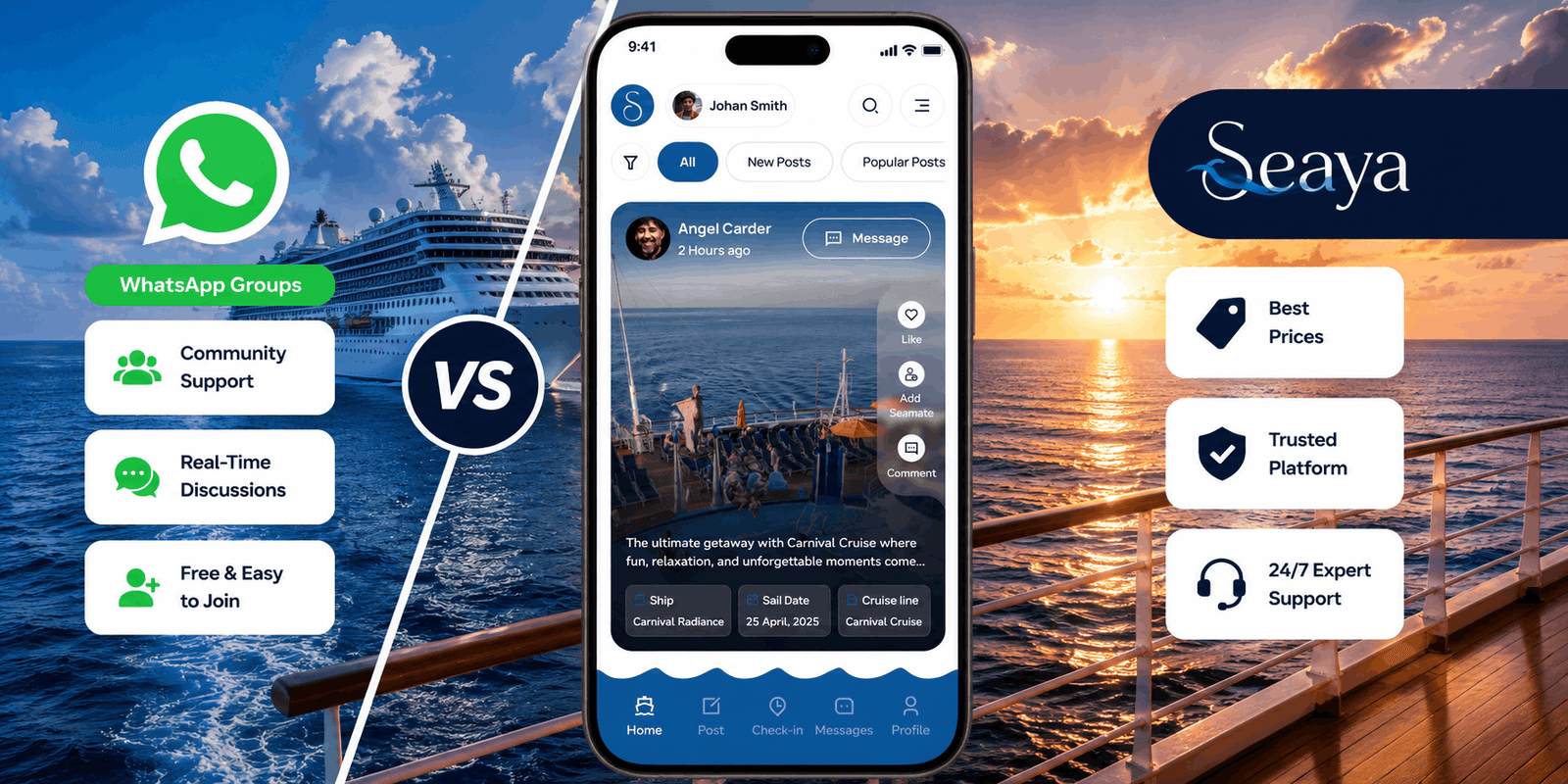
- Travelers increasingly want to connect socially with fellow passengers, not just interact with ship systems — a trend platforms like Seaya are built around.
- First-time cruisers benefit especially from smart technology, since it removes much of the uncertainty that comes with a first sailing.
- The future points toward deeper personalization, more connected communities, and continued investment in sustainable ship technology.
This isn’t a story about robots and gadgets for their own sake. It’s a story about travelers getting their time back, getting recommendations that actually fit them, and getting a cruise experience that feels tailored rather than generic. In this guide, we’ll walk through exactly how smart cruise ships are reshaping the modern cruise experience in 2026 — what’s changed, what it means for you as a passenger, and where cruising is headed next.
What Are Smart Cruise Ships?
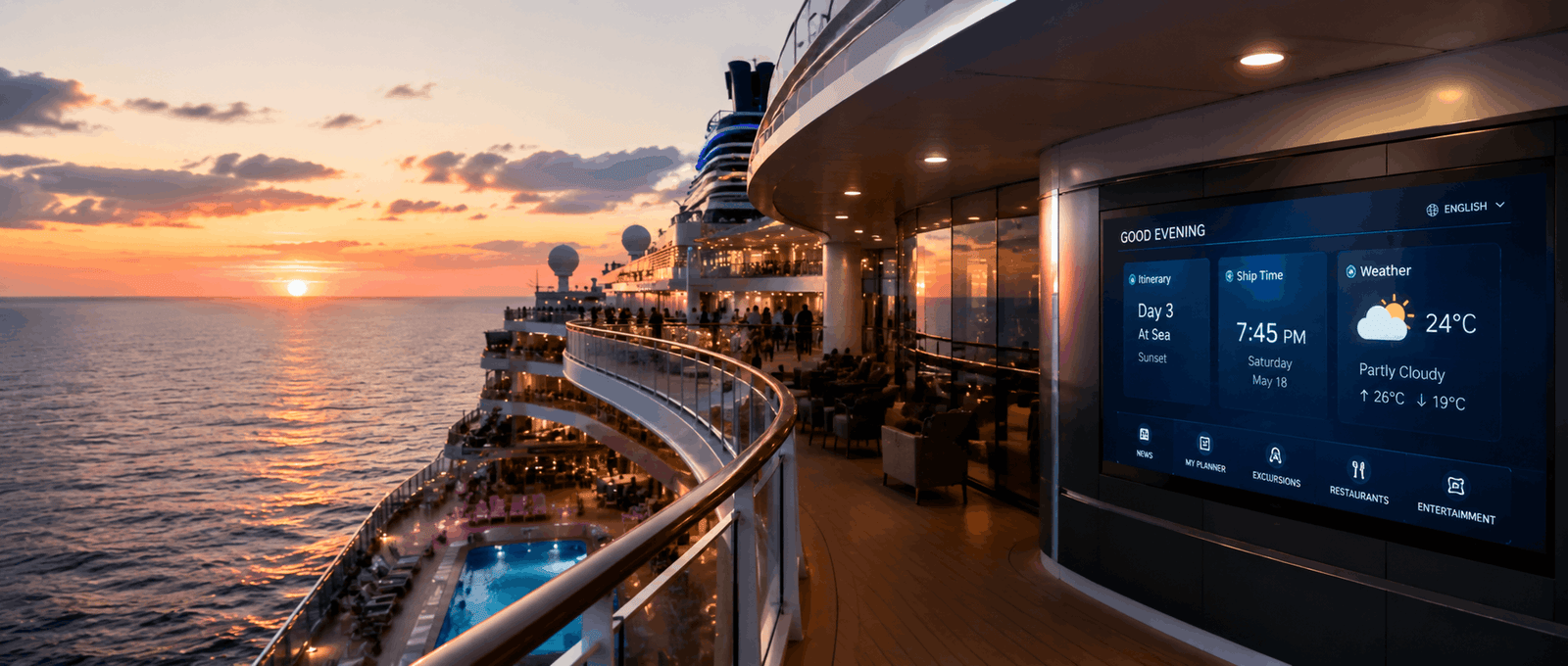
A “smart” cruise ship isn’t defined by any single gadget. It’s a ship where the app in your pocket, the wristband on your arm, the WiFi overhead, and the systems crew members use behind the scenes all talk to each other so your vacation runs smoother.
In practice, that means a few things working together:
- A companion app that replaces the paper Cruise Compass, handles your boarding pass, and lets you book dining, shows, and excursions from your phone.
- Wearable technology — a medallion, wristband, or NFC-enabled card — that unlocks your cabin, pays for drinks, and helps crew members find you.
- Faster satellite internet, largely thanks to low-orbit satellite systems, that makes onboard WiFi fast enough to stream video instead of just checking email.
- Behind-the-scenes AI, used for things like predicting maintenance needs, managing crew schedules, and smoothing out food ordering so service stays consistent even on larger ships.
None of this replaces the fundamentals of a great cruise: friendly crew, good food, interesting ports, and a comfortable stateroom. What it does is remove the friction around those fundamentals. Cruise lines are investing heavily here because the payoff is measurable — passengers who plan ahead using an app tend to spend more confidently on things they actually want, and lines see fewer frustrated guests standing in line at guest services asking where the pool towels are.
For passengers, the benefit is straightforward: less waiting, less guessing, and a vacation that adapts to what you specifically want rather than a one-size-fits-all itinerary printed the night before.
Why Smart Cruise Ships Are Becoming Popular in 2026
Cruising’s core audience has shifted, and that shift is driving the sustainable cruise technology , not the other way around.
Traveler expectations have changed. People who book a cruise in 2026 also order groceries with an app, check into flights on their phone, and expect a hotel key that’s really just their phone. Carrying a plastic card and consulting a printed newsletter for the day’s schedule feels dated by comparison. Cruise lines that lag on this front stand out for the wrong reasons.
Younger passengers are cruising in bigger numbers. Millennials and Gen Z travelers, many taking their first cruise in the last few years, expect the same kind of digital convenience they get from every other part of their lives. They’re less patient with paper processes and more likely to research and book activities themselves ahead of time rather than waiting to be told what’s available onboard.
Digital convenience has become a competitive advantage. When two ships offer similar itineraries and price points, the deciding factor is often the experience around the cruise — how easy check-in was, how quickly you got your first drink, whether the app actually worked. Lines have noticed this and are pouring money into their tech platforms as a result.
Demand for personalization is rising across all of travel, not just cruising. Hotels, airlines, and even theme parks have trained travelers to expect that a company already knows their preferences. Cruise lines are following the same playbook: knowing your dining preferences, your favorite deck, and your past excursions, and using that information to make smarter suggestions the next time you sail.
Faster and Easier Cruise Planning
The most immediate way smart cruise ships change your trip happens before you ever step onto the gangway.
Online check-in and digital boarding. Most major lines now let you complete check-in — uploading your passport, adding a security photo, and confirming an arrival window at the terminal — entirely from your phone or laptop, weeks before sailing. Combined with facial recognition at the terminal on several ships, this has cut what used to be an hour-plus process down to a few minutes for many sailings.
Cruise apps as a planning hub. Once your cruise booking is confirmed, the cruise line’s app becomes the central place to handle almost everything: dining reservations, spa bookings, shore excursions, and show reservations. Booking specialty dining or a sought-after excursion the moment it opens, rather than waiting until you’re onboard, is now one of the most reliable ways to get the time slot you actually want.
Reservations that used to require a desk visit — a specific dinner seating, a Broadway-style show, a thermal suite pass — can typically be locked in from home. That matters because popular reservations, especially on newer, larger ships, can fill up within the first day or two of sailing.
Activity planning starts before boarding. Rather than flipping through a stack of papers on day one, many passengers now build out a rough schedule in the app before they even pack a bag, which means less time on vacation spent figuring out logistics and more time actually enjoying the ship.
The practical upshot: the planning that used to eat into your first day at sea can now happen from your couch, weeks in advance, while availability is best.
Personalized Cruise Experiences
Smart ships increasingly treat every guest as an individual rather than a seat number on a manifest.
Custom recommendations. Based on past bookings, cabin category, and even what you’ve clicked on in the app, cruise lines increasingly surface excursions, dining options, and add-ons that are genuinely more likely to interest you, rather than a generic list of upsells. Reports from major lines suggest a large share of onboard spending is now decided before guests board, in large part because the app is doing a better job of showing people things they’d actually want to pay for.
Dining preferences remembered across a cruise, and sometimes across future cruises. Systems can flag dietary restrictions, favorite dishes, or preferred seating so that repeat guests don’t have to re-explain themselves at every meal.
Activity suggestions tailored to your history. If you’ve spent past cruises in the spa rather than the casino, or you’ve always gravitated toward trivia over dance classes, the app is increasingly likely to nudge you toward similar options rather than pushing the same generic schedule to everyone on the ship.
Entertainment choices that adapt. Some ships now offer AI-assisted suggestions for shows and activities based on what similar guests enjoyed, helping you cut through a packed daily schedule to find things worth prioritizing.
Personalized daily schedules. Instead of a single, identical Cruise Compass for every cabin, many apps now build a schedule specific to what you’ve booked and what you’ve shown interest in, layering your reservations, shows, and port plans into one view.
The overall effect is a cruise that feels less like a fixed itinerary handed to everyone on the ship, and more like a vacation shaped around what you specifically enjoy.
How Smart Ships Improve the Onboard Experience
Once you’re actually onboard, the technology shifts from planning tool to daily-use assistant.
Easier navigation on genuinely enormous ships. Newer vessels can span 18 or more decks, and getting lost used to be part of the experience, especially for first-time cruisers. Interactive maps inside cruise apps, along with augmented-reality wayfinding on some ships, now give real-time directions to your dining venue, the pool, or the nearest emergency exit.
Better communication without needing an internet package. Most cruise apps run on the ship’s local network, meaning you can message your travel companions, check the schedule, or look up a menu without paying for WiFi. Only features that actually require the open internet — video calls, social media, browsing — need a data package.
Interactive experiences layered throughout the ship. From augmented-reality dining shows where animated characters appear to “cook” your meal table-side, to voice-activated in-cabin assistants that can answer questions in multiple languages, ships are adding small moments of digital delight throughout a cruise, not just at check-in.
Wearable convenience. Medallion-style devices and NFC wristbands let you unlock your cabin door by walking up to it, charge a drink to your account with a tap, and let servers find you anywhere on the ship to deliver an order — a level of convenience that would have sounded like science fiction a decade ago.
It’s worth being honest about the limits here, too. An app can suggest a wine pairing or personalize your dinner recommendation, but it still can’t tell you that your cabin is going to rattle near the anchor at 6 a.m., or that a port day is better spent away from the ship’s own excursion desk. That kind of judgment still comes from an experienced crew member or a knowledgeable travel advisor, and that isn’t likely to change soon.
How Cruise Apps Are Changing the Way People Sail
If there’s one single piece of technology that has changed cruising more than any other in the last few years, it’s the cruise line app.
Trip organization in one place. Rather than juggling a confirmation email, a paper itinerary, and a separate excursion booking confirmation, everything now typically lives in a single app: your boarding pass, your dining times, your shore excursions, and your daily schedule.
Daily schedules that update in real time. If a show gets moved or a port time changes, the app updates automatically instead of relying on a printed notice slipped under your door the night before.
Free onboard messaging. Nearly every major line now offers some form of free or low-cost messaging between guests on the same ship, which has quietly solved one of cruising’s oldest annoyances: trying to find your family in a crowd of thousands of people with no cell service.
Activity discovery that goes beyond a printed program. Apps increasingly let you filter activities by interest, time, and location, rather than scanning a dense page of tiny text trying to find something for your kids to do at 2 p.m.
Planning before you even board. Many cruisers now start using the app the moment their booking is confirmed, using the weeks before sailing to lock in dining times, sign up for excursions, and build a loose plan for their first sea day.
Cruise apps aren’t just a nice extra anymore. For a lot of passengers, they’ve become as essential to the trip as the boarding pass itself.
The Rise of Connected Cruise Communities
As cruising has become more digitally connected, a related shift has been happening alongside it: travelers increasingly want to connect with each other, not just with the ship.
Modern cruisers, especially solo travelers, couples on milestone trips, and families sailing with extended relatives, are looking for ways to meet like-minded people before they even set foot on the ship. A few forces are driving this:
- Social travel has become mainstream. People are used to finding travel companions, activity partners, and local recommendations through apps in every other part of their lives, and they’re bringing that same expectation to cruising.
- Sharing plans in advance reduces awkwardness onboard. Knowing that a few other passengers on your sailing share your interest in scuba diving, trivia, or line dancing makes it much easier to actually show up to those activities instead of going alone.
- Meeting people before the cruise extends the vacation. Some of the best cruise friendships now start in a group chat weeks before departure, not at the pool bar on day three.
- Finding travelers with similar interests improves the whole trip. Whether it’s a shared excursion, a group dinner, or just someone to explore a port with, having a plan in place before boarding takes the guesswork out of making connections at sea.
This is a natural extension of everything smart ships already do. If the technology can personalize your dining and your daily schedule, it makes sense that travelers also want a way to personalize who they meet along the way.
How Seaya Fits Into the Future of Cruising
This is exactly the gap that a Seaya is built around. As ships get smarter about planning your day, Seaya focuses on the human side of the trip: helping you connect with the other travelers on your sailing before you ever board.
In practice, that looks like a few things:
- Meeting fellow passengers before boarding, so your first day at sea doesn’t start from a blank slate socially.
- Discovering who else is on your cruise, particularly useful for solo travelers or anyone sailing without a big group of their own.
- Planning activities together, whether that’s a shared excursion, a trivia team, or simply agreeing to meet up for the sailaway party.
- Sharing experiences during and after the cruise, so the connections made onboard don’t just end at disembarkation.
- Making cruising more social overall, especially for travelers who want company without committing to a big group cruise from the start.
The technology inside the ship has gotten very good at anticipating what you’ll want to eat or do. Seaya is about the part that technology alone can’t really replace — the people you’ll actually share the trip with. As cruising continues to lean into personalization, this social layer is a natural next step, not a replacement for anything the ship itself already does.
Are Smart Cruise Ships Better for First-Time Cruisers?
If you’ve never cruised before, smart ship technology tends to be even more valuable to you than it is to a repeat cruiser, for a simple reason: most of the anxiety around a first cruise comes from not knowing what to expect.
Less confusion. A first-time cruiser used to have to learn ship layout, dining times, and onboard procedures largely by trial and error on day one. Interactive maps, app-based wayfinding, and digital daily schedules flatten that learning curve considerably.
Easier planning from home. Being able to research, book, and even preview dining options and excursions from your phone weeks in advance means a first-time cruiser can walk onboard already feeling oriented, rather than encountering everything for the first time in person.
More confidence at every step. From digital check-in that tells you exactly what to expect at the terminal, to an app that shows you exactly where the muster station is, smart technology removes a lot of the “what if I do this wrong” anxiety that keeps some travelers from trying a cruise in the first place.
Better overall experience. Simply put, the fewer logistics a first-time cruiser has to figure out on the fly, the more time and mental energy they have left over to actually enjoy the ship, the food, and the ports.
None of this means a first cruise won’t still feel like a lot to take in — a large ship is genuinely a lot of ship. But smart technology has meaningfully lowered the barrier for people who might otherwise have felt intimidated by the idea.
Future Cruise Trends Beyond 2026
The direction of travel here is fairly clear, even if the exact features are still evolving.
Even more personalized trips. Expect recommendation systems to keep getting sharper, drawing on more data points across bookings, onboard behavior, and even preferences shared with connected apps, to suggest experiences that feel tailored rather than generic.
Deeper connected communities. As social features become more common across travel apps generally, expect more cruise-specific tools for meeting fellow passengers, coordinating group activities, and staying in touch after the trip ends.
Continued improvements to guest experience. Faster check-in, better wayfinding, and more seamless onboard payments are likely to keep improving as satellite internet gets faster and cheaper and cruise lines refine their apps.
Sustainability-driven technology. A significant share of new ship investment is going toward cleaner propulsion — LNG, hybrid systems, and improved energy efficiency — alongside guest-facing tech, as the industry works toward its stated net-zero emissions goals.
Smarter ports, not just smarter ships. Expect more coordination between cruise lines and port cities, including streamlined boarding processes and better-managed shore excursions, as destinations increasingly manage the volume of cruise tourism they receive.
A continued human element. Even as AI and automation expand behind the scenes, the parts of cruising that people remember most — a friendly crew member, a great shore excursion guide, a memorable meal — are likely to remain firmly human. Technology is shaping up to support that experience, not replace it.
Pros and Cons of Smart Cruise Ships
| Pros | Cons |
|---|---|
| Faster, more convenient check-in and boarding | Learning a new app or system for each cruise line |
| Better trip planning before you even board | Some features depend on paid internet access |
| Personalized dining, activity, and entertainment suggestions | Questions about how personal data is collected and used |
| Easier onboard navigation on very large ships | Older ships may not have the same technology as newer builds |
| Free onboard messaging without needing a WiFi package | Technology issues (app glitches, outages) can be frustrating when they happen |
| More confidence for first-time cruisers | Some travelers prefer a simpler, more analog vacation experience |
Both sides are worth weighing honestly. If you enjoy planning ahead and like the convenience of managing everything from your phone, smart cruise ships are likely to feel like an upgrade in every sense. If you’d rather disconnect completely and let a paper itinerary guide your day, some of these features may feel like more effort than they’re worth — the good news is that most of them remain optional.
FAQs
1. What is a smart cruise ship?
A smart cruise ship is one where the app, wearable devices, onboard WiFi, and behind-the-scenes crew systems are connected, working together to make planning, boarding, and daily onboard life easier and more personalized for passengers.
2. How are cruise ships changing in 2026?
Cruise ships in 2026 are leaning heavily into digital check-in, app-based planning, wearable technology for cabin access and payments, and AI-driven personalization for dining, activities, and entertainment recommendations.
3. Are smart cruise ships better?
For most travelers, yes — smart technology tends to reduce waiting, simplify planning, and personalize recommendations. The core cruise experience (food, service, itinerary) still matters most, but smart features make that experience easier to access and enjoy.
4. Which cruise lines have smart ships?
Most major lines have invested significantly in smart technology, including Royal Caribbean, Princess Cruises, Carnival, MSC Cruises, Celebrity Cruises, Norwegian Cruise Line, and Virgin Voyages, each with their own app and, in several cases, wearable technology.
5. How do cruise apps improve the experience?
Cruise apps centralize check-in, boarding passes, dining reservations, daily schedules, ship maps, and onboard messaging into one place, cutting down on paper processes and letting passengers plan ahead from home.
6. Are cruises becoming more digital?
Yes. From remote check-in and digital boarding passes to app-based dining reservations and wearable cabin keys, cruising has shifted rapidly toward digital-first processes over the last several years.
7. Do smart ships help first-time cruisers?
Very much so. Interactive maps, digital schedules, and app-based planning reduce the learning curve that used to make a first cruise feel overwhelming, especially on larger ships with many decks and venues.

For Christian, Seaya is the culmination of a career-long obsession with innovation. By leveraging his deep technical expertise to dismantle legacy constraints, Christian is transforming the way travelers connect at sea. He is dedicated to keeping Seaya at the vanguard of the “what’s next,” proving that the most powerful innovations happen when world-class tech meets a completely new frontier.
SUBSCRIBE NOW
Your Next Cruise Adventure Awaits
- News & articles
Related Blog