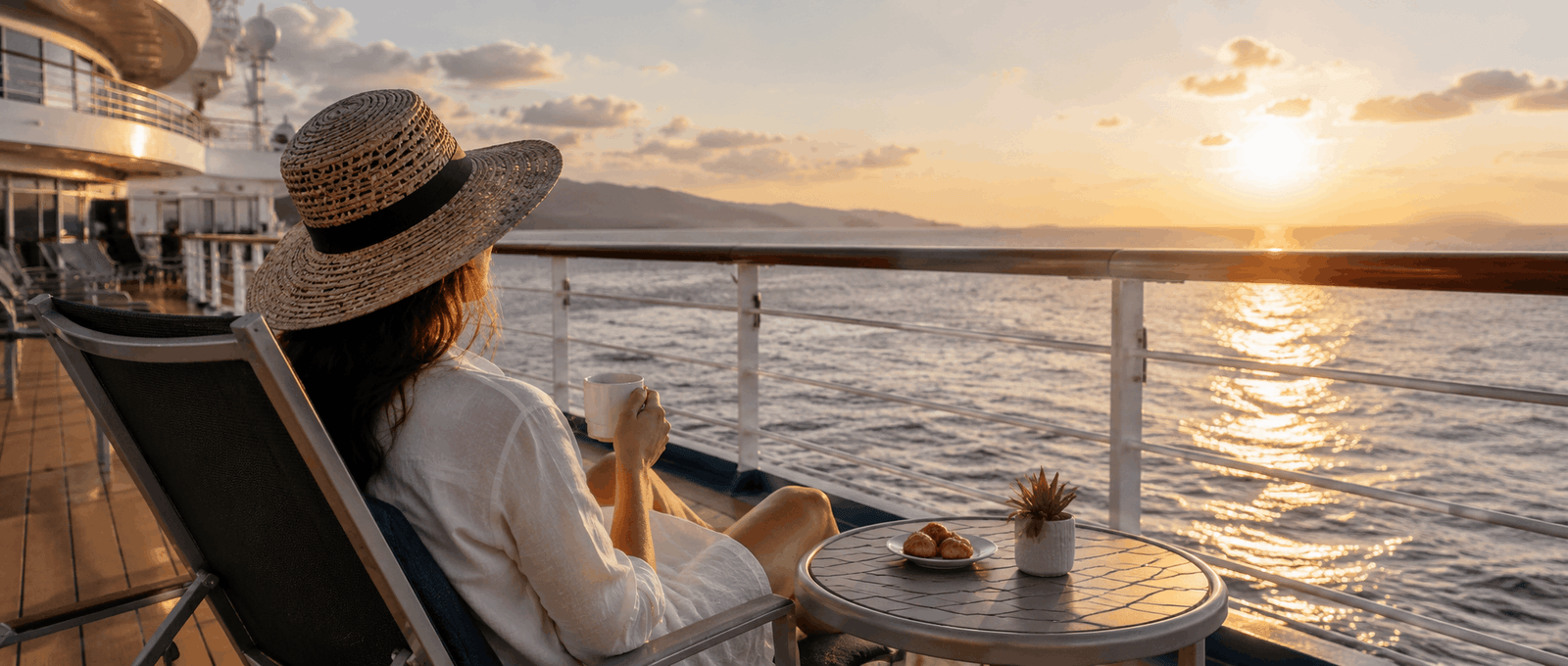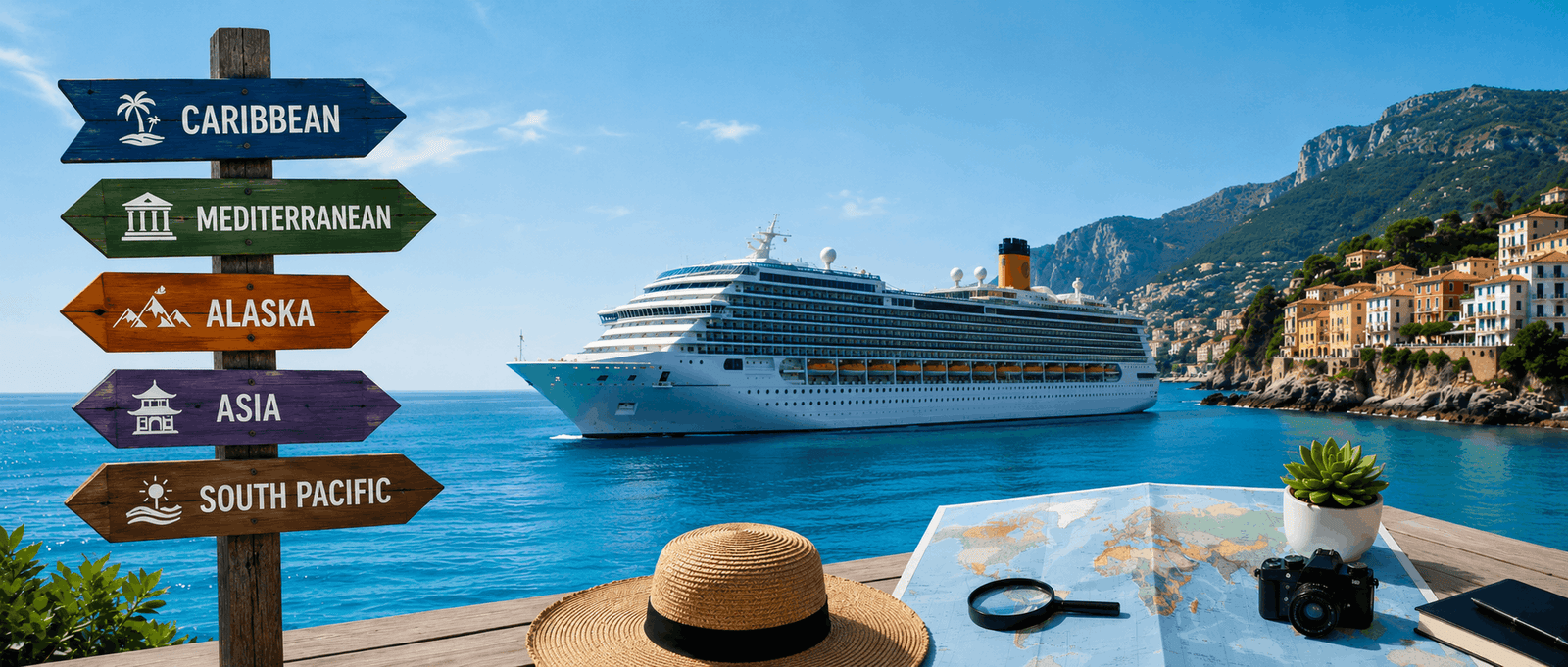
Introduction: The Loneliest Place on a Crowded Ship
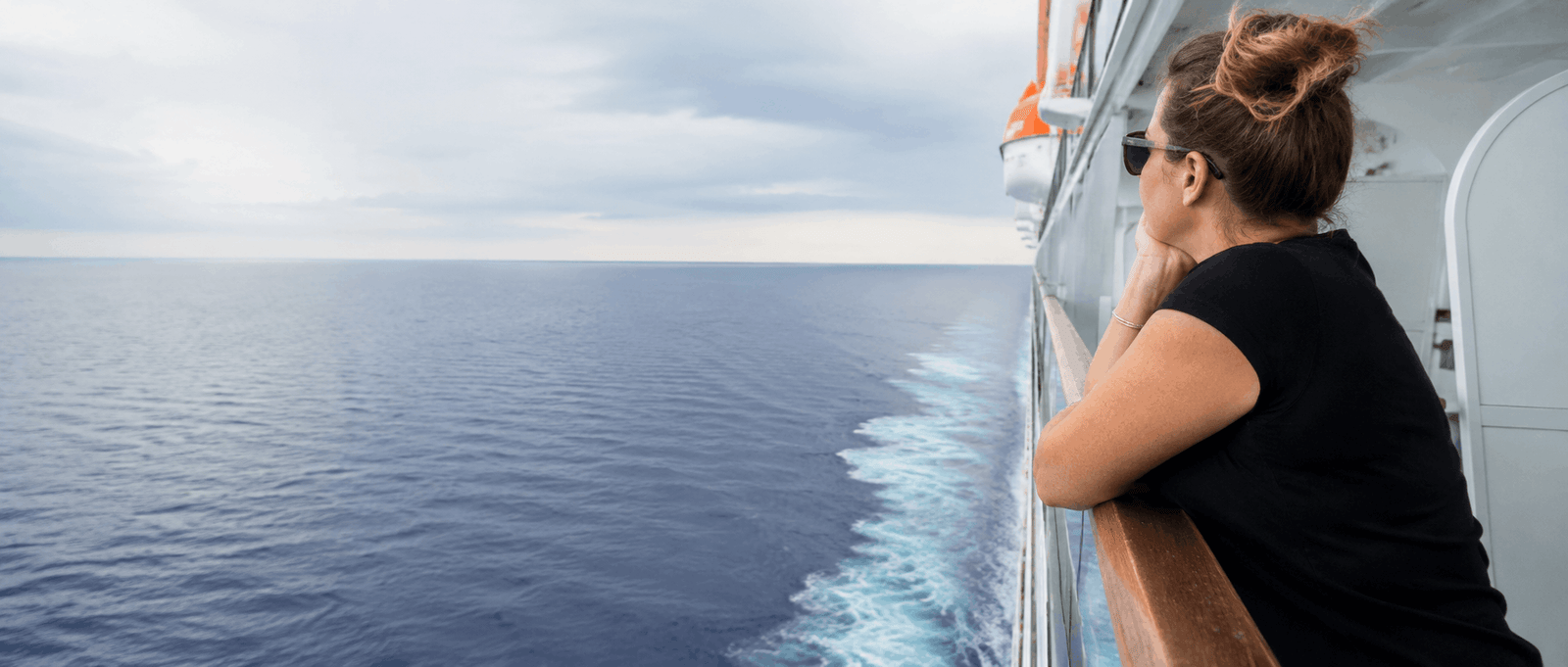
Picture the lido deck buffet at noon on a sea day. Every table is full. The queue stretches back to the elevator banks. Hundreds of voices overlap in a warm, sociable hum. And yet, for a significant number of the people in that room, the experience is quietly isolating. They are surrounded by thousands of fellow travelers. Not a single conversation has taken place since boarding yesterday. They will not speak to most of them before the ship docks.
That gap — between the social promise of a cruise and the reality of navigating one alone — is one of the most consistent and least-discussed problems in modern travel. Cruise ships are sold as communities. They arrive as logistical puzzles. The ship is vast. The schedule is full. The opportunities to meet people on a cruise exist in theory but rarely materialise in practice without deliberate effort.
The core problem is not a shortage of friendly people. Every cruise ship is full of travelers who would genuinely enjoy meeting someone compatible. The problem is structural. There is no reliable framework for identifying those people, connecting with them meaningfully, or building enough familiarity before embarkation day to make the onboard social experience feel easy. This guide addresses that structural problem directly — and explains what the solution actually looks like in 2025.
“The primary issue isn’t a lack of friendly people on board. The problem is the absence of an efficient framework to identify and organize those connections before the ship leaves port.”
What this guide covers: Why cruise ships create social distance despite physical proximity. Why onboard networking is harder than it looks. How traditional tools fail solo travelers. What genuine pre-sailing connection looks like. And how to build yours before your next departure.
The Paradox of the Floating City
On paper, a cruise ship seems like the ideal environment for building a social circle. You share a finite space with the same group of people for days at a time. Meals take place in the same restaurants. You watch the same entertainment. You pull into the same ports together. Every condition for community appears to be present. In practice, modern cruise ships are specifically designed in ways that work against the kind of organic social interaction that builds genuine cruise friends.
The scale is the first obstacle. A contemporary mega-ship carries five to seven thousand passengers across fifteen or twenty decks. Passengers disperse immediately after boarding. They move in rapidly shifting patterns — pool deck to spa to specialty restaurant to shore excursion departure lounge — with almost no reliable overlap. You might have a genuinely enjoyable conversation with someone near the hot tub on day two and simply never see them again for the remainder of the voyage. The ship is too large for random encounters to repeat reliably.
The schedule is the second obstacle. Between pre-booked shore excursions, dining reservations, spa appointments, fitness classes, and entertainment bookings, most passengers are locked into dense personal micro-itineraries. The windows of genuine unstructured social time are narrower than they appear from the outside. Crossing paths naturally with a potential cruise companion requires either extraordinary luck or the kind of structural pre-arrangement that most passengers have never been taught to pursue.
According to research from the Journal of Travel Research, solo travelers on large cruise ships report lower social satisfaction scores than solo travelers on smaller ships or land-based holidays — despite being surrounded by far more people. The paradox is real and well-documented. More passengers does not mean more connection. It often means the opposite.
The Anxiety of Onboard Networking
Even when the opportunity to meet someone presents itself, acting on it requires a level of social confidence that many travelers genuinely struggle with. Walking up to a stranger at a ship bar and starting a conversation requires courage. For introverted travelers — and research by the Myers-Briggs Foundation consistently estimates that introverts make up between 50 and 57 percent of the population — that kind of cold approach feels genuinely uncomfortable rather than simply unfamiliar.
The fear is not irrational. Onboard social interactions have a specific pressure that land-based socialising does not. On shore, a conversation that does not go well simply ends. On a ship, the person you awkwardly approached is at the next table at breakfast, in the elevator queue, and behind you at the excursion desk for the rest of the week. The cost of a failed social attempt is much higher in a contained environment. That reality makes many travelers — especially solo ones — far more cautious than they would otherwise be.
Cruise line-organised mixers were supposed to solve this problem. In practice, they rarely do. Most ship social events are structured around awkward icebreaker formats designed by committees rather than by social psychologists. They are frequently scheduled at times that clash with dinner reservations or evening entertainment. The atmosphere is often forced in a way that makes genuine relaxation impossible. Many travelers who attend one of these events report feeling more self-conscious afterward than they did before. The intention is good. The execution consistently falls short.
The result is that many passengers spend their entire voyage wishing they had a Cruise Friends while simultaneously being unable to create one from the available circumstances. They leave the ship with the faint sense that they missed something — a connection that was theoretically possible but practically just out of reach the entire time.
Why Traditional Tools Fail Solo Cruise Travelers
The standard advice for travelers trying to meet cruise travelers before departure has remained largely unchanged for a decade. Join the Facebook group for your sailing. Find the roll call thread on a cruise forum. Post an introduction and see what happens. Many solo travelers follow this advice. Most find it frustrating, ineffective, or both. Understanding specifically why these tools fail is the prerequisite for choosing something better.
The Disorganisation Problem
A Facebook group for a popular cruise line can contain members from hundreds of different sailings spread across multiple years. Finding people on your exact ship and departure date requires manually reading through posts and checking individual profiles one by one. There is no filtering by sailing date, no matching by interest, and no way to surface relevant connections automatically. The signal-to-noise ratio is poor enough that many travelers give up after twenty minutes of searching. According to the Nielsen Norman Group’s research on community usability, poor content filtering is the single most cited reason users abandon online communities without converting to active participation.
The Privacy Problem
Open social media groups require you to broadcast your travel plans to an unverified audience of thousands. Your sailing dates, ship name, cabin location, and home city are all potentially visible to anyone who can see the group. The UK Information Commissioner’s Office explicitly advises against sharing specific travel itineraries and departure dates on open social platforms, noting that this information is routinely collected for targeted phishing, identity fraud, and physical security risks. For solo travelers especially, that exposure is not a theoretical concern. It is a practical vulnerability.
The Verification Problem
General social networks offer no verification of identity or travel bookings. Anyone can join a cruise group and represent themselves as any kind of traveler. That anonymity makes it genuinely difficult to build the kind of trust that meaningful travel companionship requires. Before you agree to share a cabin with someone, share excursion plans, or commit to being dining companions for a week, you need a reasonable confidence that the person is who they say they are. Unverified platforms cannot provide that confidence. The absence of accountability slows or prevents genuine connection from forming.
The Coordination Problem
Even when a promising connection does form through a forum or social media group, sustaining and developing it is technically clunky. Forum threads move quickly and bury older posts. Private messages across multiple platforms are hard to track. Once the ship sails and Wi-Fi access becomes limited or expensive, maintaining contact through browser-based platforms becomes impractical. Travelers who managed to find a potential cruise meetup group before departure often lose track of each other in the coordination chaos of embarkation day itself.
The Case for Making Friends Before You Sail
The most effective way to eliminate onboard social anxiety is to make it unnecessary. When you make friends before sail dates, you board the ship with an established social foundation. You skip the awkward first-day introductions. The uncertainty about finding compatible people disappears as well. You arrive already knowing who you want to meet at the sailaway party and what you are doing for dinner on night one. That shift in starting position changes the entire emotional experience of the voyage.
The practical benefits compound quickly. Pre-arranged cruise friends groups can coordinate dining reservations together before the ship even departs. They can organise private shore excursions that are better, more flexible, and cheaper per person than ship-organised group tours. Two solo travelers who connected before sailing and agreed to share a cabin eliminate the single supplement fee that one of the most persistent financial penalties in the cruise industry imposes on independent travelers. According to Which? Travel, eliminating the single supplement is the highest-value cost reduction available to solo cruise travelers — often saving hundreds of pounds on a single voyage.
Beyond the practical gains, there is a psychological dimension that deserves acknowledgment. Humans are social creatures who are genuinely happier in the presence of compatible company than alone — even on holiday. A study in the Journal of Positive Psychology found that shared positive experiences produce significantly higher wellbeing scores than equivalent experiences had alone. A cruise ship is full of positive experiences waiting to happen. Having a confirmed cruise companion means all of them are shared experiences from the first day.
Pre-sailing connection also builds the kind of anticipation that enhances holiday enjoyment before departure. Looking forward to meeting specific people, planning shared activities, and exchanging excited messages in the weeks before boarding extends the pleasure of the trip well beyond the voyage itself. That extended enjoyment is free. It costs nothing beyond the time it takes to build the connection.
What a Dedicated Cruise Mate Finder Does Differently
Understanding why traditional tools fail makes it easier to appreciate what a purpose-built cruise mate finder offers instead. The differences are not cosmetic improvements to an existing approach. They are structural solutions to structural problems — each one targeting a specific failure mode that forums and social media groups cannot address because they were not designed with this use case in mind.
Sailing-Specific Matching From the Start
A dedicated Cruise Meetup Apps makes your specific sailing the foundation of your entire experience. Every person you see, every conversation you have, and every connection you make is with someone heading to the same ship on the same departure date. There is no irrelevant content from other sailings. There is no scrolling through announcements that have nothing to do with your voyage. The platform is not a general social space with a cruise filter applied. It is built around your sailing from the moment you create a profile. That focus alone makes it incomparably more efficient than any general network.
Verified Travelers, Not Anonymous Accounts
Booking verification raises the trust baseline for every interaction. When a cruise social app requires users to confirm their upcoming sailing details, every person you speak to is a real traveler with a real confirmed booking. You are not trying to assess the credibility of an anonymous profile. You are connecting with someone who has made the same concrete commitment you have. That shared stake in the voyage creates a starting point of mutual accountability that unverified platforms simply cannot replicate.
Private Communication That Protects You
Purpose-built platforms handle all communication within their own secure environment. You can build a full, genuine relationship with a potential cruise cabin mate or Cruise Friends group without sharing your phone number, email address, or personal social media profile. Your travel details are visible only to matched users within the platform — not to advertisers, data brokers, or the general public. The National Cyber Security Centre recommends exactly this model for online connections: communicate within a trusted platform environment until you have established sufficient trust to move to personal channels.
Interest-Based Filtering Beyond the Sailing
Sharing a sailing date is necessary but not sufficient for a good travel match. The best solo travel apps allow you to filter by travel style, age range, dining preferences, activity interests, and cabin-sharing intentions. Two people on the same ship with incompatible travel philosophies will not enjoy each other’s company regardless of their shared itinerary. Interest-based matching is what transforms find a cruise partner from a lottery into a genuine, repeatable process of finding compatible people.
This is precisely the problem that Seaya was built to solve. Seaya was designed from the beginning for cruise travelers who want private, purposeful pre-sailing connection. You create a profile tied to your actual sailing. The platform surfaces compatible passengers from the same ship and departure date. All communication happens within Seaya’s secure in-app environment. Your personal contact details remain entirely private until you choose to share them. There is no algorithmic interference, no advertising feed, and no unverified strangers browsing your holiday plans. Visit seaya to see how the sailing-specific matching works in practice.
How to Build Your Pre-Sailing Circle Effectively
Knowing which tools to use is only the first part of the answer. Getting real value from them requires consistent, intentional effort over the weeks before departure. The travelers who arrive at the port with confirmed cruise friends waiting for them share a specific set of habits. None of them require significant time investment. All of them pay back far more than they cost.
Build a Profile That Attracts the Right People
Vague profiles attract vague responses. A profile that says you enjoy travel and new experiences describes every user on every travel platform ever created. Be specific instead. Name the type of shore excursions you prefer. Describe your onboard rhythm — whether you are an early-morning fitness person or a slow-start sea day person, a specialty restaurant explorer or a main dining room regular. State clearly whether you are looking for a cruise cabin mate for cost-sharing, a dining companion group, or simply a broad social circle for activities. The more precisely you describe what you are looking for, the more likely you are to attract someone who is genuinely looking for the same thing. Specific profiles are not just more attractive — they are more efficient filters.
Start Early and Engage Consistently
The best pre-cruise friendships develop over weeks, not days. Travelers who begin connecting two or three months before departure have time to build genuine rapport. By embarkation day, the people they have been messaging feel genuinely familiar rather than tentatively known. Check in a couple of times a week. Share something interesting about the itinerary. Ask questions about ports your contact has visited before. Mention an excursion you are considering and ask if they have any thoughts. That rhythm of consistent, genuine exchange is what converts an initial message into a relationship worth having for a week at sea.
Use Roll Calls as a Secondary Discovery Tool
Traditional roll calls on Cruise Critic are not the primary tool for effective pre-sailing connection. But they serve a useful supporting role as a discovery mechanism. Posting a brief introduction on your sailing’s roll call thread signals availability and intent to a broad audience. When a promising response appears, move that conversation quickly to a dedicated platform where it can develop in a verified, private environment. Use roll calls to cast a wide net. Use a purpose-built cruise app to provide the quality filter that roll calls lack.
Arrange a Video Call Before Any Commitment
Before confirming any cabin-sharing arrangement or pre-booked group experience with someone you have met online, arrange at least one video call. This step is non-negotiable. A video call confirms identity, reveals conversational energy, and gives you a genuine sense of whether the connection will work in person. It costs fifteen minutes and provides the most reliable compatibility signal available before embarkation day. If a potential Cruise Friends declines a video call without a clear reason, that response is itself useful information worth acting on.
What Strong Pre-Sailing Connections Actually Unlock
Pre-arranged Cruise Friends deliver benefits that extend well beyond simply having someone to sit with at dinner. The full value of a confirmed pre-sailing circle reveals itself across every dimension of the voyage — financial, social, practical, and emotional.
Shore Excursion Access
Private port tours almost always outperform ship-organised group excursions. They are more flexible, more attentive to your specific interests, and more responsive to how the day is actually unfolding. But most private guides require a minimum booking of two to four passengers. A confirmed cruise companion makes those better experiences accessible. According to Lonely Planet’s cruise destination guides, private port excursions with groups of two to four cost an average of 30 to 40 percent less per person than equivalent ship-organised tours on the same itinerary. The savings compound significantly across a multi-port voyage.
Cabin Cost Elimination
For solo travelers who find a cruise cabin mate before sailing, the financial relief is immediate and substantial. The single supplement — which can add 50 to 100 percent to the base cabin fare on most lines — disappears entirely when two compatible solo travelers split a double-occupancy cabin. The money freed up is meaningful enough to fund specialty dining, premium excursions, or a significantly better cabin category on the same sailing.
Social Confidence From Embarkation Day
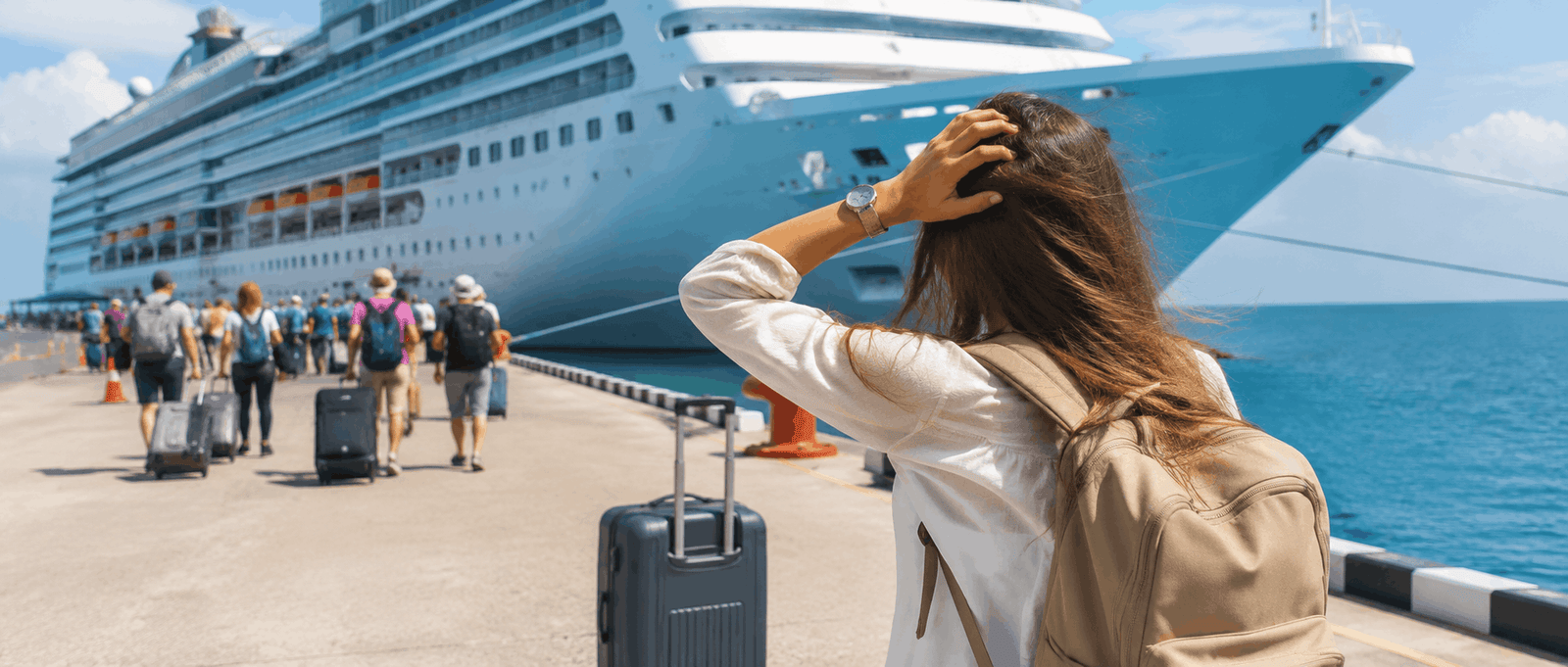
Perhaps the least-discussed benefit of pre-arranged cruise friends connections is the confidence they provide from the moment you board. Solo travelers who arrive with confirmed companions are consistently more adventurous, more engaged with onboard programming, and more satisfied with their overall experience than those who arrive alone. The social anxiety of embarkation day — which is real and well-documented among solo cruise travelers — largely disappears when you already know who you are meeting and when. That shift in starting position changes how the entire voyage feels from the first afternoon.
What To Do If You Arrive Without Pre-Arranged Connections
Pre-sailing connection is the most effective strategy. It is not always possible. A last-minute booking, a hectic pre-departure period, or a connection that simply did not develop in time can all mean boarding without confirmed companions. That is not a failed outcome. Ships are among the most socially accessible environments in leisure travel. The right approach from day one consistently produces meaningful connections even without preparation.
Attend the Solo Traveler Mixer Early
Most major cruise lines now host dedicated gatherings for solo and unattached passengers in the first day or two of the voyage. These events exist because cruise lines understand the solo traveler experience and recognize the demand. Attending one of these early gatherings puts you in a room of people who are all in precisely the same social position as you. The shared context does the social heavy lifting. According to CLIA’s annual passenger satisfaction data, solo mixer events are among the highest-rated programming additions on ships that offer them. If your ship runs one, treat it as a priority rather than an optional extra.
Request a Shared Dining Table on Night One
Asking for a shared table in the main dining room on the first evening is one of the most reliable social investments available to a solo traveler. You will see the same people across multiple evenings. Conversation deepens naturally over repeated shared meals in a way that no single activity onboard can replicate. Many lasting cruise friends relationships that began at a shared dining table on night one have continued across multiple voyages. Even on ships with fully flexible dining, positioning yourself at a bar with a relaxed, open presence produces conversations more reliably than most travelers expect.
Key Takeaways
The difficulty of finding cruise friends is structural, not personal. Ship scale, packed schedules, social anxiety, and the inadequacy of traditional tools all contribute to a gap between the social promise of cruising and the reality many solo travelers experience. Understanding that the problem is structural is the prerequisite for solving it effectively rather than simply hoping for better luck next time.
Making connections before departure consistently produces better outcomes than waiting to build them onboard. Pre-arranged cruise companions reduce social anxiety, enable better excursion planning, eliminate supplement costs, and produce higher overall satisfaction scores. The investment required is modest. The return is significant. A profile, consistent engagement, and a fifteen-minute video call are enough to transform a solo voyage into a genuinely social one.
Purpose-built solo travel apps designed for cruise connection address the specific failures of forums and social media groups — disorganisation, privacy risks, unverified identities, and poor coordination tools. A good cruise social app provides sailing-specific matching, verified profiles, private in-platform communication, and interest-based filtering. These are not luxury additions. They are the baseline requirements for a pre-sailing connection experience that reliably works.
Conclusion: The Framework That Was Missing Is Now Available
Finding genuine Best Apps to Meet Cruise Friends has been harder than it should be for a specific, diagnosable reason. The framework for identifying and connecting with compatible fellow travelers before departure has simply not existed in any usable form. Forums were too disorganised. Social media was too public. Onboard networking was too anxiety-inducing. The opportunity was always present. The infrastructure to capture it was not.
That has changed. Dedicated platforms built specifically for cruise social connection now provide everything that forums and Facebook groups cannot: sailing-specific matching, identity verification, private communication, and interest-based filtering. The gap between wanting to meet cruise travelers and actually doing it successfully has narrowed to a question of which tool you choose and how consistently you use it.
Platforms like Seaya represent what pre-sailing social planning looks like when it is designed around the traveler’s actual needs. Create a profile and browse passengers on your specific sailing. From there, you can connect privately, at your own pace, with people who share your travel style. By embarkation day, you may already have confirmed cruise buddies, a dining circle arranged, and perhaps even a cruise cabin mate who has helped halve the supplement cost. The voyage starts differently when you board with people already looking for you.
Head to seaya.io today. Create your profile. Search your specific sailing. Send your first message. The framework that was missing is now available. Your cruise companion is already there, planning the same voyage, hoping for exactly the same thing you came here to find.

For Christian, Seaya is the culmination of a career-long obsession with innovation. By leveraging his deep technical expertise to dismantle legacy constraints, Christian is transforming the way travelers connect at sea. He is dedicated to keeping Seaya at the vanguard of the “what’s next,” proving that the most powerful innovations happen when world-class tech meets a completely new frontier.
SUBSCRIBE NOW
Your Next Cruise Adventure Awaits
- News & articles
Related Blog