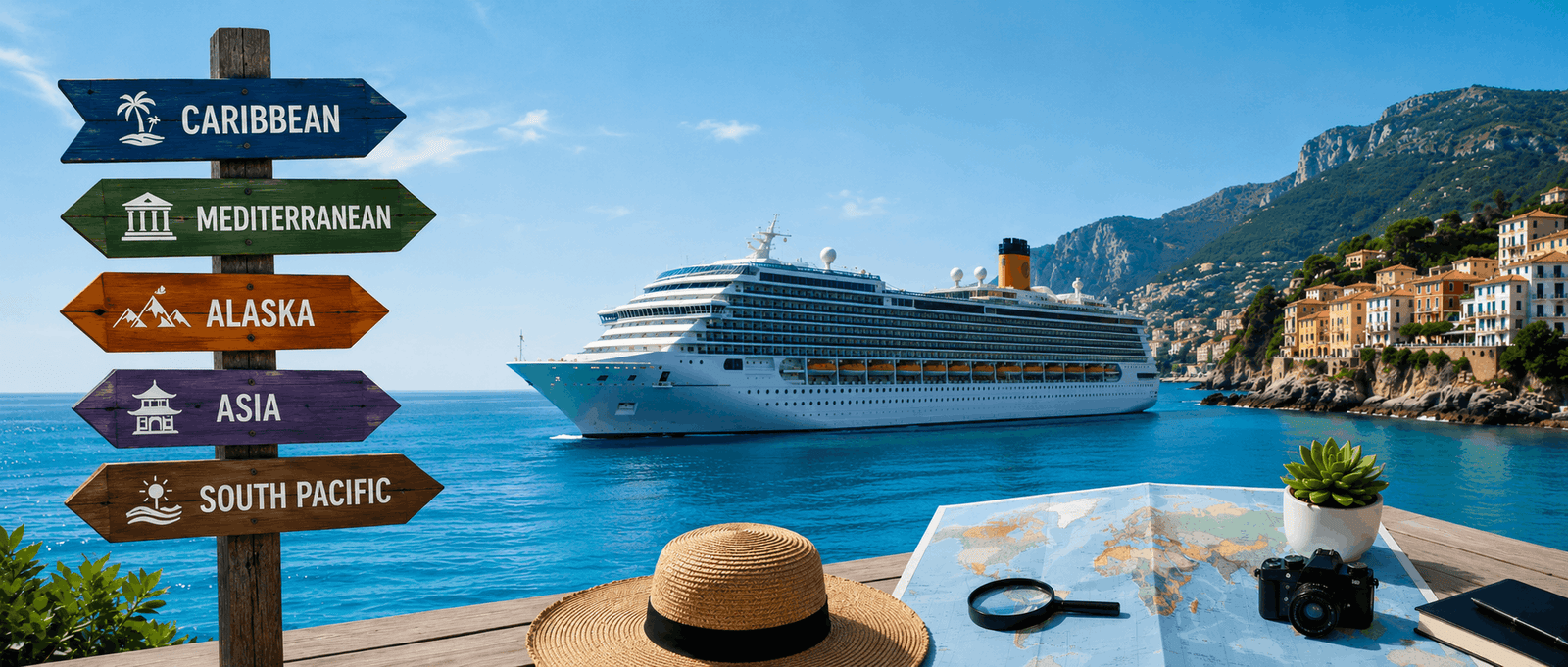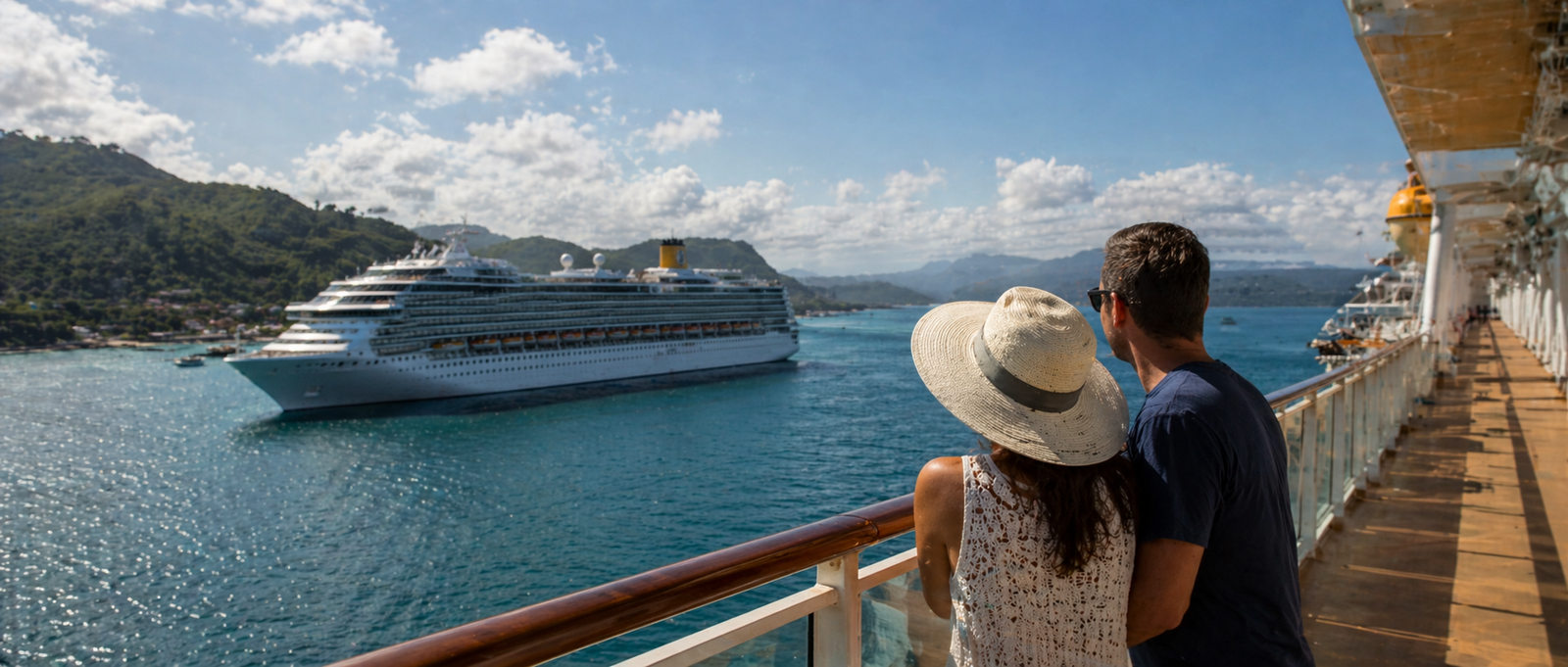
Every year, millions of people stare at the same decision: book the cruise or scroll past the ad. The pictures always look perfect — sun-drenched decks, turquoise water, couples laughing over dinner with strangers who somehow became friends by day three. But travel photography is a sales pitch, not a promise, and anyone who has done serious research quickly discovers that opinions on cruising are sharply divide that is a cruise worth it or not.
The truth sits somewhere in the middle — and that is exactly where this guide lives. We have pulled together real perspectives, practical cruise tips, current industry data. A clear-eyed look at what cruise trips actually deliver so you can make an informed choice rather than a hopeful one. Whether you are a first-timer weighing your options or a solo traveller wondering how to meet people on a cruise, read on.
2026 Cruise Industry Update: According to CLIA’s 2026 State of the Cruise Industry report, a record-breaking 37.2 million passengers sailed in 2025 — a 7.5% jump from the year before. Nearly 90% said they plan to cruise again.
What Actually Makes a Cruise Worth It
Let’s start with the strongest argument in cruising’s favor: the all-in-one convenience. When you board a ship, you are stepping into a floating hotel that moves while you sleep. Your accommodation, meals, entertainment, and transportation between destinations are bundle into one price. For anyone who has spent a European vacation wrestling with train schedules, hotel check-ins, and restaurant reservations across five cities. The appeal of unpacking once and waking up somewhere new is immediately obvious.
Beyond logistics, there is the sheer range of what modern ships offer. Today’s vessels are engineering achievements in their own right — you can find Broadway-calibre shows, gravity-defying water slides, rock-climbing walls, expansive spa facilities, and adults-only rooftop lounges all on the same ship. The options have grown so dramatically that deciding what to do on a cruise ship has become one of the more pleasant planning challenges a traveller can have.
The destination variety is another legitimate selling point. You might spend a morning exploring Mayan ruins in Cozumel and spend the afternoon in a hot tub watching the coastline of Mexico blur into open sea. That kind of variety, covering multiple countries in a single week without once booking a flight, is something traditional travel simply cannot replicate at the same price point.
Is a Cruise Worth the Money? Breaking Down the Real Cost
When people ask whether a cruise is worth the money, the honest answer is: it depends on what you compare it to. Stacked against a traditional multi-city trip — flights, hotels, restaurant bills, local transport — a cruise often comes out ahead on cost per day. Your lodging moves with you, breakfast through dinner is included in most standard packages, and the onboard entertainment is free.
Where new cruisers get caught off-guard is the extras. Specialty dining restaurants, premium Wi-Fi packages, shore excursions, spa treatments, and gratuities are typically not included in the base fare. These add-ons can meaningfully inflate your final bill if you’re not tracking them. The savvy move is to decide before you board which extras actually matter to you and which ones you can skip. A resource like Cruise Critic is useful for staying up to date on which fees are standard and which ones you can avoid with a little planning.
One area worth specific attention: Wi-Fi. Connectivity at sea has improved, but it remains slower and more expensive than what most travelers expect. If staying online is non-negotiable for you — for work, family communication, or social media — factor in the cost of an internet package before you book, not after.
What to Do on a Cruise: More Than You Can Fit in a Week
A recurring question from first-timers is simple: what to do on a cruise? The better question is usually what to do first, because the sheer volume of cruise activities available on a modern ship quickly becomes the challenge rather than the lack of options.
On sea days, the upper decks come alive. Pool parties, live music, cooking demonstrations, trivia contests, fitness classes, and gaming tournaments fill schedules that are post each evening for the next day. At port, shore excursions run from cultural and historical tours to adventure activities like zip-lining, snorkeling, and jeep safaris. Many experienced cruisers book a mix of organized excursions for efficiency and independent exploration for authenticity.
Evenings bring a different energy. Dinner in the main dining room, a show at the theater, or a quiet hour at the piano bar — the rhythm of life at sea has a way of slowing you down in the best possible sense. The key piece of cruise advice here: do not try to do everything. The travelers who burn out on day three are the ones who treated the activity schedule like a checklist.
How to Meet People on a Cruise (And Why It Matters More Than You Think)
Here is something that surprises most people when they return from their first cruise: the friendships. Not the ship, not the destinations, not the food — the people. There is a psychological shift that happens when a few thousand strangers realize they are on the same journey together. Social barriers drop faster at sea than almost anywhere else in travel.
That said, it does not happen by accident. The travelers who build real cruise friendships tend to be the ones who show up — for dinner at a shared table, for the trivia night, for the spontaneous conversation at the railing with the couple from a city you’ve never visited. Connection on a cruise is available to anyone willing to put down their phone and lean into the moment.
For solo travelers in particular, the social environment is one of cruising’s strongest arguments. The floating city format means you are never truly isolate — there is always someone to talk to, always an activity to join, always a corner of the ship where you can either connect or decompress. Solo cruising has also grown substantially as a segment: cruise lines have added dedicated single cabins and reduced single supplements, making it a more practical option than it was five years ago.
One practical tip worth mentioning: the window before boarding has become just as important as the cruise itself when it comes to social connections. Platforms like Seaya let you connect with fellow passengers before you even reach the gangway — finding gym partners, foodie companions for specialty dining nights, or a small group to share a private shore excursion. It takes the cold-start awkwardness out of the first day and means you step onboard with a familiar face or two already in your contacts.
Are Cruises Fun or Boring? The Honest Answer
It is one of the most commonly search questions about cruise trips, and the answer is genuinely personal: both are possible on the exact same ship, sailing the exact same itinerary, in the same week.
A cruise is fun when you engage with it — when you say yes to the cooking class, when you strike up a conversation at the bar, when you pick a shore excursion that genuinely interests you rather than the most popular one on the list. It can feel repetitive and flat if you spend your days passively waiting for something interesting to happen. The ship will not entertain you; it will give you the tools to entertain yourself.
The travelers who come back underwhelmed are usually those who expected the experience to unfold around them. The ones who come back booking their next sailing within hours of disembarking are the ones who treated the ship as a platform rather than a destination.
The Real Downsides of Cruise Trips (That Most Guides Gloss Over)
No honest cruise guide skips this section. There are real drawbacks to cruise travel, and pretending otherwise would be a disservice.
Crowds on popular sea days. Large ships carry thousands of passengers. Pool decks, buffet areas, and tender queues at popular ports can get genuinely overwhelming during peak periods. Learning the ship’s rhythm — when crowds thin out, where the quieter corners are — is something experience cruisers develop over trips.
Limited time in port. Most itineraries give you six to eight hours in each destination before the ship pulls anchor. For travelers who want to genuinely immerse themselves in a place, that is not enough time. A cruise works best as a sampler — a reason to discover which places deserve a longer trip on their own.
Fixed schedules. The ship sails when it sails. If you’re someone who travels spontaneously — deciding over breakfast to stay an extra day somewhere because the place moved you — a cruise will feel restrictive. The itinerary is set, and the ship will leave without you.
Hidden costs. As covered above, the all-inclusive label is a partial truth. Budget for gratuities, beverages, specialty dining, and any excursions you want to book independently.
Environmental considerations. Large ships have a real environmental footprint. The industry is actively investing in alternative fuels — according to CLIA, 65% of vessels entering service in the near term will be powered by LNG or other alternatives — but if sustainability is a significant factor in your travel decisions, it is worth researching individual cruise lines’ commitments before booking.
Who Should Go on a Cruise — and Who Should Think Twice
Cruising tends to be an excellent fit for people who value convenience over control, variety over depth, and social energy over solitude. It suits families looking for something that genuinely works for a twelve-year-old and a sixty-year-old simultaneously. It suits couples who want structured romance with spontaneous moments built in. And, perhaps most surprisingly to first-timers, it suits solo travelers who want the structure of a planned trip without the isolation of solo hotel stays.
Cruising is probably not the right call for travelers who dislike crowds, need deep immersion in a single culture, require full schedule autonomy, or feel strongly about low-impact travel. There is no shame in that recognition — knowing your travel style is how you stop spending money on trips that do not fit you.
Cruise Tips That Actually Make a Difference
Book early, not late. The best cabins and shore excursions go fast. Early booking also gives you more time to plan, research, and connect with fellow passengers before departure.
Match the ship to your personality. A 7,000-passenger mega-ship is a different world from a 500-guest boutique vessel. The former suits families and those who want non-stop energy; the latter suits travelers who want intimacy and destination focus. Research before you choose, not after.
Use pre-boarding platforms to break the ice. Apps like Seaya are built specifically for this — letting you find people who share your interests before the ship even leaves port. Whether you want a workout buddy, a wine-pairing dinner companion, or a small group for a private excursion, connecting ahead of time makes the first day significantly less awkward.
Plan your port days intentionally. Do not leave shore excursion decisions until you’re onboard. The ship’s excursions are convenient but priced at a premium. Independent operators often offer smaller groups and more authentic experiences at a lower cost — just ensure they guarantee to return you to port before the ship departs.
Find your quiet corners early. Every ship has spots that the crowd does not discover until day four. The aft deck, the library, the adults-only area, the forward observation lounge at dawn. Explore on day one and you will spend the rest of the voyage knowing exactly where to go when you need ten minutes of peace.
What’s New in the Cruise World in 2026
For those keeping an eye on the industry, 2026 is shaping up to be one of the most active years in recent memory. Fourteen new ships are entering service this year alone, adding over 33,000 berths globally. The lineup includes Disney Adventure, Norwegian Aqua, MSC World Asia, and the luxury Orient Express Corinthian — a sailing yacht that signals how far the high-end segment has evolved.
Destination-wise, Alaska is seeing a surge, with Princess Cruises and Holland America Line deploying record numbers of ships there in 2026. Winter Mediterranean sailings are expanding as well, with Silversea, Oceania, and Azamara all adding off-season itineraries. And cruise lines are doubling down on private island destinations — Royal Caribbean Group alone plans to operate more than eight exclusive ports globally. For more on where cruising is headed, some of the latest Cruise Industry News 2026 trends report is a worthwhile read.
Solo cruising is also having a genuine moment. Lines like Fred Olsen, Crystal, and Ambassador are now offering individually priced single cabins with no double-occupancy supplement, making cruise trips more accessible for independent travellers than ever before.
Final Verdict: Is a Cruise Worth It?
For most travelers, yes — with conditions. A cruise delivers genuine value when you approach it as an active participant rather than a passive passenger. The convenience is real, the variety is real, and the social environment is unlike anything you will find in a traditional hotel. But none of that translates automatically. The experience you get out of a cruise is largely proportional to what you put in.
Years from now, you probably won’t remember every meal you ate onboard. But you will remember the late-night conversation at the piano bar with someone who started the week as a complete stranger. You will remember the morning you stood on the bow as the ship glided into a harbor you had only ever seen in photographs. Those moments are what cruise trips, at their best, are actually selling.
If you’re ready to make those moments happen, start with a ship that fits your style, budget for the real costs, and — especially if you’re traveling solo — start building your crew before you board. Tools like Seaya exist precisely for this — to help you find your people before the gangway goes up. Because a cruise is not just a boat ride. It is, when done right, one of the most social and memorable ways to see the world.

For Christian, Seaya is the culmination of a career-long obsession with innovation. By leveraging his deep technical expertise to dismantle legacy constraints, Christian is transforming the way travelers connect at sea. He is dedicated to keeping Seaya at the vanguard of the “what’s next,” proving that the most powerful innovations happen when world-class tech meets a completely new frontier.
SUBSCRIBE NOW
Your Next Cruise Adventure Awaits
- News & articles
Related Blog