Stepping onto a cruise trip for the first time feels a bit like entering a floating city. Between the towering decks, the glittering pools, and the endless stretch of open ocean, it’s easy to feel a rush of excitement and a quiet voice asking: where do I even begin?
Whether you’re sailing through the Caribbean, exploring the Norwegian fjords, or watching glaciers calve off the Alaskan coast, a cruise offers something most other holidays can’t — a complete change of scenery every morning, with your room, your meals, and your community travelling right alongside you. But getting the most out of it takes a little planning.
This guide walks you through everything, from setting your budget to finding your people onboard. Consider it the resource you wish you’d had before you first set sail.
Step 1: Start with the Why
Before you open a single booking site, spend five minutes thinking about what you actually want from this trip. It sounds obvious, but it’s the question most first-timers skip — and then end up on the wrong ship wondering why they’re bored.
Are you chasing adventure — cliff-diving in Dubrovnik, zip-lining in Roatán, kayaking in Glacier Bay? Or is this trip about finally doing nothing, reading a book in the sun without a single notification? Maybe it’s somewhere in between: good food, new places, interesting conversations, and a couple of sea days to decompress.
Your answer shapes every decision that follows — destination, ship size, cabin type, and the kind of people you’ll want to sail with. Knowing it upfront saves a lot of second-guessing later.
Step 2: Choose Your Destination Thoughtfully
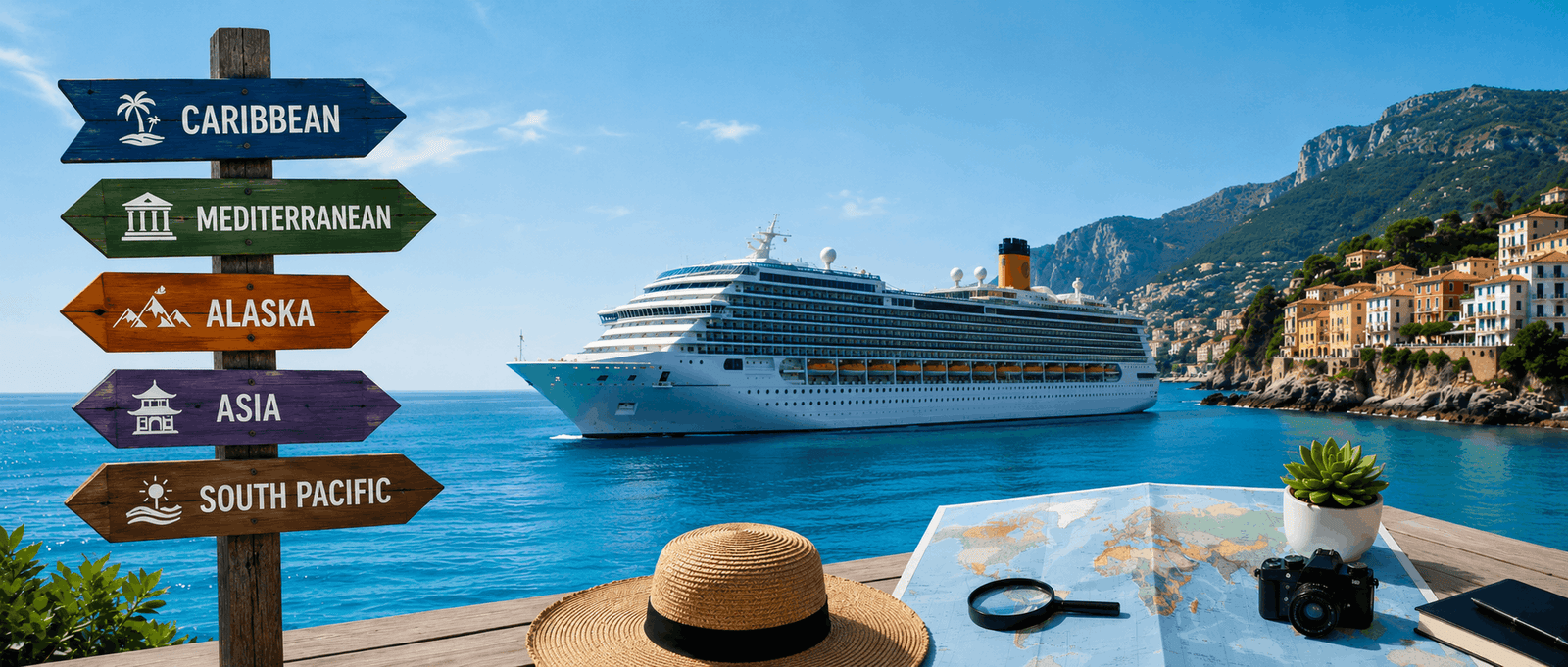
The destination is the soul of your cruise. A week in the Mediterranean feels nothing like a week in Alaska — and both are completely different from a transatlantic crossing or an island-hopping route through Southeast Asia.
The Caribbean remains the world’s most popular cruise destination for good reason. The water is warm, the ports are varied, and the infrastructure for tourists is well-established. If you’re new to cruising, this is a low-risk, high-reward starting point.
Europe offers something deeper — history layered on history in every port. A single itinerary might take you from the ancient streets of Athens to the canals of Venice to the Gothic spires of Dubrovnik. Shore days here often feel like standalone mini-trips.
Alaska is for those who want nature to overwhelm them. Bald eagles overhead, humpbacks breaching off the bow, and the eerie quiet of a glacier. It’s one of the few destinations where the journey genuinely competes with the ports.
Factor in the time of year, too. Caribbean hurricane season runs June through November. The Mediterranean is at its most crowded in July and August. Alaska’s season is compressed into May through September. Shoulder seasons often offer the best value and smaller crowds.
Step 3: Pick the Right Ship for You
Cruise ships vary so dramatically that calling them all ‘cruise ships’ barely makes sense. A 6,000-passenger mega-ship is a theme park resort at sea. A 200-passenger expedition vessel is closer to a sophisticated camping trip. The choice depends entirely on what you want your days to feel like.
Large ships (2,000+ passengers)
These are the giants you’ve seen in photos — multiple pools, a dozen restaurants, broadway-style shows, waterslides, ice rinks, surf simulators. If you travel with kids or want to never run out of things to do, this is your world. The flip side: popular spots can feel crowded, and ports where 5,000 passengers all disembark together can be overwhelming.
Mid-size ships (700–2,000 passengers)
Often considered the sweet spot. Enough amenities to keep you busy, small enough that you start recognising faces by day two. These ships tend to access more ports than the giants, and the overall feel is more relaxed.
Small ships and expedition vessels (under 700 passengers)
Intimacy is the selling point. You’ll likely know half the passengers by name within a few days. These ships reach places larger vessels can’t — remote fjords, untouched coastlines, polar regions. The trade-off is cost; smaller ships are almost always more expensive per night.
Step 4: Build a Realistic Budget
The headline cruise fare is rarely the whole story. Think of it as a base price — your accommodation, most meals, and entertainment — and then build out from there.
Here’s what often gets people:
- Shore excursions. Booking through the ship is convenient but expensive. Independent tours or self-guided days are almost always cheaper and often better.
- Drinks packages. If you drink, these often save money. Do the maths based on your actual habits, not optimistic ones.
- Wi-Fi. Rarely included and often priced at a premium. Download offline maps, podcasts, and shows before you board.
- Gratuities. Many lines add automatic service charges. Check whether these are included in your fare.
- Specialty dining. Steakhouses, sushi bars, and chef’s table experiences cost extra on most ships.
A rough rule of thumb: budget 30–50% on top of the headline fare to cover the extras comfortably. If you come in under that, great. If not, you won’t be caught short.
Step 5: Book at the Right Time
Cruise pricing is dynamic and can swing considerably. The general wisdom holds: book early for popular sailings in peak season, especially if you want a specific cabin category. Lines typically release their best cabin inventory first, and the most desirable rooms go fast.
If flexibility is your superpower, last-minute deals can be exceptional — sometimes 40–60% off the original fare as lines try to fill remaining cabins. The risk is you’ll have limited cabin choices and less time to arrange flights and visas.
Watch for ‘wave season’ — January through March — when cruise lines run their most aggressive promotions of the year, often bundling perks like free drinks packages, onboard credit, or complimentary gratuities.
Step 6: Sort Your Documents Early
This is the boring step that people put off and then panic about. Don’t.
Most cruises require a passport valid for at least six months beyond your return date. Some destinations require visas — and in the case of countries like Russia or India, the process takes time. Check every port on your itinerary, not just the country you depart from.
Travel insurance isn’t optional on a cruise. Medical evacuations at sea are extraordinarily expensive. Look for policies that specifically cover cruise disruptions — missed port departures, itinerary changes, and emergency medical evacuation.
Step 7: Pack with Intention
Packing for a cruise is slightly different from packing for a land holiday. You’ll need layers — it’s often windier on deck than you expect, and the onboard air conditioning runs cold. You’ll also likely need at least one formal or smart-casual outfit for dress-up nights, which most ships still observe.
Leave room for what you pick up along the way. Port shopping is half the fun in some destinations, and you’ll want space in your luggage for the things you didn’t know you needed until you saw them.
A few things first-timers consistently wish they’d packed: a reusable water bottle (ships charge for bottled water in some places), power strips with USB ports (cabins often have surprisingly few outlets), and a small day bag for port excursions.
Step 8: Make the Most of Life Onboard
Modern cruise ships are not the shuffleboard-and-bingo environments of a generation ago. Today’s vessels compete with the best resort hotels for activities, dining options, and entertainment — sometimes surpassing them.
On a sea day, you might start with a yoga class at sunrise, spend the morning at a cooking demonstration, grab a solo lunch at the sushi bar, then spend the afternoon at a trivia session or poolside before catching a live comedy show after dinner. The schedule is genuinely packed — the challenge is choosing, not finding something to do.
That said, it’s easy to overschedule yourself. Give yourself permission to simply sit somewhere beautiful and watch the ocean pass. Those unplanned hours often become the ones you remember most.
Step 9: Shore Excursions Done Right
This is where a cruise really earns its keep. Waking up to a new country out of your porthole, with the whole day to explore it, is something that never really gets old.
Ship-organized excursions offer one key advantage: if the tour runs late, the ship will wait for you. With independent travel, that guarantee disappears. If you’re visiting a tricky port or one where language barriers are significant, the convenience is worth the premium.
For simpler ports — especially those in the Caribbean or well-trodden European cities — going independently is often far more rewarding. You move at your own pace, eat where the locals eat, and avoid the crowds of fellow passengers all seeing the same thing at the same time.
One non-negotiable rule: whatever you do ashore, be back at the ship at least 30 minutes before departure. The gangway closes on time, and there are no exceptions.
Step 10: Embrace the Social Side — It’s One of the Best Parts
Here’s something that surprises most first-time cruisers: the people. Ships have a way of creating genuine connections that you just don’t get in a hotel or an Airbnb. You’re together for days, you keep running into each other at meals and on deck, and somewhere between the second sea day and the third port, strangers become friends.
The communal atmosphere is unlike anywhere else in travel. Dinner tables are often shared on many lines. Trivia nights, dance classes, and excursions all throw people together naturally. Don’t resist it.
That said, meeting the right people — ones who share your interests, travel at your pace, want to explore the same ports — is harder to leave to chance alone. That’s where Seaya app come in. Seaya was built specifically for the cruise community: it lets you connect with fellow passengers before you even board, so you can find travel companions for shore excursions, arrange group dinners, or simply know a few friendly faces before you set foot on the gangway.
It’s particularly useful for solo travellers, who often worry about the social dynamics of cruising. Rather than hoping to fall into a good group by luck, you can be intentional about it. Meet people on cruise before sailing the same itinerary, reach out in advance, and arrive already knowing someone.
The friendships that form on a cruise are often the part people talk about long after the tan has faded. A little intention goes a long way.
A Final Word Before You Set Sail
A cruise is not just a holiday — it’s a particular kind of experience that people tend to either fall completely in love with or quietly decide isn’t for them. Most fall in love.
The planning side of things can feel like a lot upfront, but once you’re onboard, it all melts away. You don’t need to think about where to sleep, where your next meal is coming from, or how to get to the next destination. It’s all handled. Your only job is to show up, stay curious, and say yes to things.
Seaya to find your people before you go, do a little homework on your ports, pack the extra layer you’ll definitely need on deck, and then let the sea do the rest.
First cruises have a way of becoming second cruises. And third ones. Fair warning.

For Christian, Seaya is the culmination of a career-long obsession with innovation. By leveraging his deep technical expertise to dismantle legacy constraints, Christian is transforming the way travelers connect at sea. He is dedicated to keeping Seaya at the vanguard of the “what’s next,” proving that the most powerful innovations happen when world-class tech meets a completely new frontier.
SUBSCRIBE NOW
Your Next Cruise Adventure Awaits
- News & articles
Related Blog