Cruising is one of the most exciting ways to travel — a floating vacation packed with new destinations, world-class entertainment, and more food than you’ll ever need. But for first-time cruisers, the experience can feel overwhelming if you’re not prepared. Many travellers spend months dreaming about their trip, only to realize on Day 2 that they’ve missed a booking window, packed the wrong essentials, or simply don’t know where to start socially.
The good news? Every one of these pitfalls is avoidable. With the right preparation, your first sailing can be smooth, social, and genuinely transformative. Here’s what to watch out for — and exactly how to handle it.
1. Flying In on Embarkation Day
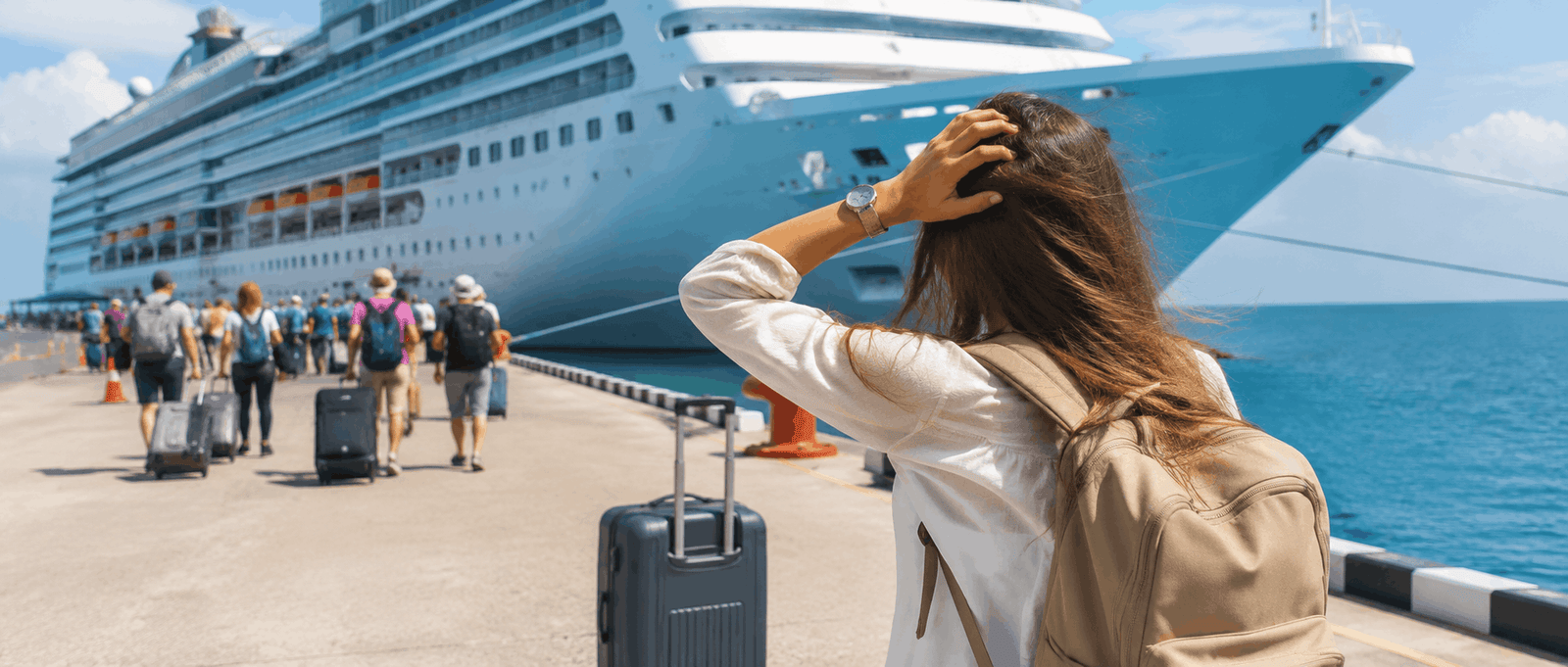
If there’s one mistake that can derail a vacation before it even starts, it’s booking your flight for the same morning the ship departs. Weather delays, mechanical issues, or a lost bag can turn a dream trip into a nightmare — and if you miss the ‘all aboard’ time, the ship will not wait.
Pro tip: Always arrive at your departure city at least one day early. Think of it as a free bonus travel day — you get to explore a new city, sleep well, and board feeling refreshed rather than frantic.
2. Ignoring Hidden Costs
Your cruise fare covers a lot, but it’s rarely truly all-inclusive. Gratuities, specialty dining, Wi-Fi packages, premium beverages, and shore excursions can add up fast — sometimes 30–50% on top of the base fare if you’re not careful.
Read the fine print before you sail. Many lines offer pre-cruise discounts on drink packages and excursions that disappear once you’re on board. Booking early saves real money.
Pro tip: Set a daily discretionary budget before you leave home. Knowing your limit prevents the unpleasant ‘final account’ shock on disembarkation morning.
3. Overpacking — or Forgetting the Day-One Bag
First-timers tend to pack their entire wardrobe ‘just in case.’ Modern ships are more casual than you might expect, though most have specific dress codes for Elegant Nights or themed events. A few versatile outfits go a long way.
What many people don’t think about: your large suitcases are often delivered to your cabin hours after you board. Without a small carry-on bag holding your swimsuit, sunscreen, medications, and a change of clothes, you’ll be stuck in your travel outfit while everyone else is already at the pool.
4. Skipping Travel Insurance
It’s easy to skip this one when you’re excited about booking. But a missed embarkation due to a flight delay, a medical issue at sea, or a cancelled port can cost thousands of dollars without coverage. Travel insurance is one of the simplest ways to protect your investment.
Pro tip: Look for a policy that includes trip interruption, emergency medical evacuation, and ‘cancel for any reason’ coverage — especially if you’re booking far in advance.
5. Missing Social Opportunities
A cruise is one of the most naturally social environments on the planet — hundreds of interesting people from around the world, all in the same floating neighborhood for a week. Yet many travelers spend the first few days feeling isolated, simply because they don’t know how to break the ice efficiently.
The traditional approach — hoping you sit next to someone interesting at dinner — works sometimes, but it’s not reliable. Joining a ‘Roll Call’ on cruise forums before you sail is a great start; it lets you connect with fellow passengers on your exact sailing and plan excursions or meetups in advance.
Apps designed specifically for cruise travel, like Seaya, take this a step further. Rather than leaving connections to chance, Seaya lets you find people who share your interests — whether you’re looking for a trivia partner, a gym buddy, or a group to share a private shore excursion — before the ship even leaves port. For solo travelers especially, having a few familiar faces on Day 1 transforms the whole experience.
6. Not Exploring the Ship Early
Many first-timers wander aimlessly for the first day or two, missing out on amenities they’ve already paid for. The spa, specialty restaurants, fitness classes, and entertainment bookings often fill up fast — sometimes within the first hour after boarding.
Pro tip: As soon as you board, do a quick lap of the ship. Find the dining venues, the pool decks, the entertainment desk, and any amenities that require reservations. Twenty minutes of orientation saves hours of frustration later.
7. Over-Scheduling Every Day
It’s tempting to book an excursion for every port and a show for every evening. This is a fast track to vacation burnout. The ship itself is the destination — the spa, the deck chairs, the sunset views — and sea days are when you actually get to enjoy it.
Leave at least one port day largely unplanned. Walk off the ship, wander local markets, find a beach on your own. The most memorable moments of a cruise are often the unscripted ones.
8. Staying Only Within Your Travel Bubble
Even if you’re traveling with a group, spending the entire week exclusively with the people you arrived with means missing half of what makes cruising special. The diversity of passengers on any given ship is remarkable — retirees, honeymooners, solo adventurers, families with kids from a dozen different countries.
Joining organized events, sitting at a shared dining table, or simply striking up a conversation at the bar can lead to friendships that outlast the trip. If you’re not sure where to start, activity-based meetups — trivia nights, cooking demos, group fitness classes — take the pressure off because the activity gives you something to talk about and you can meet people on cruise.
9. Not Understanding Ship Time vs. Local Time
This sounds minor. It isn’t. Ships often stay on ‘Ship Time’ — the time zone of the departure port — even when they cross into different time zones. If you rely on your phone’s automatic clock while exploring a port, you could believe you have an extra hour when the ship is actually pulling up the anchor.
Pro tip: Always double-check the ship’s daily newsletter (usually slipped under your cabin door each evening) for any time change instructions. Set a manual alarm, not a phone alarm, for your return time.
10. Planning a Family Cruise Without Research
A family cruise is a fantastic way to bond across generations — but not every ship suits every age group. Some vessels are essentially floating water parks built for teens; others focus on quiet luxury and fine dining that bored kids will suffer through.
Before booking, check Kids Club reviews specific to the ship (not just the line), look at the availability of connecting cabins or family suites, and verify that there are age-appropriate activities for every member of the group. A little research here saves a week of ‘I’m bored.’
11. Ignoring Health Basics
Seasickness catches many first-timers off guard — even people who never get motion sick on land. Pack preventative medication before you leave (it’s harder to find on board and expensive when you do). Ginger chews, acupressure wristbands, and prescription patches are all worth considering.
Norovirus outbreaks on ships are real but preventable. Wash your hands frequently, use the hand sanitizer stations posted at every restaurant entrance, and don’t share drinks or utensils with people you’ve just met. It sounds obvious, but in the excitement of a new environment, people forget.
Setting Sail with Confidence
The perfect cruise doesn’t exist, but a well-prepared one does. The ‘hardware’ of the ship — the waterslides, the food, the cabin — matters less than most people think. What you’ll actually remember, years later, are the people you met, the unexpected moments in a small port town, and the feeling of waking up somewhere new every morning.
Come prepared, stay flexible, and make a genuine effort to connect — whether that’s joining a Roll Call before you sail, signing up for a group activity on board, or using a tool like Seaya to find like-minded travellers ahead of time. Approach the experience with an open mind, and your first cruise will almost certainly not be your last.
For the latest cruise updates and expert insights, visit Cruise Industry News.

For Christian, Seaya is the culmination of a career-long obsession with innovation. By leveraging his deep technical expertise to dismantle legacy constraints, Christian is transforming the way travelers connect at sea. He is dedicated to keeping Seaya at the vanguard of the “what’s next,” proving that the most powerful innovations happen when world-class tech meets a completely new frontier.
SUBSCRIBE NOW
Your Next Cruise Adventure Awaits
- News & articles
Related Blog