Key Takeaways
- Cruise friends are fellow passengers you connect with during a sailing and often stay in touch with afterward, and they tend to form faster than friendships on land because you keep running into the same people.
- Repeated interaction, not one long conversation, is what usually turns a friendly chat into a real cruise friendship.
- Shared interests — dining, fitness, entertainment, excursions — create more natural and longer-lasting connections than random proximity alone.
- Solo travelers, couples, families, and groups all socialize differently on a cruise, so what works for one traveler type won’t necessarily work for another.
- Connecting with fellow passengers before departure, through a cruise-specific app like Seaya, can make onboard socializing feel easier rather than replacing it.
- Cruise friendships that last usually involve a small, intentional follow-up soon after disembarking, rather than being left to chance.
Cruise friends are the people you meet on a sailing who turn a vacation into a shared experience — the ones you end up saving a lounge chair for, texting a year later, or booking your next cruise around. They matter because cruising is one of the few trips where you spend a week with the same few thousand people, which makes real connection easier to build than almost anywhere else.
What Are Cruise Friends?
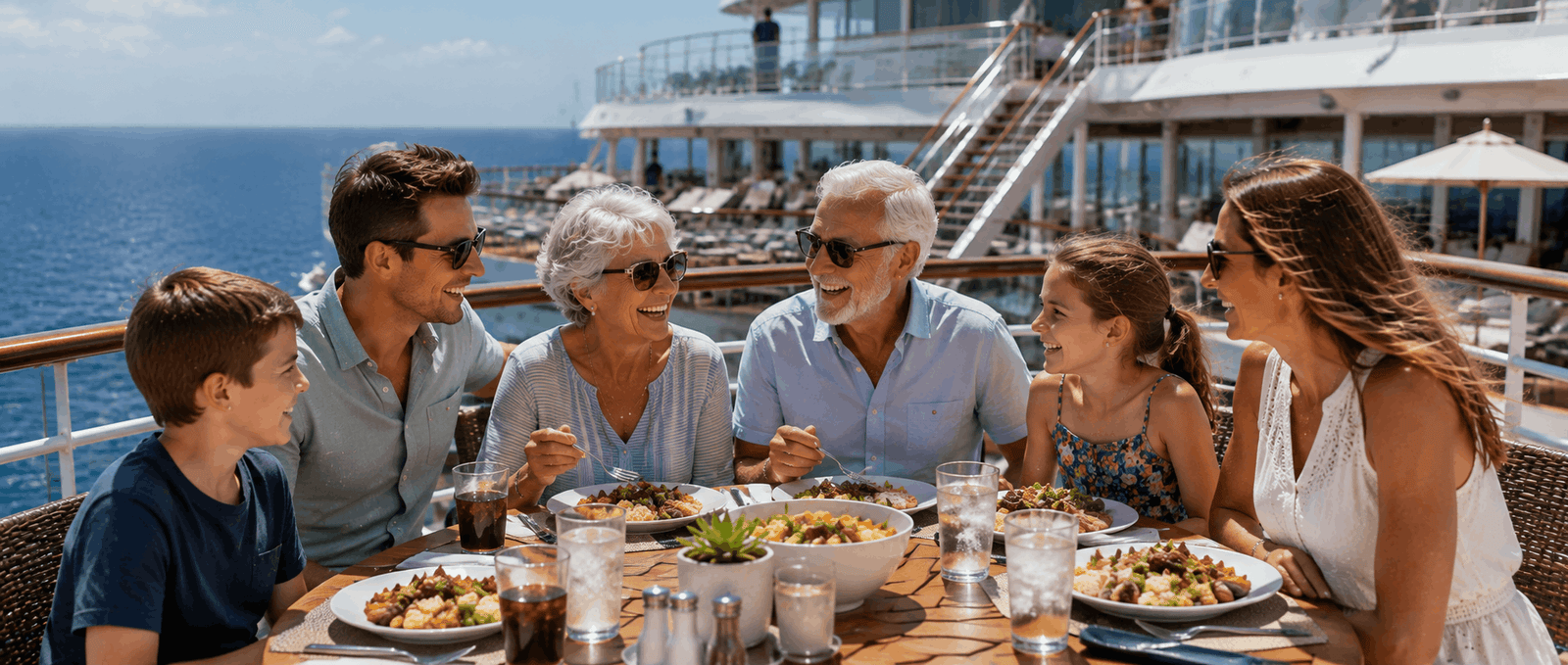
Cruise friends are fellow passengers you connect with during a sailing — through repeated conversations, shared activities, or common interests — and stay in touch with beyond the trip. The relationship usually starts small: a chat at the pool, a shared table at dinner, a trivia team formed on day two.
What separates cruise friendships from a typical vacation interaction is repetition. On a week-long land trip, you might meet someone once and never see them again. On a ship, you keep bumping into the same people at the same bar, the same fitness class, the same excursion meeting point. That repetition is what turns a pleasant exchange into an actual friendship.
Why Do Cruise Friends Make a Cruise More Social?
Having cruise friends changes the texture of the whole trip, not just one afternoon. Meals feel different when you’re sharing a table with people you like instead of eating alone or with strangers who don’t say much. Excursions feel different when there’s someone to split a cab with in port or laugh with over a bad snorkeling guide.
A cruise without any social connection can start to feel isolating, even with thousands of people aboard. Big ships are full of strangers moving past each other — the pool deck, the buffet line, the theater — and it’s entirely possible to spend a week surrounded by people and still feel alone. Cruise friends solve that by giving you a reason to look forward to dinner, a familiar face at the gym, and someone to share the memory with afterward instead of just a photo on your phone.
There’s also a practical layer to it. Fellow passengers become people to split specialty dining reservations with, trade excursion tips with, or team up with for game shows and trivia. None of that requires a deep friendship — it just requires a few names and faces you recognize by day three.
What Makes It Easier to Make Cruise Friends?
A few conditions make cruise friendships form faster than friendships on land, and understanding them helps you lean into what actually works instead of waiting for something to happen on its own.
You’re already on the same sailing. That single fact does more work than people give it credit for. Everyone aboard chose the same ship, the same dates, and often the same itinerary, which means you already share a starting point for conversation without needing to explain your entire trip.
Shared activities remove the pressure of small talk. It’s easier to talk to someone while you’re both doing trivia, taking a cooking class, or standing in line for a water slide than it is to walk up and introduce yourself cold. The activity gives you something to talk about besides yourselves.
Repeated interaction builds familiarity fast. Seeing the same person at the same pool bar or the same evening show three nights in a row does more for a friendship than one long conversation on night one. Familiarity lowers the barrier to saying hello again.
Similar travel style and pace matter more than age. Two 60-year-olds who want to spend the whole cruise reading by the pool won’t necessarily click, but a 28-year-old and a 55-year-old who both want to hit every port and try every specialty restaurant often will. Lifestyle compatibility tends to predict a good cruise friendship better than demographics alone.
Where Do Cruise Friendships Usually Start?
Cruise friendships tend to start in places where people are already occupied with something else, because that removes the awkwardness of approaching a stranger with nothing to say.
Pools and lounges work because people are relaxed and stationary for long stretches, which naturally invites conversation with whoever’s nearby.
Fitness classes and wellness activities create a shared effort — finishing a spin class or a yoga session together gives people an easy, low-stakes reason to talk afterward.
Dining, especially shared or communal tables, forces sustained conversation over 30 to 60 minutes, which is often enough time for a real connection to form.
Entertainment venues, like trivia nights, game shows, or comedy clubs, put people in the same room with a shared reaction — laughing at the same joke or competing on the same team does a lot of the social work for you.
Group excursions put a small number of people together for hours in an unfamiliar setting, which tends to produce more genuine conversation than anything happening back on the ship.
The common thread across all of these spots isn’t the location — it’s that people have a reason to be there other than meeting someone. That’s what makes the conversation feel natural instead of forced.
How Can You Make Your Cruise More Social?
Making a cruise more social isn’t about becoming a different, more outgoing version of yourself for a week. It’s about choosing habits that put you in situations where connection happens on its own.
- Pick activities based on genuine interest, not obligation. You’ll meet people more naturally at a wine tasting or a dance class you actually want to attend than at something you signed up for just to “be social.”
- Say yes to the second conversation. The first “hi” at the pool rarely turns into a friendship. It’s the second or third run-in — recognizing a face, remembering a name — where things actually develop.
- Return to the same spots at the same times. Sitting at the same bar for the sail-away or hitting the gym at the same hour each morning increases the odds you’ll see familiar faces again.
- Extend a low-pressure invitation. “We’re doing trivia at 7, come join us” is easier to say yes to than “let’s be friends,” and it often leads to the same outcome.
- Be the one who remembers names. Small as it sounds, using someone’s name the second time you see them signals that the interaction mattered to you.
- Don’t force it. Not every conversation needs to become a friendship, and treating every fellow passenger as a potential best friend can come across as intense rather than warm.
How Cruise Friends Can Make Different Types of Cruises Better
Social needs on a cruise aren’t the same for everyone, and pretending they are misses how differently people actually experience a sailing.
Solo Cruisers
For solo travelers, cruise friends often make the difference between a trip that feels adventurous and one that feels lonely. Dining alone every night or wandering a port without company can wear on a person by day four, even for people who genuinely enjoy solo travel. A few familiar faces to grab dinner with or explore a port alongside can reshape the entire week without requiring a travel companion from day one.
Couples
Couples don’t need cruise friends to have a good trip, but the right ones can add a layer the vacation wouldn’t otherwise have — a second couple to share a specialty dinner with, split an excursion cost with, or simply laugh with over cocktails. It also gives each partner something to talk about besides just each other for a week.
Families
For families, cruise friends often form through the kids first. Parents get to know each other while their children play in the kids’ club or splash around the same pool area, and those parent-to-parent conversations can turn into dinner plans or coordinated excursions. It also gives kids a social outlet of their own, which takes some pressure off parents to be the sole source of entertainment. Family cruising remains a major driver of the industry, with roughly one-third of sailings now involving multiple generations sailing together, according to CLIA’s 2026 State of the Cruise Industry Report.
Friends Traveling Together
Groups of friends already have their built-in social circle, but the most memorable cruises often happen when that circle expands to include people met along the way. A shared table at dinner or a spontaneous excursion invite can fold new people into a group’s dynamic without changing the trip they planned.
How to Find Cruise Friends With Similar Interests
Random proximity can produce a fine conversation, but shared interests produce friendships that actually last. Someone who loves the same kind of live music, food, or excursion style as you gives the friendship something to build on beyond “we happened to be on the same ship.”
Think about the interests that already shape how you travel: food and specialty dining, live entertainment and nightlife, fitness and wellness, photography, adventure excursions like snorkeling or hiking, or simply relaxing by the pool with a book. People who share those specific interests tend to keep running into each other at the same activities anyway, which naturally increases the number of times you cross paths.
This is also where a cruise-specific social app becomes genuinely useful rather than just convenient. Instead of relying on chance encounters to find someone who loves the same excursions or dining style as you, you can identify shared interests ahead of time and know who to look for once you’re aboard.
Can You Make Cruise Friends Before the Cruise?
Yes, and doing so tends to make onboard socializing easier rather than replacing it. Connecting with a few fellow passengers before departure means you already have familiar faces to look for once you board — someone to grab a coffee with on day one instead of starting from zero.
This is where Seaya fits in naturally. It’s built specifically for travelers who want to connect with people sailing on the same cruise before the trip even starts, whether they’re traveling solo, as a couple, or with family. For readers who want a deeper look at meeting compatible travelers ahead of a sailing, Seaya’s guide on finding the right people for your cruise covers that groundwork in more detail, and the piece on cruise group travel and finding people to sail with is useful for anyone planning to travel with a larger group.
How Seaya Helps Travelers Connect With Cruise Friends
Seaya is a cruise-specific social app built to help travelers connect with fellow passengers before a sailing even begins. Rather than treating cruise friendships as something that only happens by chance onboard, Seaya lets you add your upcoming cruise, build a profile, and start discovering who else is sailing on the same ship and dates.
The app centers on shared interests: users can highlight the cruise activities they love most so those interests show up on their profile, making it easier to find fellow travelers who actually want to do the same things you do — whether that’s specialty dining, fitness classes, nightlife, or shore excursions. A social feed lets travelers view and interact with fellow “seamates” on their upcoming cruise, and a check-in feature lets people mark the destinations they’ve visited and share that with others exploring the same places.
Seaya is designed for solo travelers, couples, families, and groups alike, and it’s free to use. Travelers who want to make their cruise more social can use Seaya to connect with fellow passengers and start building those connections around their upcoming cruise, well before anyone sets foot on the ship. For families weighing which sailing might offer the best social opportunities for kids and parents alike, Seaya’s roundup of the best family cruises for making new friends is a useful companion read.
How to Turn Cruise Connections Into Real Friendships
A pleasant conversation at the pool doesn’t automatically become a friendship — it needs a bit of follow-through. A few things tend to separate a one-off chat from a connection that lasts.
Meeting the same people again during the trip matters more than any single interaction. If you hit it off with someone at breakfast, mention where you’ll be later, whether that’s a specific bar for sail-away or a particular deck chair. Doing an activity together — an excursion, a cooking class, a trivia night — gives the friendship shared material to reference later, which is often what conversations end up returning to once you’re both home.
Exchanging contact information, when it feels comfortable, is worth doing before the trip ends rather than hoping you’ll run into each other again at the airport. And it’s worth respecting the fact that not everyone wants a lasting connection — some people are perfectly happy keeping cruise friendships contained to the ship, and that’s a normal, healthy boundary rather than a rejection.
How to Keep Cruise Friendships Going After the Trip
The friendships that last beyond the gangway usually share one thing: a small effort to stay in touch soon after disembarking, before the memory fades into “that nice couple we met on the cruise.” A quick message sharing photos, tagging each other in a shared trip album, or simply checking in a week later keeps the connection alive.
From there, cruise friendships tend to follow the same path as any other travel friendship — some fade naturally, some turn into an annual tradition of booking the same cruise together, and some become genuine long-term friendships that outlast the trip that started them. The ones that stick usually involve a bit of intention: remembering a birthday, sending a message when you spot a deal on a cruise line you both loved, or planning to sail together again.
Frequently Asked Questions
How many cruise friends do people typically make on one sailing?
It varies widely, but most travelers end up with a handful of familiar faces rather than a large new social circle — usually a dinner table’s worth of people or one or two couples or families they keep running into throughout the week.
Do cruise friendships work differently on big ships versus small ships?
Yes. Smaller and mid-size ships tend to produce friendships faster simply because you run into the same limited group of people more often, while larger ships require a bit more intention, like returning to the same bar or class each day, to get that same repeated exposure.
What if someone you meet turns out to have different interests or plans than you?
That’s normal and doesn’t mean the connection was wasted — a friendly conversation can stay just that, a pleasant exchange for the day, without needing to turn into a deeper friendship or shared itinerary.
Is it awkward to ask for someone’s contact information before the cruise ends?
Not if it’s framed casually, like suggesting you stay in touch or share photos afterward. Most people appreciate the gesture, and it’s far more common to regret not asking than to regret asking.
Can you make real cruise friends on a short 3- or 4-night cruise?
Yes, though the timeline is tighter. Short cruises tend to produce friendships fastest around communal dining and daytime activities, since there are fewer days to rely on chance encounters alone.
Do repeat cruisers often keep meeting the same cruise friends year after year?
Some do, especially if they gravitate toward the same cruise line or itinerary, but it’s more common for repeat cruisers to build a rotating network of people from different sailings rather than the exact same group each time.
Is there a best time during a cruise to start making friends — early or later in the trip?
Earlier is generally better, since it gives more days for repeated interactions to build familiarity. Waiting until the last sea day to start socializing leaves little time for a connection to develop beyond a single conversation.
Should introverts still sit at communal dining tables?
It can still be worthwhile, since communal tables create conversation without requiring anyone to initiate it. Introverted travelers often find it easier than approaching someone directly, precisely because the setting does the work for them.
What if a cruise friend wants more contact after the trip than you’re comfortable with?
It’s fine to set a comfortable pace, whether that means responding occasionally rather than constantly, or being honest that you enjoyed the trip together but aren’t looking for a regular ongoing friendship.
Can teenagers or young adults make cruise friends separately from their parents?
Yes, and many cruise lines offer teen clubs or age-specific lounges specifically for this, giving younger travelers a chance to build their own social connections apart from the family group.
What’s a natural way to step away from a conversation without seeming rude?
Mentioning a specific next activity, like heading to an excursion meeting point or a dinner reservation, gives a natural exit while still leaving the door open to talk again later in the trip.
Do cruise lines organize official social meetups for solo travelers or groups?
Many cruise lines host solo-traveler meetups, singles mixers, or group excursions specifically designed to bring like-minded passengers together, though the frequency and format vary by cruise line and ship.
Conclusion
Cruise friends aren’t a side benefit of cruising — for a lot of travelers, they’re what makes the trip memorable in the first place. A cruise you sail through quietly, sticking to yourself, is a very different experience from one where you’ve got a trivia team, a dinner crew, or a couple to compare notes with in port. The good news is that making a cruise more social doesn’t take a personality change or a rigid plan. It takes showing up to a few activities you actually enjoy, being open to the second and third conversation, and putting in a small amount of effort to stay in touch once the trip ends.
Whether that connection starts at the pool on day two or through a cruise-specific app Seaya weeks before you board, the friendships that come out of a sailing tend to be some of the easiest to make and, often, some of the ones that stick.

For Christian, Seaya is the culmination of a career-long obsession with innovation. By leveraging his deep technical expertise to dismantle legacy constraints, Christian is transforming the way travelers connect at sea. He is dedicated to keeping Seaya at the vanguard of the “what’s next,” proving that the most powerful innovations happen when world-class tech meets a completely new frontier.
SUBSCRIBE NOW
Your Next Cruise Adventure Awaits
- News & articles
Related Blog