Key Takeaways
- Book early — the best cabins, prices, and itineraries go first.
- Choose a cruise based on your actual travel style, not just popularity.
- Budget for the full cost of the trip, not just the cruise fare.
- Reserve shore excursions as soon as they’re available.
- Confirm passport and visa requirements months in advance.
- Buy cruise-specific travel insurance.
- Pack in layers and prioritize essentials over volume.
- Connect with fellow travelers before departure for a more social trip.
- Build a rest day into longer itineraries.
- Arrive at the embarkation port with a buffer day whenever possible.
Ask any seasoned cruiser what separates an unforgettable voyage from a forgettable one, and you’ll rarely hear “the ship” or “the destinations.” You’ll hear about the planning that happened weeks, sometimes months, before anyone set foot on the gangway. The cabin that was booked early enough to get the balcony instead of the interior. The excursion that was reserved before it sold out. The new friends who were already waiting at the muster station because they’d connected online before the trip even began.
This guide walks through everything worth doing before you board — from picking the right cruise and building a realistic Cruise budget, to packing smart, sorting your documents, and connecting with the people you’ll actually be sailing with. Whether this is your first cruise or your tenth, treat it as the reference you come back to every time you start planning your next one.
Why Cruise Planning Starts Long Before Embarkation
Cruising has grown into one of the most popular ways to travel, and that popularity has changed how far ahead you need to plan. Ships that once sailed half-full now sell out entire categories of cabins months in advance, particularly for peak season sailings, holiday departures, and newer ships with a lot of buzz around them. If you’re waiting until a few weeks before your trip to start making decisions, you’re often choosing from what’s left rather than what you actually want.
Early planning gives you four real advantages.
Better itinerary choices. The most desirable itineraries — the ones that hit the ports you actually want to see, at the time of year with the best weather — get booked up first. Cruise lines release their schedules 12 to 18 months out for a reason: the good departures move fast.
Better cabin availability. Balconies, connecting cabins for families, and accessible staterooms are limited in number. Book late and you may be stuck with an obstructed view or a cabin nowhere near the rest of your group.
Lower prices and better perks. Cruise pricing generally follows a U-shaped curve: it’s cheapest when the sailing is first released, rises through the middle of the booking window, and sometimes drops again close to departure — but only for cabins nobody wanted. Booking early often means lower fares, free upgrades, or onboard credit that simply isn’t available later.
None of this means you need to plan a year in advance for every trip. But understanding why the calendar matters helps you make smarter decisions about when to book, what to prioritize, and where you can afford to wait.
Choosing the Right Cruise for Your Holiday
The best cruise for your neighbor might be the wrong cruise for you. Before you look at a single itinerary, it helps to get honest about what kind of holiday you actually want.
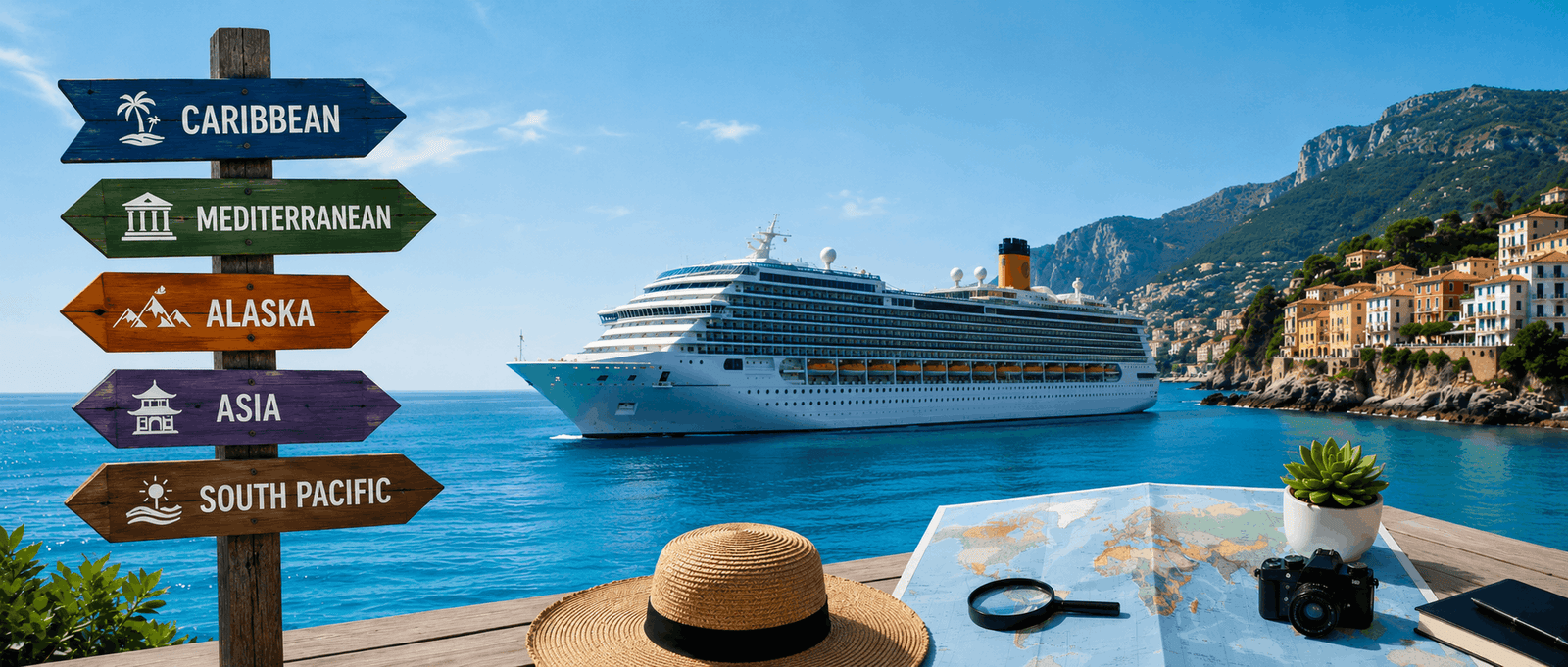
Destination. Caribbean cruises suit travelers who want beaches, warm water, and relatively short flights from North America. Mediterranean cruises appeal to people chasing history, food, and old European ports. Alaska cruises are built around scenery and wildlife rather than nightlife. Think about what kind of days you want to have on shore, not just which region sounds appealing on a map.
Length. A three- or four-night cruise is a good way to test whether cruising suits you, but it also means less time to relax and more port days packed close together. Seven-night cruises are the sweet spot for most travelers — long enough to properly unwind, short enough to fit into a normal holiday allowance. Cruises of ten nights or longer suit people with more flexible schedules and a taste for slower travel.
Cruise line and ship size. Large ships (often carrying 4,000+ passengers) come with more entertainment, more dining variety, and more activities for kids, but also bigger crowds and longer lines. Smaller and mid-sized ships offer a quieter atmosphere and often call at ports the big ships can’t reach. Luxury lines trade activities and crowds for space, service, and included extras. None of these is objectively better — it depends on what you want your days to feel like.
Once you’ve narrowed down the destination, length, ship type, and season that fit your holiday, the actual comparison between specific sailings becomes far easier — and far less overwhelming.
Create a Cruise Budget Before Booking
The advertised cruise fare is rarely the full cost of the holiday, and travelers who don’t budget for the extras are often the ones who end up disappointed or overspending once onboard. Building a realistic budget before you book protects both your bank account and your enjoyment of the trip.
Here’s what actually goes into the total cost of a cruise holiday:
| Category | What to Consider |
|---|---|
| Cruise fare | Base price per person, cabin category, taxes and port fees |
| Flights | Getting to and from the embarkation port, plus timing buffers |
| Pre/post-cruise hotels | Especially important if flying internationally |
| Shore excursions | Independent tours are often cheaper than ship-sponsored ones |
| Dining | Specialty restaurants and premium dining packages |
| Internet | Wi-Fi packages can be pricier than expected |
| Gratuities | Often added automatically, sometimes optional to prepay |
| Alcohol and beverage packages | Worth comparing against à la carte pricing |
| Shopping and souvenirs | Easy to underestimate |
| Emergency/contingency fund | Missed excursions, medical needs, unexpected costs |
A useful rule of thumb: take your cruise fare and budget an additional 25–40% for everything else, more if you plan to drink, dine at specialty restaurants, or book several excursions. Travelers who only budget for the fare itself are almost always surprised by the final bill.
It also helps to decide upfront which extras matter to you and which don’t. If specialty dining isn’t a priority, skip it and put that money toward excursions instead. Budgeting isn’t about spending less — it’s about spending intentionally on the parts of the trip you’ll actually remember.
Book Shore Excursions Early
Shore excursions are often where a cruise holiday goes from “nice” to “unforgettable” — and they’re also one of the most commonly mismanaged parts of the trip.
Popular excursions sell out. Small-group tours, popular snorkeling spots, and anything involving limited transport (like a specific train or boat) can sell out weeks before the ship even leaves port, particularly on ships calling at a destination in high volume.
Independent vs. cruise-sponsored tours. Booking directly through the cruise line guarantees the ship will wait for you if the excursion runs late, but independent local operators are often cheaper and offer smaller groups. A reasonable approach: use cruise-sponsored excursions for ports where timing is tight or the destination is unfamiliar, and consider independent operators for ports where you’re comfortable navigating on your own.
Match excursions to your travel style. A family with Cruise Young kids will want a different pace than a couple looking for an adventurous hike or a solo traveller hoping to meet people. Don’t book an excursion because it’s popular — book it because it fits how you actually like to spend a day.
Plan rest days. Not every port needs an excursion. Some of the best cruise memories come from an unplanned afternoon wandering a port town or simply enjoying a quiet day on the ship while it’s docked. Build at least one lower-key day into a longer itinerary so the trip doesn’t feel like a checklist.
Prepare Travel Documents
Nothing derails a cruise faster than a document problem at the port — and unlike a flight, a cruise ship generally won’t wait for a passenger who can’t board.
Passport validity. Most cruise lines and destinations require your passport to be valid for at least six months beyond your return date. Check this early; passport renewals can take weeks, longer during busy seasons.
Visas. Some itineraries require visas for specific ports or countries, even for a short stop. Requirements vary by nationality, so check each port on your itinerary rather than assuming a single visa covers the whole trip.
Cruise documents. Boarding passes, luggage tags, and any pre-arrival health forms should be printed or saved offline well before travel day, in case of spotty airport or hotel Wi-Fi.
Travel insurance. Cruise-specific travel insurance can cover trip cancellation, medical emergencies at sea, missed port departures, and lost luggage — situations that standard travel insurance sometimes excludes. Given how disruptive a medical evacuation or a missed ship departure can be, this is rarely money wasted.
Health requirements. Some destinations require proof of vaccination or health screenings. Check both the cruise line’s requirements and the requirements of each country on the itinerary.
Digital copies. Photograph or scan every important document — passport, visa, insurance policy, boarding pass — and store them somewhere accessible offline, plus email a copy to yourself. If anything is lost or stolen, this saves enormous stress.
Pack Smarter, Not Heavier
Packing for a Cruise Travel Safety is different from packing for a standard holiday, mostly because you’re dealing with variable weather across multiple ports, limited cabin storage, and evenings with a noticeably different dress code than the daytime.
Weather considerations. Layer for temperature swings, especially on itineraries that mix warm ports with cooler sea days, or Alaska and Northern Europe cruises where temperatures can shift dramatically within a single day.
Formal nights. Most mainstream cruise lines still have one or two “elegant” or formal nights. You don’t need a tuxedo, but a collared shirt and slacks, or a dress, will keep you comfortable rather than under-dressed in the main dining room.
Medications. Pack all medications in carry-on luggage, not checked bags, along with a printed list of prescriptions in case you need a refill at a port. Bring more than you think you’ll need in case of itinerary delays.
Electronics. A power strip (non-surge-protected, as most cruise lines prohibit surge protectors) is one of the most useful items you can pack, since cabins often have limited outlets. A portable charger is worth it for long excursion days.
Travel accessories. A small day bag for excursions, reusable water bottle, motion sickness remedies if you’re prone to seasickness, and a lanyard for your ship key card all make daily life onboard noticeably easier.
Packing light matters too — cabin storage is limited, and you’ll be happier navigating narrow hallways and tender boats without an oversized suitcase.
Connect With Fellow Travelers Before You Sail
One of the most underrated parts of cruise planning has nothing to do with logistics — it’s about the people you’ll be sailing with.
Cruises are, by design, social environments: shared dining tables, group excursions, lounges, and activities built for meeting new people. But travelers who connect with fellow passengers before the ship even leaves port tend to have a noticeably smoother, more social trip from day one.
Sharing excursion plans. Coordinating shore excursions with other travelers beforehand can mean smaller, more personal group tours, split transportation costs, and simply more fun exploring a port with people you already know.
Meeting families. Parents traveling with kids often want to connect with other families in advance, so the kids have familiar faces at the kids’ club and the adults have people to share an evening with once the children are settled.
Solo traveler communities. For Solo Cruisers, arriving without a plan for meeting people can mean an isolating first day or two. Connecting with other solo travellers on the same sailing beforehand means you already have people to sit with at dinner or explore a port with on day one.
Group dining and activity planning. Cruise lines allow you to request table sizes for dining, but coordinating in advance with people you’ve already connected with means you can request a table together rather than leaving it to chance.
Cruise friendships. Many of the strongest friendships formed on cruises started with a simple pre-cruise message: “Are you on the same sailing?” Those conversations, started weeks before departure, often carry through the entire trip and well beyond it.
How Seaya Makes Cruise Holiday Planning Easier
This is exactly the gap Seaya was built to close. Instead of hoping you happen to meet like-minded travelers once you’re onboard, Seaya lets you connect with people booked on your same sailing before you ever reach the port.
Through Seaya, travelers can find and message others on the same cruise, join communities built around a specific ship, sailing date, or itinerary, and start coordinating well ahead of departure. That might mean a family finding other families with kids the same age, a solo traveler finding a small group to explore ports with, or a couple discovering another couple who wants to split the cost of a private excursion.
Beyond simply meeting people, Seaya makes it easier to plan together — sharing excursion ideas, comparing notes on which ports are worth prioritizing, and swapping practical tips from people who’ve sailed the same route before. It turns the weeks before a cruise from a solo planning task into something more collaborative, and it means that by the time you walk up the gangway, you’re not meeting your fellow travelers for the first time — you already have a plan, and often a few new friends, in place.
Used alongside the rest of your planning — your budget, your documents, your packing list — connecting with fellow travelers early is one of the simplest ways to make sure your cruise holiday feels social and well-organized from the very first day.
Common Cruise Planning Mistakes
Even experienced cruisers fall into these traps. Here’s how to avoid them.
Waiting too long to book. The best cabins, prices, and itineraries go first. If you have a specific sailing in mind, book as soon as it’s released rather than waiting for a “better deal” that may never come.
Forgetting travel insurance. Given how disruptive a missed port or medical issue at sea can be, skipping insurance to save a small amount upfront is rarely worth the risk.
Ignoring hidden costs. Gratuities, Wi-Fi, specialty dining, and excursions add up fast. Budget for them from the start rather than being surprised by your onboard bill.
Overpacking. Cabin storage is limited, and most items you “might need” are available onboard or at ports. Pack for the itinerary you actually have, not every possible scenario.
Booking excursions too late. Popular tours sell out weeks in advance. If there’s a specific excursion you want, book it as soon as it’s available rather than waiting until closer to the sailing.
Not researching the itinerary. Every port offers different things. Spend time understanding what each stop is actually like — walking distance from the port, best neighborhoods, weather patterns — so you’re not figuring it out in real time.
Arriving at the port without a buffer. Flying in the morning of embarkation day is a common and risky mistake. Flight delays or cancellations can mean missing the ship entirely. Arrive at least the day before whenever possible.
A Cruise Holiday Planning Timeline
Use this timeline as a general guide, adjusting based on your cruise length and how far out you booked.
3–6 Months Before
- Finalize passport and visa requirements
- Book flights and any pre/post-cruise hotels
- Start researching and booking shore excursions
- Set your overall holiday budget
- Begin connecting with fellow travelers on your sailing
1 Month Before
- Purchase travel insurance if you haven’t already
- Complete cruise line’s online check-in
- Confirm excursion bookings and dining reservations
- Start a packing list and check clothing for formal nights
2 Weeks Before
- Check weather forecasts for each port
- Refill and organize medications
- Print or download boarding documents and luggage tags
- Notify your bank/credit card companies of travel dates
1 Week Before
- Finish packing and weigh luggage if flying
- Make digital copies of all key documents
- Confirm transportation to the port
- Check in with any fellow travelers you’ve connected with
The Day Before Boarding
- Arrive in the embarkation city if possible
- Double-check all documents are together and accessible
- Get a good night’s sleep
Embarkation Day
- Arrive at the terminal with time to spare, but not excessively early
- Have documents and boarding pass ready
- Locate the muster station once onboard
- Start enjoying the ship
| Stage | Key Focus |
|---|---|
| 3–6 months before | Booking, documents, budget |
| 1 month before | Insurance, check-in, excursions |
| 2 weeks before | Weather, medications, documents |
| 1 week before | Final packing, confirmations |
| Day before | Arrival, final checks |
| Embarkation day | Boarding, muster station |
Why Smart Planning Creates Better Cruise Memories
Planning ahead isn’t just about avoiding problems — it fundamentally changes the shape of the holiday itself. Travelers who plan well spend less time onboard sorting out logistics and more time actually enjoying the ship and its ports. They spend less mental energy worrying about documents or missed excursions, which means more presence in the moments that matter.
Cruise Families who plan together tend to have smoother trips, because everyone knows what to expect each day. Friendships formed before departure tend to run deeper, because they’ve had weeks to build rather than starting from scratch on day one. And travelers who’ve budgeted properly enjoy their excursions and dinners without a running tally of stress in the back of their mind.
None of this happens by accident. It’s the direct result of decisions made in the weeks and months before the ship ever leaves the dock.
Practical Checklists
Ultimate Cruise Holiday Planning Checklist
- Choose destination, length, and cruise line
- Set a realistic budget including extras
- Book flights and hotels with a timing buffer
- Book shore excursions early
- Confirm passport, visa, and insurance
- Complete online check-in
- Connect with fellow travelers before sailing
- Finalize packing list
- Arrive at the port with time to spare
Cruise Packing Checklist
- Passport, visa documents, boarding pass
- Medications in carry-on with prescription list
- Formal night outfit(s)
- Weather-appropriate layers
- Power strip (non-surge-protected) and portable charger
- Reusable water bottle and day bag
- Motion sickness remedies, if needed
- Swimwear and casual daywear
Travel Document Checklist
- Valid passport (6+ months beyond return date)
- Visas for applicable ports
- Cruise line boarding documents
- Travel insurance policy details
- Health/vaccination documentation if required
- Digital copies of everything, stored offline and emailed to yourself
Shore Excursion Planning Checklist
- Research each port in advance
- Decide between independent and ship-sponsored tours
- Book popular excursions as early as possible
- Balance active days with at least one rest day
- Confirm meeting times and locations before the sailing
FAQs
1. Why should I start planning my cruise early?
Early planning gives you access to better cabin availability, lower prices, and more complete itineraries. Popular sailings and cabin categories sell out well before the cruise line stops taking bookings, so waiting often means settling for what’s left.
2. How far in advance should I book a cruise?
For popular itineraries, holiday sailings, or new ships, booking 6–12 months ahead is common. For less in-demand sailings, 3–6 months usually still leaves good options. The more specific your preferences (cabin type, dining time, itinerary), the earlier you should book.
3. What should I do before boarding a cruise?
Confirm your documents, complete online check-in, finalize excursions, pack according to the itinerary’s weather and dress codes, and ideally connect with fellow travelers on the same sailing so you’re not starting from scratch once onboard.
4. What travel documents do I need for a cruise?
Typically a passport valid for at least six months beyond your return date, any required visas for specific ports, your cruise line’s boarding documents, and proof of travel insurance. Requirements vary by nationality and itinerary, so check each port individually.
5. How do I budget for a cruise holiday?
Start with the base cruise fare, then add flights, hotels, excursions, dining, Wi-Fi, gratuities, and a contingency fund. A reasonable estimate is to budget an additional 25–40% on top of the cruise fare for everything else.
6. When should I book shore excursions?
As early as possible, especially for popular tours or small-group experiences. Many excursions sell out weeks before the sailing, particularly at high-traffic ports.
Conclusion
The best cruise holidays aren’t the ones that go perfectly by luck. They’re the ones where someone did the work in advance — picked the right sailing for how they actually like to travel, budgeted honestly instead of hoping for the best, sorted the paperwork early, and packed with a bit of thought instead of a bit of panic.
None of that planning has to feel like a chore. Booking an excursion you’re genuinely excited about, or messaging someone who’ll be on your sailing to swap tips about a port you’ve never visited, is part of the fun of a cruise — it just happens to start weeks before you board rather than the moment you walk up the gangway.
If there’s one thing worth taking from this guide, it’s that a cruise holiday is really two trips: the one you plan, and the one you take. Get the first one right, and the second one tends to take care of itself. So start early, book the things that sell out, keep your documents in order, pack for the trip you’re actually taking, and don’t wait until you’re onboard to start meeting the people you’ll be sharing it with. That’s really the whole idea behind Seaya — helping you start the good part of the trip a little sooner.

For Christian, Seaya is the culmination of a career-long obsession with innovation. By leveraging his deep technical expertise to dismantle legacy constraints, Christian is transforming the way travelers connect at sea. He is dedicated to keeping Seaya at the vanguard of the “what’s next,” proving that the most powerful innovations happen when world-class tech meets a completely new frontier.
SUBSCRIBE NOW
Your Next Cruise Adventure Awaits
- News & articles
Related Blog