Key Takeaways
- Cruises simplify group travel by bundling lodging, transportation, dining, and entertainment into a single booking.
- Women are increasingly choosing cruises for the built-in balance of relaxation and adventure.
- Solo women travelers benefit from the structured social opportunities that ships naturally provide.
- Booking early secures better cabin options and access to popular excursions.
- Matching the itinerary to the group’s actual priorities — relaxation, adventure, or celebration — matters more than the ship’s size or brand.
- Budgeting beyond the base fare for excursions, dining, and extras prevents surprises later.
- Building in unstructured free time leads to some of the most memorable moments of the trip.
- Shared meals and group activities are the fastest way to deepen friendships onboard.
- Connecting with fellow travelers before boarding — through Seaya — can make the whole trip feel more social from day one.
- Group cruises tend to create repeat travelers, with many women planning their next trip before the current one even ends.
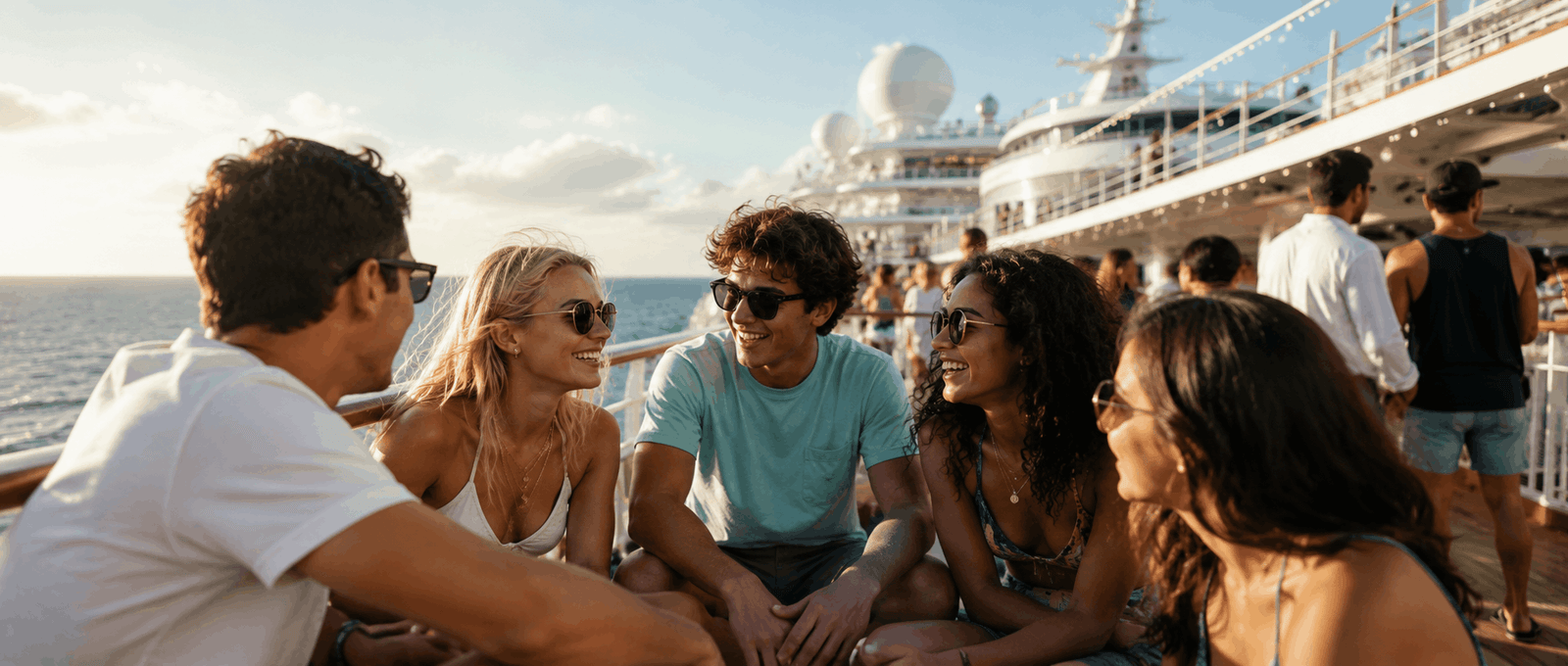
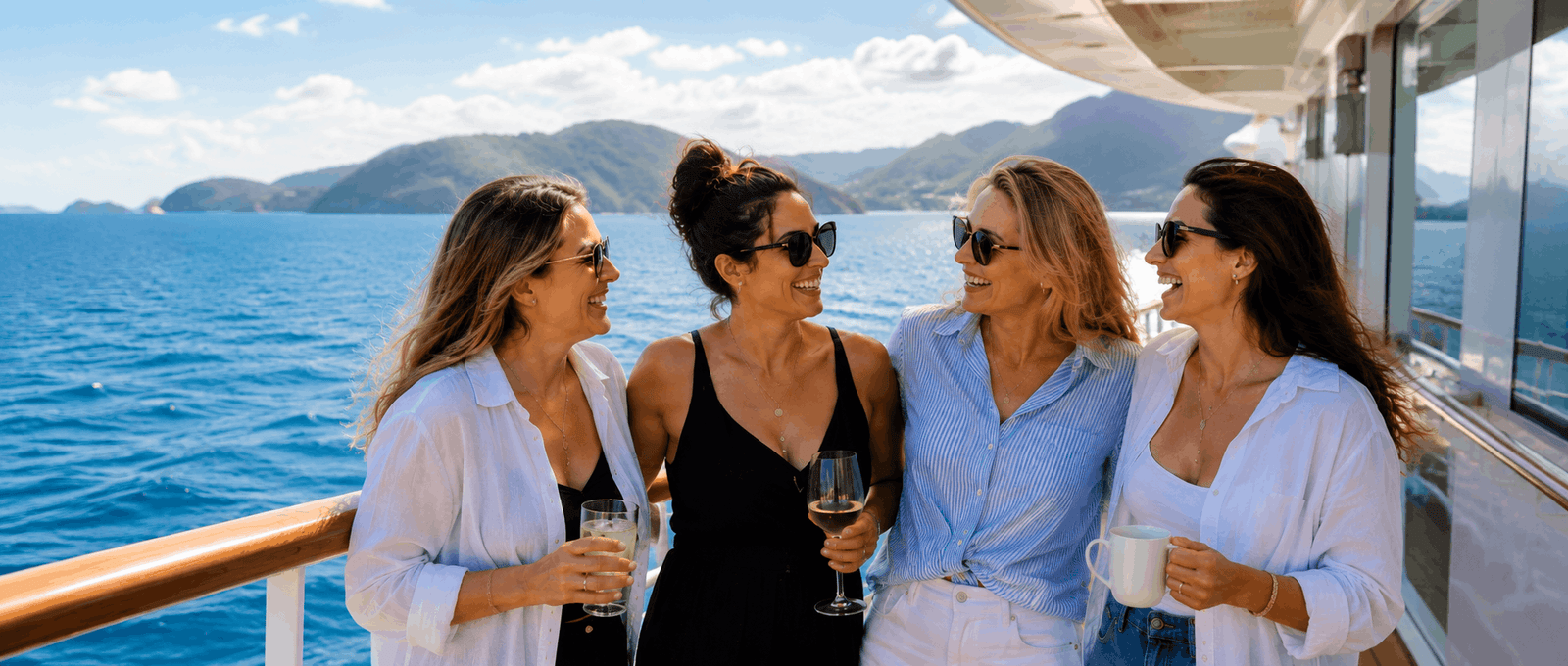
There’s a particular kind of laughter that happens on a balcony at sunset, somewhere between two ports, when a group of women realize they’ve talked for three hours straight and haven’t looked at their phones once. Ask around on any cruise ship these days and you’ll hear some version of this story — a mother and daughter finally getting uninterrupted time together, three college roommates keeping a promise they made twenty years ago, a woman traveling solo who now has dinner plans every night with people she met on day one.
This guide looks at why women’s group cruising has become one of the fastest-growing corners of travel, what makes the format so well-suited to friends, sisters, mothers and daughters, and solo travellers alike, and how to plan a trip that actually delivers the connection and relaxation you’re hoping for.
Why Women’s Group Travel Is Growing
Travel habits have changed, and women are driving a lot of that change. A few forces are behind the rise of women’s group vacations specifically.
Experience-first travel. Fewer women are saving vacation for “someday.” More are prioritizing experiences now — a milestone birthday, a reunion, a reward for getting through a hard year. Cruises fit naturally into this mindset because they compress a lot of experience into a single, manageable trip.
Stronger friendships through shared time. Adult friendships often survive on group texts and occasional cruise dinners. A multi-day trip resets that. Spending real, unstructured time together — the kind that happens naturally on a ship — deepens friendships in a way that a two-hour brunch never quite manages.
Shared memories that outlast the trip. Group travel produces stories that get retold for years. Photos become inside jokes. Small moments — a shore excursion that didn’t go as planned, a late-night dance floor, a sunrise nobody expected to see — turn into the memories that friend groups reference for decades.
Wellness and self-care. Many women are treating vacation as recovery time, not just entertainment. Cruises offer built-in opportunities for rest: spa days, quiet mornings on deck, and the simple relief of not cooking, cleaning, or driving for a week.
Celebrating life milestones together. Birthdays, retirements, divorces, empty-nesting, graduations — women are increasingly choosing to mark these moments with a group trip rather than a party. A cruise gives the celebration room to breathe over several days instead of a single evening.
Flexible vacation options. Group cruises can accommodate a wide age range and a wide range of budgets and energy levels under one itinerary, which makes them easier to organize than a group trip that requires everyone to agree on a single hotel, city, or pace.
Why Cruises Are Perfect for Women Traveling Together
Ask a group of women why they picked a cruise over any other kind of trip, and the same themes come up again and again.
Easy planning. One booking covers lodging, transportation between destinations, most meals, and entertainment. For a group trying to coordinate schedules and preferences, this alone removes most of the friction that usually comes with planning Women’s travel for multiple people.
Multiple destinations without repacking. A single cruise can visit three, five, or more ports in a week. Everyone gets a taste of different places without the hassle of checking in and out of hotels or hauling luggage through airports.
Entertainment for every mood. Comedy shows, live music, trivia nights, dance classes, movie screenings under the stars — there’s enough variety that a group with different tastes can each find something they genuinely enjoy, then regroup for dinner.
Dining options for every appetite. From casual buffets to elegant multi-course dinners, cruise dining accommodates dietary needs, budgets, and moods without anyone having to negotiate where to eat that night.
Safety and convenience. Many women, especially those traveling without a male companion, cite safety as a top reason they chose a cruise. Ships are contained, well-monitored environments, and shore excursions are typically organized and vetted, which lowers the guesswork that can come with independent travel in unfamiliar cities.
Something for every personality. Introverts can retreat to a quiet corner of the ship with a book. Extroverts can find a party within minutes. Both are on vacation at the same time, on the same ship, without either having to compromise their idea of a good day.
The Different Types of Women’s Cruise Trips
Women’s group cruising isn’t one trip — it’s a category that flexes to fit almost any relationship or occasion.
Friends’ getaways. The classic girls’ trip, upgraded. A group of friends books a cruise instead of a rental house, trading the stress of grocery runs and dish duty for room service and shore excursions.
Mother-daughter cruises. A dedicated stretch of time away from the rest of the family, often used to reconnect during a transition — before college, after a divorce, around a big birthday, or simply because life got busy and it’s been too long.
Sisters traveling together. Siblings who don’t live near each other often use an annual or biannual cruise as their reason to reconnect, sometimes turning it into a standing tradition.
Multi-generational family trips. Grandmothers, mothers, and daughters traveling together, with a ship’s range of activities keeping everyone entertained regardless of age or mobility.
Solo women joining group cruises. Women traveling alone are one of the fastest-growing segments in cruising. Many join specifically because the built-in social structure of a ship — shared tables, group excursions, communal lounges — makes solo travel feel far less solitary.
Birthday celebrations. Milestone birthdays (30th, 40th, 50th, 60th, and beyond) are increasingly celebrated at sea with a group of close friends instead of a single party night.
Retirement celebrations. A cruise gives retirees and their friends room to celebrate a major life change without cramming it into one evening.
Reunion cruises. College roommates, former coworkers, or extended family scattered across the country use a cruise as neutral, easy-to-reach ground for a reunion that doesn’t fall entirely on one host.
Activities Women Enjoy Most on Cruises
Every group is different, but a few categories of activities consistently come up as favorites among women traveling together.
Spa experiences. Massages, facials, and thermal suites give the trip a rhythm of relaxation between busier days in port.
Wellness programs. Meditation sessions, sunrise yoga on deck, and wellness talks have become standard offerings on many ships, appealing to travelers who want their vacation to actually restore them.
Fitness classes. From spin to Pilates to dance cardio, group fitness classes double as a fun way to start the day together before splitting off for individual plans.
Shore excursions. Guided hikes, food tours, snorkeling trips, and cultural excursions give groups a shared adventure to plan around and talk about for years afterward.
Fine dining. Specialty restaurants and chef’s-table experiences turn dinner into an event, especially for celebration cruises.
Live entertainment. Broadway-style shows, live bands, and comedy nights give the group an easy, no-planning-required evening activity.
Photography. Ships and ports alike offer no shortage of scenery, and many women’s trips produce a running photo album that becomes its own keepsake.
Shopping. Port towns and onboard boutiques offer a low-key activity that groups can do together or split off in pairs for.
Sunset gatherings. A recurring favorite: claiming a spot on deck at sunset with a drink in hand and nowhere else to be.
Cooking and wine experiences. Culinary classes and wine tastings give groups a shared, hands-on activity that also makes for a great story back home.
Building Meaningful Friendships at Sea
There’s something about a ship that accelerates connection. Part of it is proximity — you’re going to run into the same people at the pool, the same dinner table, the same trivia night. Part of it is the shared novelty of being somewhere new together.
Shared experiences create fast bonds. Watching the same sunset, trying the same unfamiliar dish, laughing through the same trivia question nobody could answer — these small shared moments build familiarity quickly.
Group activities lower the barrier to conversation. A cooking class or dance lesson gives people something to talk about immediately, without the awkwardness of small talk from a cold start.
Excursions turn strangers into travel companions. Spending four hours on a shore excursion with the same small group tends to produce real conversation, especially once the itinerary hits a bump — a delayed bus, an unexpected view — that everyone experiences together.
Dining together builds familiarity. Shared or assigned dining is one of the oldest traditions in cruising precisely because it works: the same faces at the table each night naturally deepen into friendship over the course of a week.
Social events give structure to connection. Wine tastings, deck parties, and themed nights give people a reason to gather without anyone having to organize it themselves.
Many of these friendships last well beyond the cruise. Group chats formed on a ship in the Caribbean often turn into annual reunion trips, birthday visits, and lifelong correspondence — one of the quieter but most consistent outcomes of cruise travel.
How to Plan the Perfect Women’s Cruise Vacation
A great group cruise doesn’t happen by accident. A little upfront planning goes a long way toward making sure everyone actually enjoys the trip.
Choosing the destination. Think about what the group actually wants — beach days, cultural exploration, nightlife, or a mix. Caribbean itineraries tend to suit groups wanting relaxation and beach time; Mediterranean and European itineraries suit groups drawn to history and cuisine; Alaska suits groups looking for scenery and adventure.
Budget planning. Agree on a total budget range early, including cabin cost, excursions, gratuities, drink packages, and spending money in port. This avoids awkward conversations later when some in the group want to splurge and others want to keep costs down.
Selecting the right cabin. Groups often split between interior cabins (budget-friendly, good for those who’ll barely be in the room) and balcony cabins (worth it for groups who value private outdoor space to gather). Booking cabins near each other makes coordinating easier throughout the trip.
Packing. Beyond the obvious — swimsuits, formal-night outfits, comfortable walking shoes — it helps to pack a few shareable items (a portable speaker, a deck of cards, a battery pack) that the whole group can use.
Booking excursions. Book popular excursions early, as they sell out. Balance one or two group excursions with enough free time for people to split off and do their own thing.
Scheduling free time. Not every hour needs a plan. Building in unstructured time prevents the trip from feeling like a checklist and gives room for the best moments — the ones that aren’t scheduled — to happen.
Group communication. Set up a shared group chat before the trip to coordinate expectations, and agree on a simple way to stay in touch onboard, since cell service can be limited at sea.
Common Mistakes Women Should Avoid
A little foresight prevents most of the headaches that can derail a group cruise.
- Waiting too long to book. Popular sailings, cabin categories, and excursions sell out months in advance, especially around holidays and school breaks.
- Overplanning every day. Packing the itinerary too tightly leaves no room for spontaneity — or rest.
- Ignoring everyone’s interests. A trip planned entirely around one person’s preferences tends to leave others disengaged. Build in variety.
- Choosing the wrong itinerary. A high-energy party ship isn’t the right fit for a wellness-focused mother-daughter trip, and vice versa. Match the ship and itinerary to the group’s actual priorities.
- Not budgeting for extras. Specialty dining, drink packages, spa treatments, and excursions add up quickly beyond the base fare. Budget for them upfront rather than being surprised later.
- Forgetting travel insurance. Group trips involve multiple travelers’ schedules, health, and finances — travel insurance protects everyone if something changes unexpectedly.
How Seaya Helps Women Connect Before Their Cruise
One of the more overlooked parts of planning a cruise — especially for solo travelers or groups hoping to meet other like-minded women onboard — is that most of the connection-building traditionally starts only after boarding. Seaya was built to change the timeline on that.
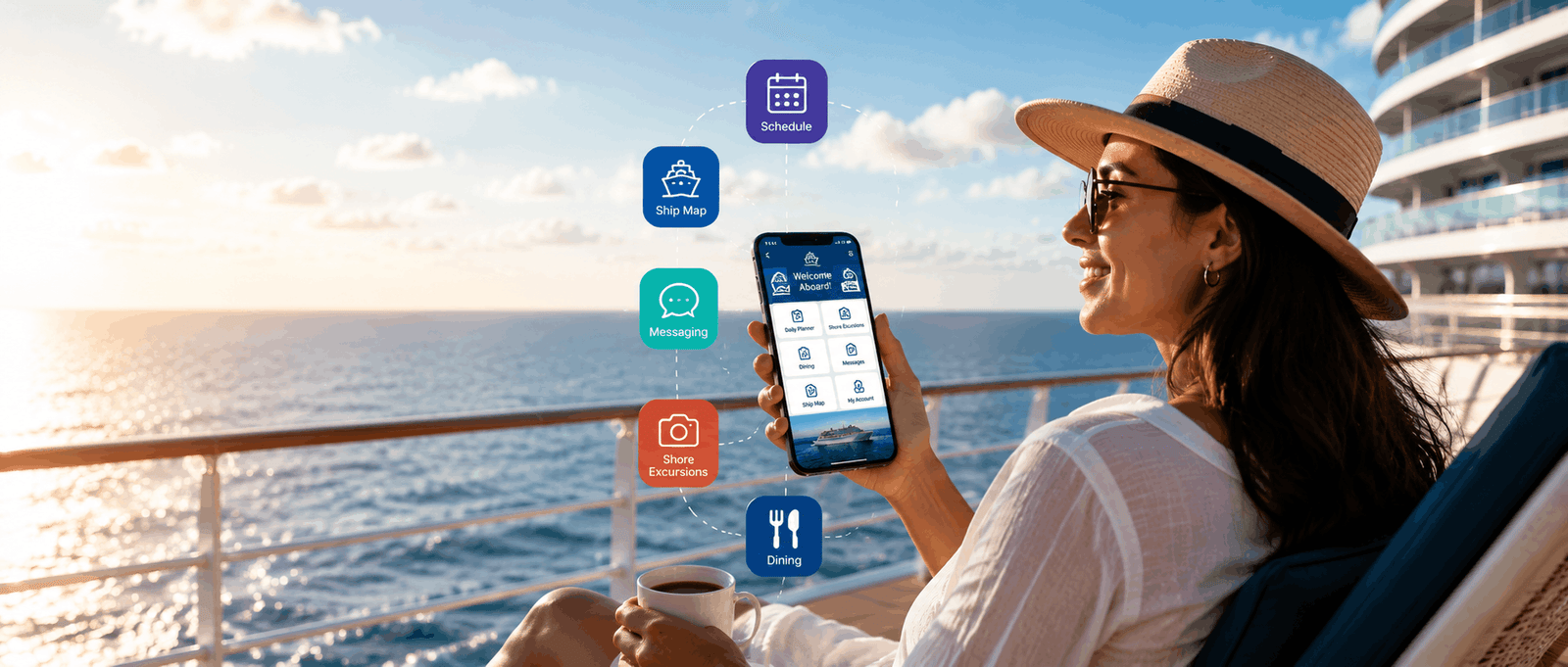
Seaya gives cruisers a way to connect with fellow passengers before the ship ever leaves port. Instead of hoping you’ll happen to sit next to someone interesting at dinner, travelers can find and message others who are booked on the same sailing ahead of time. That’s especially useful for women traveling solo who want to line up companions for shore excursions, or for small groups hoping to meet other women with similar interests to join them for activities.
The platform makes it easier to discover people with shared interests — whether that’s a shared excursion, a wellness routine, or simply wanting company at dinner — and to start conversations before anyone sets foot on the gangway. Coordinating plans, like meeting up for a sunrise yoga class or splitting a private excursion to keep costs down, becomes far simpler when the groundwork is laid in advance rather than improvised on day one.
For many women, this changes how the trip feels from the very first day. Instead of spending the first 24 hours getting oriented and hoping to meet people, they arrive already knowing a few faces and having a plan in place — which tends to make the rest of the week easier to enjoy.
Why Women’s Cruise Vacations Are More Than Just Holidays
Ask women who’ve taken these trips what they actually got out of it, and the answer is rarely just “a good time,” though there’s plenty of that too.
Personal growth. Stepping outside a regular routine — trying a new excursion, striking up conversation with a stranger, navigating an unfamiliar port — builds a kind of confidence that carries back into everyday life.
Confidence. Solo travelers in particular often describe a shift after a cruise: proof to themselves that they can navigate new places, meet new people on a cruise , and enjoy their own company.
Strengthening friendships. Uninterrupted time together, away from work and errands, deepens relationships in a way that regular life rarely allows.
Reducing stress. The combination of being cared for (meals prepared, transportation handled) and being somewhere beautiful has a measurable effect on how rested people feel afterward.
Creating lifelong memories. The shared stories from a group cruise tend to outlast almost every other kind of vacation memory, in part because the trip itself was shared so continuously.
Inspiring future adventures. Many women return from a first group cruise already planning the next one — proof that the format tends to create repeat travelers, not just one-off vacationers.
Cruise Vacation vs Traditional Girls’ Trip
| Factor | Cruise Vacation | Traditional Girls’ Trip |
|---|---|---|
| Planning | One booking covers lodging, food, and transport | Requires coordinating flights, hotels, and restaurants separately |
| Budget | Predictable, mostly bundled into one fare | Costs spread across many bookings, harder to predict |
| Activities | Wide variety built into the itinerary | Activities must be researched and booked individually |
| Relaxation | Built-in downtime, spa, and wellness options | Relaxation depends on how the group structures the trip |
| Safety | Contained, monitored environment with vetted excursions | Varies by destination and requires more independent research |
| Convenience | No repacking between destinations | Repacking and transit required between multiple stops |
| Social opportunities | Structured events make meeting others easy | Meeting new people depends entirely on the destination |
Women’s Cruise Groups by Travel Style
| Group Type | Best Cruise Experience |
|---|---|
| Friends | Caribbean or Mediterranean itineraries with a mix of beach days, nightlife, and shared excursions |
| Solo travelers | Ships with strong solo-traveler communities, shared dining, and group excursion options |
| Mother–daughter | Wellness-focused itineraries with spa time, quieter ports, and flexible scheduling |
| Sisters | Adventure-leaning itineraries like Alaska or Mediterranean history tours |
| Multi-generational families | Larger ships with a wide activity range suited to different ages and energy levels |
FAQs
1. Why are more women choosing cruise vacations together?
Cruises combine relaxation, adventure, and social connection into one trip, with far less planning burden than a traditional group vacation. That combination has made them especially popular among friends, family members, and solo travelers looking to make new connections.
2. Are cruises safe for women travelers?
Cruises are generally considered a safe way to travel, particularly for women traveling solo or in small groups. Ships are contained, monitored environments, and most shore excursions are organized and vetted in advance, which reduces the uncertainty that can come with independent travel.
3. Are cruises good for women’s group vacations?
Yes. Cruises accommodate a wide range of interests, energy levels, and budgets within a single itinerary, which makes them easier to plan for a group than coordinating separate flights, hotels, and activities for multiple destinations.
4. What is the best cruise destination for women?
It depends on the group’s priorities. Caribbean itineraries suit groups wanting beach time and relaxation, Mediterranean itineraries suit groups drawn to culture and cuisine, and Alaska suits groups wanting scenery and adventure.
5. How do I plan a girls’ cruise trip?
Start by agreeing on a destination and budget as a group, then book early to secure cabins near each other and popular excursions. Set up a shared communication plan and balance group activities with free time.
6. Can solo women make friends on a cruise?
Yes, and it’s one of the most common reasons solo women choose cruises. Shared dining, group excursions, and onboard social events make it easy to meet other travelers, and many solo cruisers now connect with fellow passengers before the trip even begins.
Conclusion
None of this really comes down to the ship itself. It comes down to what happens on it — the conversations that run long, the excursion that turns into an inside joke, the quiet morning on deck that nobody had to plan. That’s what keeps drawing women back to this particular way of traveling together, whether it’s a mother and daughter carving out a week for each other, three friends keeping a decades-old promise, or a woman traveling solo who ends up leaving with a group chat full of new friends.
A cruise won’t do the relationship-building for you, but it clears almost everything else out of the way so that part can happen. Book with a little intention, leave room in the schedule for nothing in particular, and the rest tends to take care of itself. If you’re heading out solo or want to start meeting your fellow travelers before you even reach the port, that’s exactly what Seaya is there for — so the connections you’re hoping to make on this trip can start a little earlier than day one.

For Christian, Seaya is the culmination of a career-long obsession with innovation. By leveraging his deep technical expertise to dismantle legacy constraints, Christian is transforming the way travelers connect at sea. He is dedicated to keeping Seaya at the vanguard of the “what’s next,” proving that the most powerful innovations happen when world-class tech meets a completely new frontier.
SUBSCRIBE NOW
Your Next Cruise Adventure Awaits
- News & articles
Related Blog