Key Takeaways
- Cruise friendships form fast because they’re built on shared experience, not slow familiarity.
- Relaxed environments and abundant free time make people more open to connection.
- Trust builds quickly at sea because small travel challenges create shared vulnerability.
- Solo travelers often build the strongest friendships because they’re naturally more open to conversation.
- The best places to meet people are shared dining tables, trivia nights, excursions, and mixers.
- Vivid shared memories — sunsets, celebrations, adventures — are what make these friendships stick.
- Cruise friendships need a little intentional effort to survive after the trip ends.
- Exchanging contact info and starting a group chat before disembarkation makes a real difference.
- Avoiding common mistakes, like staying isolated in your cabin, opens the door to connection.
- Platforms like Seaya can help travelers start building these friendships before they even board.
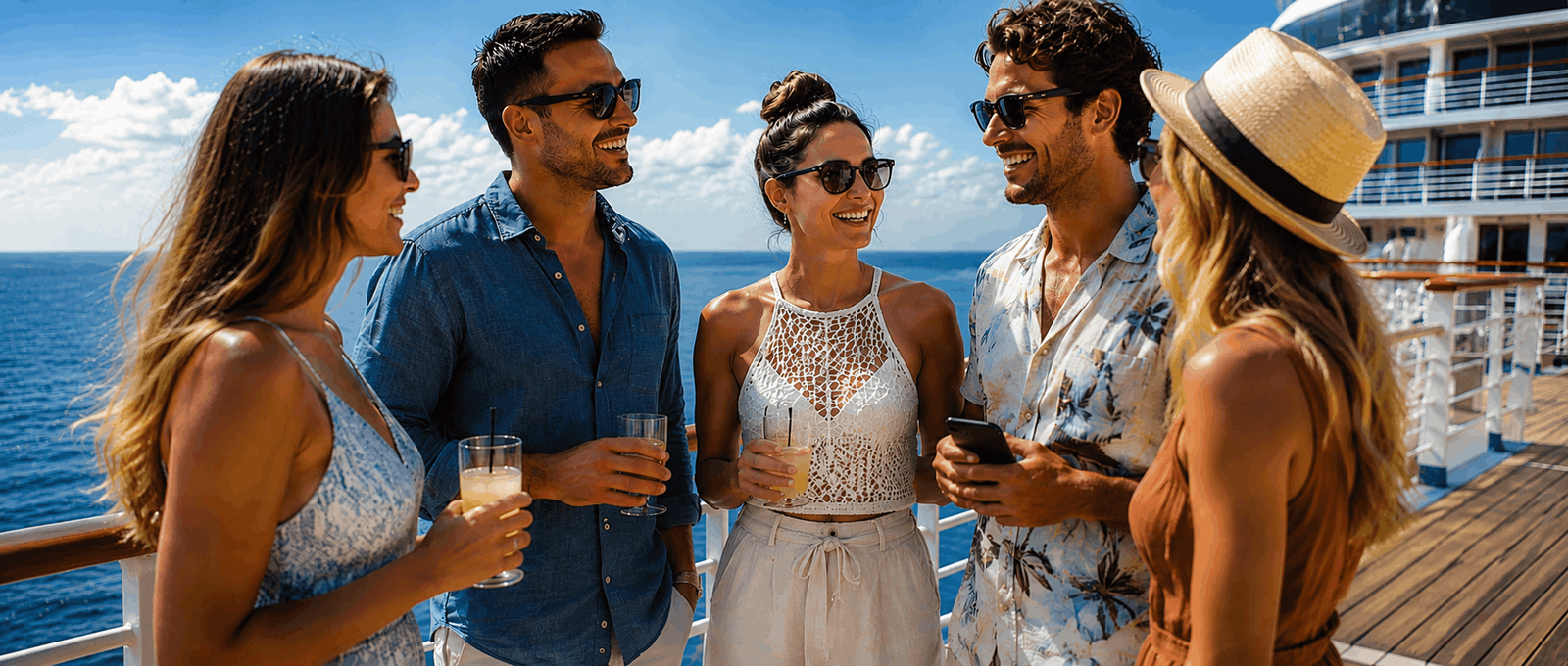
There’s a strange kind of magic that happens somewhere between the second sea day and the last formal night. You’re standing at the railing with someone you met three days ago over a trivia question about the Eiffel Tower, and it hits you: you already know their kids’ names, their dog’s name, and the story about the time they almost missed the ship in Cozumel. You’ve known this person for 72 hours, and somehow it feels like 72 weeks.
This isn’t a coincidence, and it isn’t just the cocktails talking. There’s real psychology behind why cruise friendships form faster, run deeper, and last longer than most vacation acquaintances. In this article, we’re going to walk through exactly why that happens, where it happens, how to make it happen for you, and — maybe most importantly — how to keep those friendships alive once the gangway comes down for the last time and everyone scatters back to their regular lives.
Why Cruise Friendships Form So Naturally
On land, Psychology of friendship usually builds slowly. You meet a coworker, you exchange small talk for months, and eventually — maybe — you grab a coffee outside of work. Cruises compress that entire process into days, sometimes hours, and there are a few very specific reasons why.
You’re sharing an experience, not just a location. Two people sitting in different cities aren’t sharing anything. Two people watching the same sunset from the same pool deck, eating the same slightly-too-fancy dinner, and laughing at the same magician’s terrible jokes are having a shared experience in real time. Shared experience is the fastest path to bonding that psychologists know of, and a ship gives you dozens of them every single day.
The environment removes everyday pressure. There’s no commute, no inbox, no laundry pile staring at you. When people are relaxed, they’re more open. They make eye contact. They say yes to a conversation instead of putting in earbuds. That openness is the raw material friendships are built from.
Group activities do the icebreaking for you. Trivia teams, cooking demos, dance classes — these give you an excuse to talk to someone without the awkwardness of walking up and introducing yourself cold. The activity is the reason you’re talking; the friendship is the byproduct.
You’re surrounded by people who are, by definition, also travelers. Everyone onboard already made the decision to try something a little social. That shared willingness lowers the barrier for everyone else, too.
Put those five factors together — shared experience, relaxed mindset, abundant time, built-in icebreakers, and a self-selected social crowd — and you get a kind of friendship accelerator that’s genuinely hard to replicate anywhere else.
What Makes Cruise Friendships Different From Everyday Friendships
Not all fast friendships are equal, and cruise friendships have a few qualities that set them apart from the ones you build slowly at home.
Trust builds faster because vulnerability shows up faster. Traveling with someone — even just for a shore excursion — puts you in small moments of shared uncertainty: getting lost in a port town, laughing through choppy tender boat rides, figuring out a language barrier together. Those little moments of “we’re figuring this out together” build trust in a way that years of scheduled coffee dates sometimes don’t.
The memories are tied to something extraordinary. A friendship formed at the office is tied to a cubicle. A friendship formed on a cruise is tied to a sunset over the Aegean or a beach day in the Bahamas. Extraordinary settings tend to produce more emotionally vivid memories, and vivid memories make a relationship feel more significant even after time has passed.
Here’s a simple side-by-side to make the contrast clear:
| Factor | Cruise Friendships | Everyday Friendships |
|---|---|---|
| Time to bond | Days, sometimes hours | Weeks to months |
| Setting | Shared, extraordinary experiences | Routine, familiar environments |
| Vulnerability | Built in through travel logistics and new situations | Builds slowly through repeated exposure |
| Common ground | Often pre-selected by trip type/interests | Discovered gradually |
| Emotional intensity | High, tied to vivid memories | Moderate, tied to consistency |
| Longevity without effort | Requires intentional reconnection | Sustained by proximity |
That last row matters. Cruise friendships form fast, but because there’s no shared workplace or neighborhood keeping you in each other’s orbit afterward, they need a little intentional effort to survive the trip home. We’ll get to exactly how to do that later on.
The Best Places to Meet People on a Cruise
If you want to make friends on a cruise, some spots onboard are simply better suited for it than others. Here’s where the real connections tend to start.
The pool deck. It’s casual, it’s relaxed, and nobody’s in a hurry. Sun loungers next to each other are basically an invitation to chat.
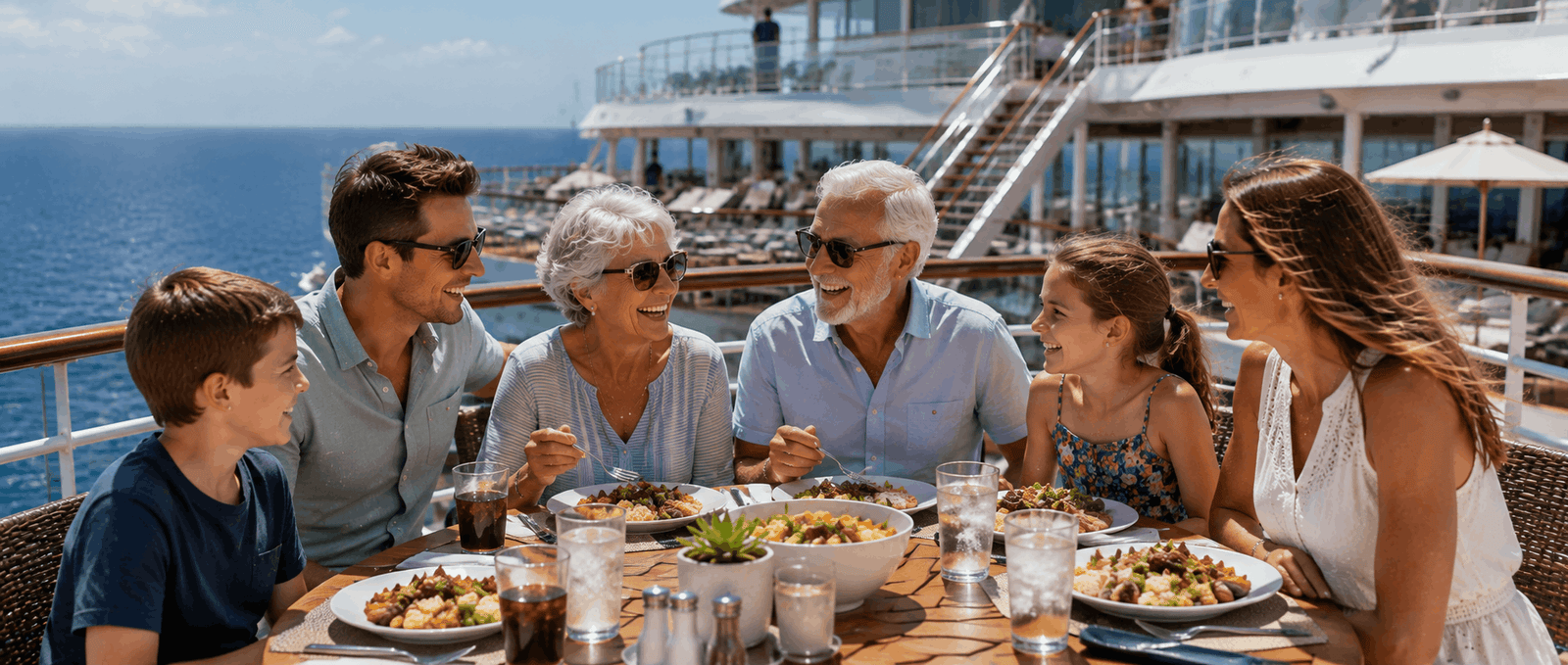
Dining rooms, especially traditional or shared seating. Sitting across from the same people every night for a week is one of the most underrated ways to build a real friendship at sea. By night three, you’re not making small talk anymore — you’re catching up.
Shore excursions. Few things bond strangers faster than a shared adventure in an unfamiliar place. A snorkeling trip, a walking tour, or a bus excursion puts you shoulder-to-shoulder with the same small group for hours.
Entertainment shows. Waiting in line for a show, or chatting during intermission, is a low-pressure way to strike up conversation with the people seated near you.
Trivia nights. This might be the single most reliable friendship-generator on any ship. Teams form fast, rivalries form faster, and by the end of the cruise, your trivia team is basically your cruise family.
Fitness classes. Sweating through a sunrise yoga session or a spin class together creates an instant sense of camaraderie — plus, it’s an easy way to meet people who share your interests outside the ship too.
Lounges and bars. A quiet piano lounge or a lively sports bar both work the same way: people linger, people talk, people remember each other by name the next day.
Social events and mixers. Many ships run singles mixers, solo traveler meetups, or theme nights specifically designed to get people talking. These are worth showing up to even if mingling isn’t usually your thing — everyone there showed up for the same reason you did.
Why Solo Travelers Often Build the Strongest Cruise Friendships
There’s a common myth that solo cruising means being alone the whole trip. In reality, solo travelers frequently walk away from a cruise with the strongest friendships of anyone onboard, and there’s a clear reason why.
Solo travelers are more open to conversation by default. Without a travel companion to fall back on, you’re naturally more likely to say yes to a chat at the bar, join a group excursion, or sit at a shared dinner table. That openness is the single biggest driver of new friendships anywhere, not just on ships.
Community activities are built with solo travelers in mind. Most cruise lines run dedicated solo traveler meetups, singles mixers, and shared-seating dinner options specifically because they know solo cruisers want connection, not isolation.
Shared adventures replace shared history. You don’t need years of history with someone to have an amazing day together — you just need a good excursion, a common sense of humor, and a willingness to show up.
It builds confidence that carries beyond the cruise. Many solo travelers say that after a week of striking up conversations with strangers, they feel more comfortable doing the same thing back home — at a coffee shop, a new gym, or a work event. The skill of “just starting the conversation” is one that sticks.
How Shared Experiences Create Lifelong Memories
Ask anyone who’s kept in touch with a cruise friend for years, and they won’t describe the friendship in terms of personality traits. They’ll describe a moment.
Shore excursions create some of the most vivid shared memories because they combine novelty, mild adventure, and a bit of shared problem-solving — figuring out a foreign currency, navigating a market, or timing the return to the ship together.
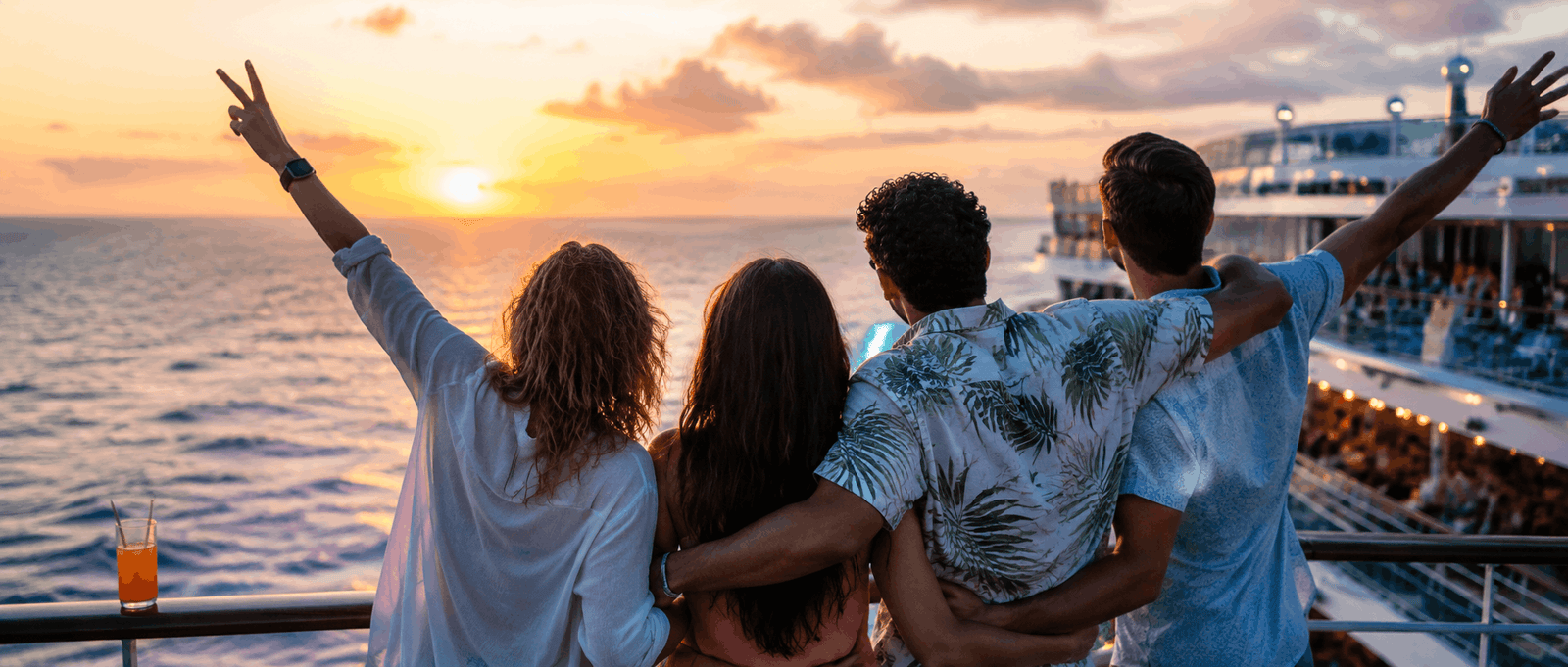
Sunset moments — whether from a pool deck, a balcony, or a beach stop — carry an emotional weight that’s hard to replicate. Watching something beautiful with someone tends to fuse that person into the memory itself.
Group dinners turn into inside jokes, running gags about the waiter’s magic tricks, or a shared appreciation for the surprisingly good lobster night. Food, ritual, and repetition (the same table, the same time, every night) build closeness almost without anyone noticing.
Celebrations — a birthday balloon drop, a vow renewal, a milestone anniversary toast — pull strangers into a moment of genuine shared joy, and joy is sticky. People remember who was there when something good happened.
Sea days, with their unstructured stretches of time, are often when the deepest conversations happen. Without a port to rush off to, people talk longer, and longer conversations tend to go further beneath the surface.
These moments matter because memory and emotion are deeply linked. A friendship attached to a vivid, positive memory is simply more likely to be maintained than one attached to routine.
Why Cruise Friendships Continue After the Vacation Ends
So why do some of these friendships actually last, instead of fading the way a lot of vacation acquaintances do?
Social media makes distance irrelevant. A quick photo tag or a comment on a friend’s post is enough to keep a connection warm for years, even without a phone call.
Messaging apps keep the conversation alive in real time. A shared group chat from the trip often becomes the place where people check in, share updates, and plan the next reunion.
Future cruise plans give the friendship a reason to continue. Nothing cements a cruise friendship like already having a return trip booked together. It transforms the relationship from “people I met once” to “people I travel with.”
Annual reunions form organically. Many cruise friend groups develop a tradition of booking the same itinerary, or a new one, every year — sometimes growing to include each other’s extended families.
Travel groups and communities extend the connection beyond just one ship. Once a small group of cruise friends starts organizing future trips together, it often opens the door to meeting even more like-minded travelers through the same circle.
The common thread in all of these is intention. Cruise friendships don’t automatically survive re-entry into regular life — but the people who take five minutes to exchange contact info and stay a little bit engaged afterward are the ones who end up with a real, lasting friendship instead of a nice memory that fades.
How to Stay Connected With Cruise Friends
If you want your cruise friendships to actually last, a little bit of follow-through in the final days of the trip and the weeks after makes all the difference.
Exchange contact information before the last night. Don’t wait until you’re standing in the disembarkation line with fifteen minutes and a suitcase in each hand. Trade numbers, social handles, or emails once you know you’ve clicked with someone.
Create a group chat while you’re still onboard. Starting the group chat before the trip even ends means everyone is already engaged, and it gives you an easy way to share photos as they happen.
Plan a future cruise, even loosely. You don’t have to book anything on the spot, but even a casual “we should do this again next year” gives the friendship a future to grow toward.
Share travel photos soon after you’re home. Memories fade fast once regular life resumes. Sending along your favorite photos within the first week keeps the trip — and the friendship — fresh.
Stay in touch consistently, not just once. A friendship doesn’t need daily contact to survive, but it does need occasional contact. A birthday message, a check-in during a big life event, or simply reacting to a post keeps the relationship alive between trips.
Common Mistakes That Prevent Cruise Friendships
Not every cruiser walks away with new friends, and it’s usually not bad luck — it’s a few avoidable habits.
Staying only with your own group. Traveling with family or a partner is wonderful, but sticking exclusively to your existing circle closes the door to everyone else onboard.
Skipping activities. Trivia, mixers, and shore excursions are where friendships start. Skipping them in favor of relaxing alone in the cabin means missing the moments where connection actually happens.
Being afraid to start the conversation. Most people onboard are just as open to meeting someone new as you are — they’re often just waiting for someone else to say hello first.
Spending all your time in your cabin. It’s tempting to treat the cabin as a retreat, but the friendships happen out on deck, in the dining room, and at the shows.
Missing community events. Solo meetups, welcome mixers, and repeat-cruiser gatherings are specifically designed for connection. Skipping them means skipping the easiest on-ramp to meeting people.
Checklist: Ways to Build Lasting Cruise Friendships
- Say yes to at least one group activity per day
- Choose shared or traditional dining seating instead of eating alone
- Attend at least one mixer or meetup event
- Strike up a conversation on a shore excursion
- Exchange contact info before the final night
- Start a group chat before disembarkation
- Take (and share) photos with your new friends
- Follow up within the first week home
- Suggest a future trip, even loosely
- Check in periodically, not just once
How Seaya Helps Travelers Build Cruise Friendships Before Sailing
One of the biggest shifts in cruise culture over the past few years is that friendship-building no longer has to start on embarkation day. Seaya exist because so many travelers wanted a way to meet fellow passengers before they ever boarded the ship.
Seaya works by connecting travelers who are booked on the same sailing, or who share similar interests and Cruise travel advice styles, ahead of time. Instead of hoping you happen to sit next to the right person at dinner, you can already know a few familiar faces before you walk up the gangway. For solo travelers especially, that head start can make the difference between a nervous first day and walking on already knowing someone’s name.
Practically, this means travelers using Seaya can:
- Meet fellow passengers before departure, so day one doesn’t start from zero
- Discover people with similar interests, whether that’s food, adventure excursions, or slower-paced relaxation
- Join cruise communities built around specific sailings, cruise lines, or travel styles
- Plan activities together in advance, from excursion meetups to dinner groups
- Build friendships before boarding, rather than leaving connection entirely to chance
- Continue those connections throughout the cruise and long after it ends
Think of it less as a dating app and more as a shared roster — a way to know that the people around you on the ship aren’t complete strangers, but people you’ve already had a conversation with. It doesn’t replace the organic magic of meeting someone at trivia night; it just gives that magic a head start.
Why Cruise Friendships Make Every Vacation Better
Beyond the emotional payoff, cruise friendships genuinely change the quality of the trip itself.
Less loneliness. Even travelers who came with family or a partner often say having a few extra friendly faces around made the ship feel less enormous and more like a community.
More confidence. Every conversation you start and every connection you make builds a little bit of social muscle that carries into the rest of the trip — and into life back home.
Better experiences overall. A shore excursion is more fun with a group. A show is funnier with someone to laugh next to. A sea day is more relaxing with someone to share it with.
Shared adventures. Having a friend onboard means someone to try the new restaurant with, someone to convince you to do the zipline, someone to split a private tour with.
Lasting memories. Trips fade in detail over time, but the people you shared them with tend to stick. Years later, most cruisers remember their favorite fellow passengers as vividly as they remember the destinations themselves.
Tips for Making Meaningful Cruise Friendships
- Show up early to group activities. The first few minutes before an event officially starts are often the easiest time to strike up a casual conversation.
- Ask open-ended questions. “What made you choose this cruise?” opens up a much longer conversation than a simple “where are you from?”
- Say yes more than you say no. An invitation to trivia, a dinner table, or an excursion group is an easy way in — take it.
- Choose shared seating at dinner if you’re open to meeting people. It’s one of the single best structural decisions you can make for building friendships onboard.
- Follow up the same day. If you had a great conversation at lunch, look for that person again at the evening show. Familiarity builds quickly on a ship.
- Be genuinely curious. People remember how interested you seemed in them far more than how interesting you seemed to them.
- Don’t force it. Not every conversation turns into a friendship, and that’s fine — the goal is a few real connections, not fifty acquaintances.
Real-Life Examples
The solo traveler who found a second family. A woman traveling alone on a seven-night Caribbean cruise sat at a shared dinner table on night one. By night three, that table had become the highlight of her day. A decade later, she still travels with three of those original tablemates once a year.
The families who met on a shore excursion. Two families, strangers before boarding a snorkeling excursion in Cozumel, ended up spending the rest of the cruise together — pool days, dinners, even a joint dance-off during the crew talent show. Their kids still video-chat regularly.
The couple who expanded their circle. A married couple who usually kept to themselves on vacations joined a trivia team out of boredom on a rainy sea day. That team became a running group chat that’s now planned three cruises together.
The friends who turned one trip into a tradition. A group of four friends who met individually — not as a pre-existing group — during a mixer event now book an annual cruise together every spring, and two of them have since become each other’s emergency contacts.
FAQs
Why are cruise friendships so strong?
Cruise friendships tend to form quickly and deeply because they’re built on shared, emotionally vivid experiences — sunsets, excursions, celebrations — in a relaxed environment with abundant free time, all of which accelerate trust and closeness.
Do people stay friends after a cruise?
Many do, especially when they exchange contact information before the trip ends and make a small effort to stay in touch, whether through messaging apps, social media, or planning a future cruise together.
How do I make friends on a cruise?
Join group activities like trivia, choose shared dining seating, attend mixers, and say yes to shore excursions. Being open to conversation in casual settings like the pool deck or lounges also goes a long way.
Are cruises good for solo travelers?
Yes. Solo travelers are often more open to conversation by default, and most cruise lines run dedicated solo meetups and shared dining options that make it easy to meet people right away.
Where is the best place to meet people on a cruise?
Shared dining tables, trivia nights, shore excursions, and mixer events tend to produce the fastest and most lasting connections, since they naturally encourage repeated interaction.
How can shy travelers make friends onboard?
Structured activities like trivia or fitness classes take the pressure off starting a conversation cold, since the activity itself becomes the icebreaker. Choosing shared seating at dinner also helps, since conversation happens naturally over several nights.
Can families meet other families on a cruise?
Absolutely. Shore excursions, kids’ club pickup times, and family-oriented activities are common places where parents strike up conversations that turn into lasting family friendships.
Do cruise friendships last?
Many do, particularly when travelers make a point of staying connected through group chats, social media, or planning to sail together again in the future.
Should I join cruise activities to meet people?
Yes. Activities like trivia, dance classes, and mixers are specifically designed to create low-pressure opportunities for conversation and connection.
How do I stay connected after my cruise?
Exchange contact information before the trip ends, start a group chat while still onboard, share photos soon after returning home, and check in periodically rather than only once.
Can I meet travelers before my cruise?
Yes. Platforms designed for pre-cruise connection, like Seaya, let travelers meet fellow passengers, discover shared interests, and even plan activities together before departure day.
How does Seaya help travelers connect?
Seaya connects travelers booked on the same sailing or with similar travel interests before the cruise begins, making it easier to walk onboard already knowing a few friendly faces and plan things to do together.
Conclusion
Cruise friendships aren’t a happy accident of proximity — they’re the product of shared experience, relaxed time, and a setting that practically invites strangers to become close, fast. What starts as a trivia team or a table for six can end up as a group chat you check every week, a standing plan for next spring’s sailing, or a friendship that outlasts the vacation by years.
The difference between a nice memory and a real friendship usually comes down to a few small choices: saying yes to the mixer instead of staying in the cabin, trading numbers before the last night instead of after, sending that first photo the week you get home. None of it requires much effort — it just requires a little intention, both onboard and once you’re back on dry land.
If you’re heading into your next cruise hoping to meet people who might still be in your life five or ten years from now, the good news is you don’t have to leave it entirely to chance. Show up to the activities, sit at the shared table, start the conversation — and if you want a head start, tools like Seaya can help you meet fellow travelers before you even step onboard. The friendships are there to be made. All you have to do is be open to them.

For Christian, Seaya is the culmination of a career-long obsession with innovation. By leveraging his deep technical expertise to dismantle legacy constraints, Christian is transforming the way travelers connect at sea. He is dedicated to keeping Seaya at the vanguard of the “what’s next,” proving that the most powerful innovations happen when world-class tech meets a completely new frontier.
SUBSCRIBE NOW
Your Next Cruise Adventure Awaits
- News & articles
Related Blog