Key Takeaways
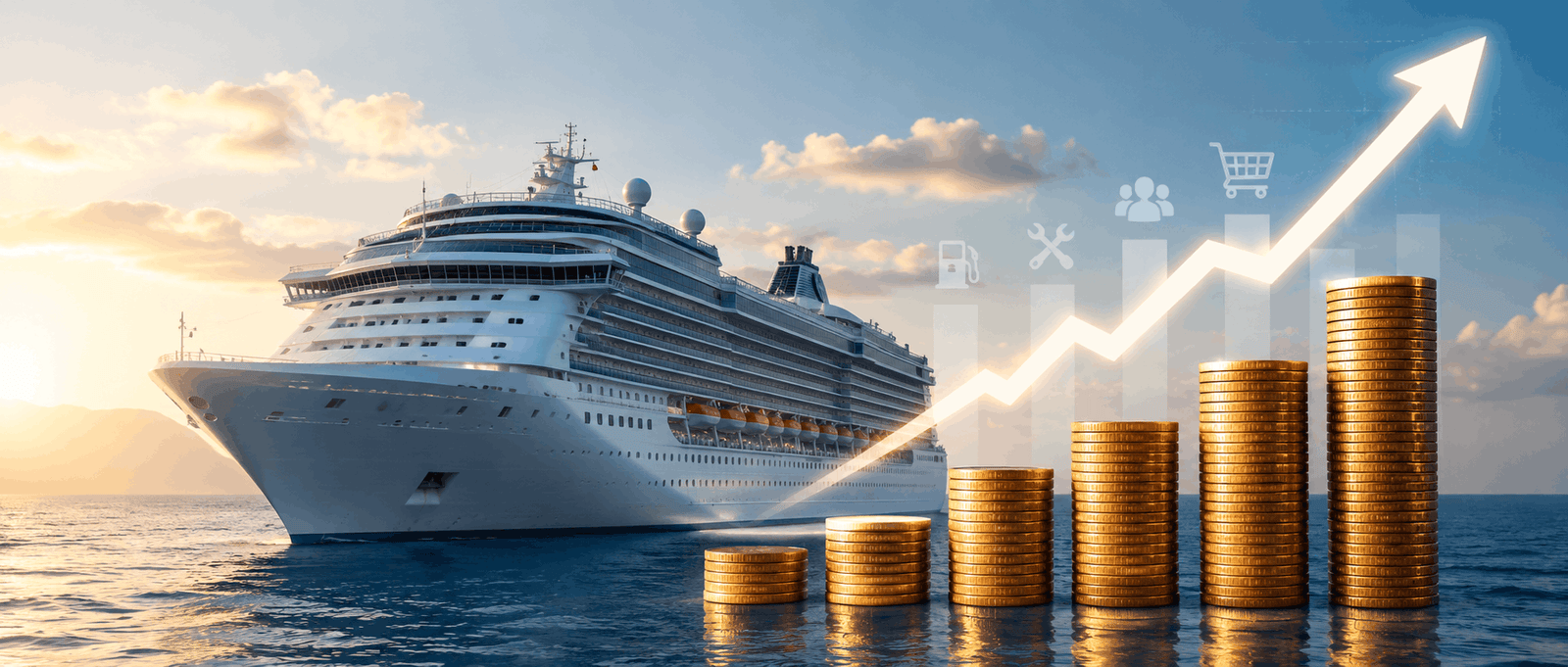
- Cruise prices in 2026 are rising due to record demand, limited ship capacity, inflation, higher fuel costs, and smarter dynamic pricing by cruise lines.
- More than 39 million passengers are projected to cruise in 2026, putting enormous pressure on available inventory.
- Royal Caribbean has deployed AI-powered yield management to maximize fares based on real-time demand data.
- Major lines including Carnival, Princess, and Holland America raised daily gratuities in 2026, adding $224–$280+ to a couple’s 7-night tab.
- Expedition and luxury cruises have seen the steepest price increases, driven by surging demand and structurally limited ship capacity.
- The “book early or book last minute” strategy is back — the middle booking window is often where prices peak.
- Add-ons like specialty dining, beverage packages, and internet now routinely add hundreds or thousands to the total cost of a sailing.
- Cruises still offer strong value compared to land-based alternatives when you factor in accommodation, food, and entertainment.
- Traveling during shoulder season (September–November) can reduce fares by 20–35% compared to peak summer pricing.
- Planning ahead — including connecting with fellow passengers before departure — helps you make the most of every sailing dollar.
If you’ve checked cruise fares recently and done a double-take, you’re not imagining things. Cruise prices in 2026 are genuinely higher than they were a year ago — and in many cases, significantly so. What used to be considered an affordable vacation option has quietly shifted into a more premium category, even as ships sail fuller than ever.
So what’s driving the increase? The short answer is a perfect storm of record demand, limited cabins, rising operating costs, and cruise lines that have gotten very good at squeezing every dollar out of a full ship. The longer answer — the one that actually helps you make smarter booking decisions — is what this article is about.
Whether you’re trying to figure out if you should book now or wait, wondering which cruise line offers the best value, or just trying to understand why your last sailing cost so much more than the one before it, you’ll find clear answers here.
What’s Driving Cruise Price Increases?
The cruise industry came roaring back from the pandemic years, and it hasn’t slowed down since. In 2024, the industry welcomed nearly 35 million passengers — the most in cruising history. In 2026, that figure is projected to surpass 39 million. When that many people want the same product and the supply hasn’t kept pace, prices go up. That’s not strategy. That’s math.
But demand alone doesn’t tell the whole story.
Record demand driving prices higher
Royal Caribbean CEO Jason Liberty said it plainly in early 2026: the company had already booked roughly two-thirds of its 2026 capacity at what he called “record rates.” The line experienced its strongest seven consecutive booking weeks in company history following its most recent earnings call. When ships fill up that fast, cruise lines have little incentive to discount — and every reason to push fares higher.
This strong booking pace means limited inventory, which directly correlates to higher fares and fewer genuine last-minute deals or promotions. The old cruise hack of waiting for a rock-bottom deal close to departure is increasingly unreliable. By the time the sailing date nears, the ship is already sold out — or the remaining cabins are priced at a premium.
AI-powered dynamic pricing
Royal Caribbean has been especially transparent about its use of artificial intelligence to optimize revenue. The line’s yield management system analyzes real-time demand data and adjusts fares accordingly — increasing prices when demand is high without triggering a drop in Cruise bookings. The goal is to improve personalization and reduce friction in the booking experience while presenting “relevant options that add value to the guest.” In practice, this means the fare you see today may be materially different from the fare you see tomorrow.
This approach to pricing looks increasingly like the airline industry. Fares shift based on demand, booking pace, and cabin availability — not on any fixed schedule.
Rising operating costs
From fuel to food to labor, cruise lines are dealing with rising costs across the board — and those increases don’t disappear. They show up in pricing. Fueling a modern mega-ship has always been expensive, but fuel costs have risen substantially. Food costs have climbed worldwide, and staffing has become more expensive at every level. Port fees have also increased at many destinations as governments and port authorities recognize the value — and the impact — of millions of cruise visitors.
New ships carrying premium pricing
New ships tend to carry premium pricing, while older vessels and shoulder-season sailings often provide better value. Cruise lines have been on a major fleet expansion, and the newest vessels — Royal Caribbean’s Icon of the Seas and Star of the Seas, MSC’s World America, Norwegian’s Aqua, and Princess’s Sun Princess — attract significant interest and command higher fares simply because travelers want to experience them.
The result is a market where even travelers who consider themselves savvy deal-hunters are paying more than they expected.
Which Cruise Lines Increased Prices the Most?
Not all cruise lines have moved fares the same way. Here’s how the major players have shifted their pricing in 2026.
Royal Caribbean
Royal Caribbean remains the industry’s biggest player, and its pricing reflects both its brand strength and its aggressive revenue optimization strategy. Inside cabin fares for 3–5 night Caribbean sailings from Royal Caribbean typically run $550–$710 per person, making it one of the pricier mass-market options by base fare — though the onboard experience on newer ships is genuinely hard to match.
The line has notably held its daily gratuities steady at $18.50 per person for standard cabins, while competitors have raised theirs. That’s a meaningful distinction when you’re comparing total trip costs.
Carnival
Carnival has historically positioned itself as the budget-friendly option, and base fares remain competitive. But Carnival raised its daily gratuities in April 2026, and has also reduced the number of drinks allowed per day on its beverage packages — meaning you’re paying more while getting less. The gap between Carnival’s low base fare and its total cost has narrowed.
Norwegian Cruise Line
Norwegian’s “Free at Sea” bundle — which typically includes drinks, Wi-Fi, and gratuities — makes its pricing more complex to compare at face value. Norwegian’s Free at Sea package makes its balcony cabin the cheapest total cost among the major lines because drinks, Wi-Fi, and gratuities are all bundled in. However, Norwegian did raise its daily gratuity rate (relevant for those who don’t take the bundle), with a 7-night sailing for two in standard staterooms now adding $280 in service charges — the highest of any mainstream cruise line.
MSC Cruises
MSC has aggressively expanded its North American presence with MSC World America and continues to offer low base fares — often starting around $439 per person for 7-night sailings. That said, MSC also raised its gratuities in 2026, and its add-on costs can mount quickly.
Celebrity Cruises
Celebrity cruise occupies the premium end of the mainstream market and prices accordingly. Its “All Included” fare structure, which bundles drinks and Wi-Fi, makes it genuinely competitive against cheaper base fares once you add those extras. Specialty dining that was once $25–$30 per person has risen significantly, with many venues now running $60 or more.
Princess Cruises
Princess raised its daily gratuities in March 2026 and has trimmed dining menus on some ships, swapping premium cuts of meat and seafood for cheaper alternatives. Princess’s Premier and Plus packages for 2026 have also been restructured, making it important to read the current inclusions carefully before booking.
Are Cruises Still Worth the Money?
Despite the price increases, cruise travel continues to offer compelling value — particularly when you compare it honestly to alternatives.
Cruise vs. Resort vs. DIY Vacation
| Category | 7-Night Cruise | All-Inclusive Resort | DIY Land Vacation |
|---|---|---|---|
| Average cost (per person) | $800–$1,800 | $1,200–$2,500 | $1,500–$3,000+ |
| Accommodation included | ✅ Yes | ✅ Yes | ❌ Extra cost |
| All meals included | ✅ Main dining | ✅ Yes | ❌ Extra cost |
| Entertainment included | ✅ Shows, pools, activities | Partial | ❌ Extra cost |
| Transportation between destinations | ✅ Yes | ❌ No | ❌ Extra cost |
| Number of destinations | 3–7 ports | 1 | Varies |
| Add-on costs | Drinks, excursions, specialty dining | Excursions, tips | Transport, activities |
| Overall value rating | ⭐⭐⭐⭐ | ⭐⭐⭐ | ⭐⭐⭐ (effort required) |
When you factor in what’s included — accommodation, main dining, onboard entertainment, transportation between multiple destinations — a cruise still stacks up well against comparable alternatives. Cruise vacations are often perceived as more economical than land-based alternatives, as they bundle transportation, meals, lodging, and entertainment.
The caveat is that the gap has narrowed. Rising base fares, higher gratuities, and more expensive add-ons mean that budgeting carefully matters more than it did even three years ago. The “all-in” cruise price today requires more intentional planning than the sticker fare suggests.
How Rising Prices Affect Travelers
The price increases aren’t limited to the fare you see at booking. They ripple through almost every aspect of cruise planning.
Earlier bookings are becoming necessary
The window for securing a good Cruise cabin at a reasonable price has moved earlier. Booking 12–18 months in advance allows you to lock in pricing before demand builds. The middle booking window is often where prices peak and travelers feel most constrained. What this means practically: if you’re still planning on booking 3–4 months out, you may find your preferred cabin categories are already gone — and what remains is priced at a premium.
Onboard add-ons are more expensive
Many travelers focus only on the base cruise fare, but the total cost of a cruise can be much higher. Extra expenses — drinks, specialty dining, internet access, and shore excursions — are now a major part of cruise travel.
A drink package for two on a 7-night sailing can add $500–$1,000 or more. Daily Wi-Fi plans run $20–$30 per person per day on many lines. Specialty dining that was once an occasional splurge has become more expensive and, on some ships, nearly required if you want to avoid crowded main dining rooms.
Shore excursion costs are climbing
Port fees have risen at many destinations, and cruise line-organized excursions have followed suit. Private tours booked through independent operators are often cheaper, but they require more planning and, on ships with tight turnarounds, carry more risk if something goes wrong and you’re late back to port.
The nickel-and-dime experience is more noticeable
Norwegian Cruise Line now charges $5 for a second main course in the main dining room. Carnival and MSC have both reduced the number of drinks allowed per day on their packages. These kinds of changes — small individually, significant collectively — have made travellers more aware of the full cost of a sailing than in the past.
How to Save Money on a Cruise in 2026
Higher prices don’t mean you can’t cruise smart. Here are the strategies that actually work in the current market.
Book early — or at the right late window
There are two windows that still tend to offer value: booking early (12–18 months in advance) to lock in pricing before demand builds, and occasionally finding genuine last-minute deals if you’re flexible. The middle window — roughly 3–8 months out — is often where prices are least competitive.
Travel during shoulder season
Off-season fares (September–November) typically drop 20–35% compared to peak pricing. If you can shift your sailing by a few weeks or trade July for October, the savings can be substantial.
Compare what’s actually included
The cheapest cruise is not always the best deal. A slightly higher fare may include drinks, Wi-Fi, specialty dining, or onboard credits that more than make up the difference. Norwegian’s bundled packages, Celebrity’s All Included fares, and Viking’s fully inclusive model are all worth pricing out against lower base-fare alternatives.
Consider older or less-hyped ships
New ships carry premium pricing because of the novelty factor. An older ship on the same itinerary often delivers the same ports, similar food, and comparable entertainment at a materially lower fare. The experience difference is rarely as dramatic as the price difference.
Prepay gratuities now
If you have a sailing coming up, prepaying gratuities at today’s rates locks you in before any future increases take effect. With multiple lines having raised gratuity charges already in 2026, this is one of the few levers cruisers have.
Use loyalty programs strategically
Royal Caribbean’s Crown & Anchor Society, Carnival’s VIFP Club, and NCL’s Latitudes program all offer perks that have real dollar value — from onboard credits to cabin upgrades to priority boarding. Concentrating your sailings on one or two lines can deliver meaningful savings over time.
Book shore excursions independently
For port-intensive itineraries, independent excursions can cost 30–50% less than the cruise line equivalent. Research each port in advance, identify reputable local operators, and build in a buffer to ensure you’re back at the ship well before departure.
Watch for genuine promotions
Lines still run real sales — kids sail free, second guest discounts, onboard credit offers. Setting fare alerts and working with a travel agent who specializes in cruises can help you catch genuine deals rather than manufactured ones.
Why Planning Ahead Matters More Than Ever
In the current environment, improvisation is expensive. Ships fill faster than ever, the best cabins go early, and prices for nearly everything — from specialty dining to shore excursions — reward advance booking.
This is also true for the social side of cruising. Ships carrying 5,000–7,000 passengers can feel overwhelming if you board not knowing anyone. More cruisers are finding that connecting with fellow passengers before departure transforms the experience — you arrive knowing faces, have shore excursion plans in place, and aren’t starting from scratch in the Lido buffet line.
That’s precisely where platforms like Seaya become genuinely useful. Seaya is a cruise social networking app that lets you find and connect with other passengers on your specific sailing before you board. Whether you’re looking for shore excursion partners, cabin share options for solo travelers, or simply fellow passengers to explore a port with, Seaya makes the pre-cruise connection process straightforward.
When itineraries are busy and shore excursions are selling out faster than ever, having a group assembled before departure isn’t just convenient — it can save you real money through shared costs and better planning.
Will Cruise Prices Go Down in 2027?
This is the question every traveler with a planned cruise or a wish list wants answered honestly. The evidence-based outlook is mixed.
Prices for expedition cruises have risen the most, reflecting high demand and limited capacity. Other cruise products have seen price increases, albeit at a more moderate level. For mainstream ocean cruising, the structural factors driving prices higher — demand outpacing capacity, dynamic pricing models, rising operating costs — are unlikely to reverse in the near term.
When that many people are booking, prices tend to hold firm. The question of whether cruise prices will meaningfully decline in 2027 largely depends on whether demand softens, new ship capacity comes online faster than expected, or broader economic conditions force cruise lines to compete more aggressively for customers.
A few scenarios worth watching:
- New ship supply: Several major vessel deliveries are scheduled for 2026–2027. More capacity, all else equal, should eventually moderate prices — particularly on high-demand routes like the Caribbean.
- Economic conditions: Cruise spending rose across all income groups in the first four months of 2026, compared to the same period a year earlier — unlike spending on flights and hotels, where lower-income spending declined. If broader consumer spending softens, cruise lines may face more pressure to attract budget-conscious travellers.
- Pricing strategy evolution: Cruise lines have found that customers are remarkably tolerant of price increases as long as the experience justifies them. That tolerance has limits, and some industry observers believe certain lines are testing it with the current round of fare and gratuity increases.
The realistic outlook: prices for mainstream cruises are likely to remain elevated through 2027, with occasional promotional windows worth watching. Meaningful across-the-board price reductions would require a significant demand correction that currently shows no signs of materializing.
Frequently Asked Questions
Why are cruise prices increasing in 2026?
Cruise prices are rising in 2026 because demand is at record levels, ships are filling up faster than ever, and operating costs — including fuel, labor, food, and port fees — have increased. Major lines have also adopted airline-style dynamic pricing that adjusts fares in real time based on demand and available inventory.
Are cruises more expensive this year compared to last year?
Yes. Most mainstream cruise lines have raised base fares, daily gratuities, and onboard add-on costs in 2025–2026. While some promotional pricing exists, the overall trend has been upward across nearly every major category.
Will cruise prices go down in 2027?
A major across-the-board price decrease in 2027 is unlikely given current demand levels. New ships coming online may moderate fares on specific routes, and shoulder-season pricing will continue to offer better value. Significant price drops would require demand to soften materially — which hasn’t happened yet.
Should I book my cruise now or wait?
For most travelers, booking sooner is better in the current environment. The best cabins on popular sailings fill up 12–18 months in advance, and fares generally increase as inventory shrinks. Last-minute deals exist but are less reliable than they were a few years ago.
Which cruise line offers the best value in 2026?
It depends on your priorities. Norwegian’s Free at Sea bundle offers the best total cost for travelers who want drinks and Wi-Fi included. Carnival offers the lowest base fares. Royal Caribbean delivers the most comprehensive onboard experience, particularly on newer ships. MSC has aggressive introductory pricing on its North American sailings.
Is cruising still cheaper than a resort?
In many cases, yes — particularly when you factor in that a cruise includes accommodation, multiple meals per day, onboard entertainment, and transportation between destinations. A comparable all-inclusive resort or land vacation often costs more once you add flights, meals, and activities. That said, add-ons on cruises have become significantly more expensive, so total trip costs require careful budgeting.
Why are fuel costs affecting cruise prices?
Cruise ships are enormous vessels that burn significant quantities of fuel — some large ships consume over 250 tons of fuel per day at sea. When fuel prices rise globally, those costs flow directly into cruise line operating expenses and, ultimately, into fares.
How can I save money on a cruise in 2026?
Book 12–18 months early to lock in lower fares, travel during shoulder season (September–November), compare what each line includes in its base fare, consider older ships on the same itinerary, book shore excursions independently, prepay gratuities at current rates, and use loyalty program benefits.
Final Thoughts
Cruise prices in 2026 are higher than they used to be — that much is simply true. The reasons range from structural (more people want to cruise than ever before) to strategic (cruise lines have gotten very good at maximizing revenue per passenger). The experience of showing up and finding bargains is largely over.
But “more expensive than before” doesn’t mean “not worth it.” Cruises still deliver genuine value when planned well — multiple destinations, bundled accommodation and dining, built-in entertainment, and an experience that remains difficult to replicate on land. The key is approaching a cruise the same way you’d approach any significant purchase: with a clear understanding of what you’re paying for, when to buy, and where the real costs are.
Booking early, planning budgets carefully, and making informed choices are now essential. While cruises still offer great experiences, they require smarter planning than ever before.
As cruise prices continue to rise in 2026, planning ahead is more important than ever. If you’re sailing soon, Seaya helps you connect with fellow passengers before departure — making it easier to organize shore excursions, meet cruise friends, and enjoy a more social cruise experience from day one. You’ve already invested in the trip; connecting with the people on board is what turns a good cruise into a great one.

For Christian, Seaya is the culmination of a career-long obsession with innovation. By leveraging his deep technical expertise to dismantle legacy constraints, Christian is transforming the way travelers connect at sea. He is dedicated to keeping Seaya at the vanguard of the “what’s next,” proving that the most powerful innovations happen when world-class tech meets a completely new frontier.
SUBSCRIBE NOW
Your Next Cruise Adventure Awaits
- News & articles
Related Blog