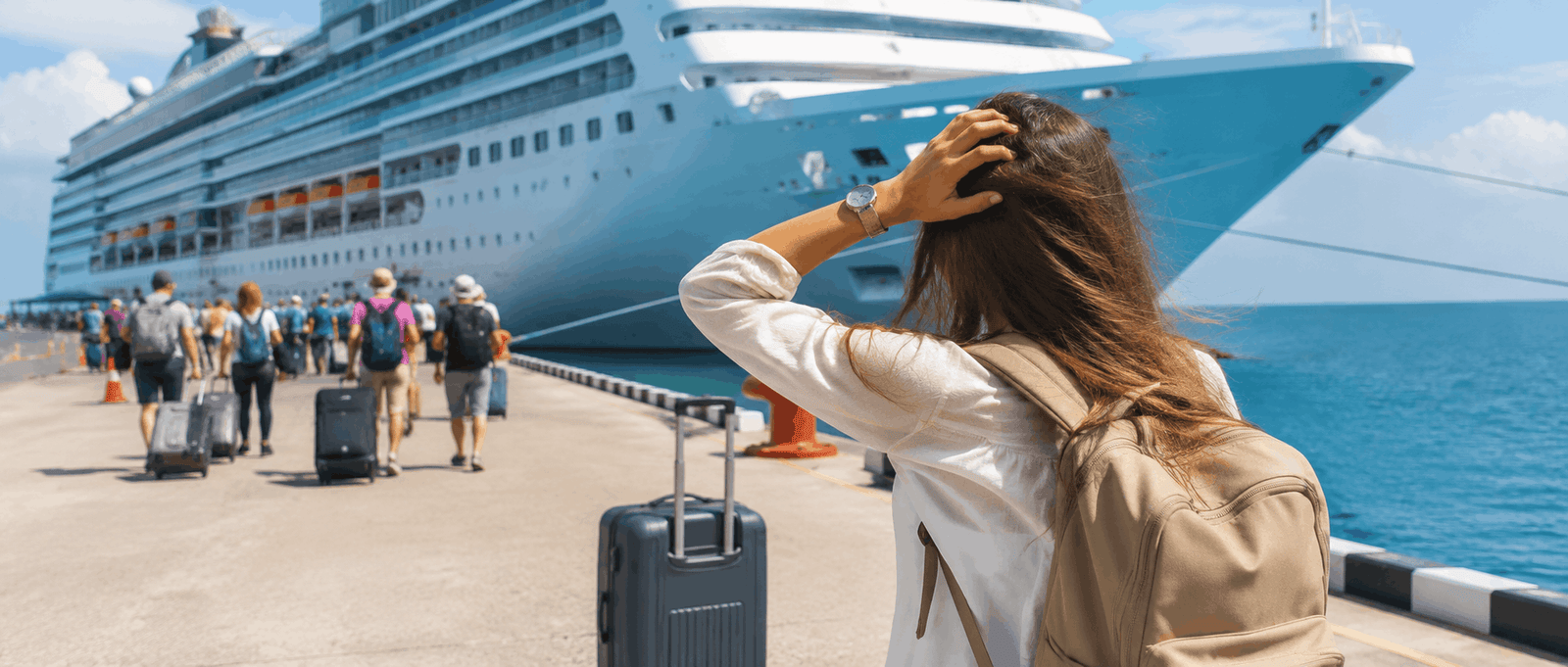
The anticipation that builds in the weeks before a cruise is unlike any other kind of travel excitement. You’ve chosen your ship, locked in your cabin, and bookmarked every shore excursion that caught your eye. Yet for many travelers — especially those sailing solo — one quiet question tends to surface somewhere between packing and embarkation day: “Who am I actually going to spend this trip with?”
It’s a more common feeling than most people admit. Stepping onto a ship with thousands of strangers can feel overwhelming, even for confident social personalities.
The good news is that the most memorable cruise on new friendships rarely start on the Lido deck. They start long before anyone boards.
Over the past few years, a growing number of cruise travelers have discovered that connecting with fellow passengers before departure doesn’t just ease social anxiety — it transforms the entire experience. When you already know a name or two by the time you step onto the gangway, the first few days feel less like breaking ice and more like picking up where you left off.
Why the Best Cruise Connections Start Before Departure
Cruises are uniquely social environments. Everyone shares the same ship, the same ports, and many of the same daily rhythms. And yet, meeting people onboard isn’t always as natural as it sounds. Crowded dining rooms, packed pool decks, and entertainment venues full of strangers can feel more like a convention than a community — at least in the early days.
Research consistently shows that familiarity reduces social anxiety. When travelers arrive knowing even one or two people, their confidence on board increases significantly. According to Psychology Today, anticipatory social connection — building relationships before entering a new environment — is one of the most effective ways to ease the discomfort of unfamiliar group settings.
Beyond the emotional benefit, pre-cruise connections are simply practical. Travelers who connect early are far more likely to coordinate shore excursions, split the cost of private tours, find dining companions for specialty restaurants, and build the kind of group chemistry that turns a good trip into a great one.
The Rise of Social Travel Platforms
Not long ago, travelers who wanted to connect before sailing had two real options: post on a cruise forum and hope someone responded, or simply show up and figure it out. Both approaches left a lot to chance.
That’s changed meaningfully. Dedicated social travel platforms now allow passengers to find others on the exact same sailing, filter by shared interests, and start genuine conversations weeks before the ship leaves port. The shift mirrors broader changes in how people approach travel planning — according to Statista’s 2024 travel technology report, over 60% of travelers now use a mobile app at some point in their pre-trip planning.
One platform that has specifically focused on this gap is Seaya. Designed for cruise travelers rather than general social networking, it connects passengers based on their specific sailing and shared interests — whether that’s fitness, food, nightlife, or simply finding someone who prefers a slow morning coffee over an 8 AM excursion. What makes it work is the specificity: you’re not browsing thousands of strangers, you’re finding the subset of people already booked on your ship who happen to share your travel style.
How to Introduce Yourself Without It Feeling Awkward
One of the biggest concerns travelers have about pre-cruise networking is knowing how to start without sounding forced or overly eager. In practice, it’s far easier than it seems — because the shared context already does most of the work.
Everyone in a pre-cruise community has the same trip in common. That’s an unusually rich starting point. A question about a specific port, a comment about which dining package seems worth it, or even a casual remark about how many sea days you’re looking forward to — these are natural, low-stakes ways to open a conversation that doesn’t feel like networking.
Being specific also helps attract the right people. There’s a meaningful difference between posting “Hi, looking to meet people!” and writing “Hi — I’m a solo traveler who loves trivia nights and slow mornings. Anyone else planning to do the food tour in Dubrovnik?” The second version gives people something to respond to, and it filters for genuine compatibility rather than just proximity.
Mentioning your travel vibe honestly is equally useful. Being upfront about whether you’re a “book on the balcony” type or a “party on the pool deck” type saves everyone time and leads to more natural friendships. According to Verywell Mind, authentic self-disclosure in early conversations is one of the strongest predictors of lasting social bonds — even when those bonds begin online.
Digital Roll Calls and Social Media Groups
One of the longest-standing traditions in the cruising world is the Roll Call — a digital gathering point where passengers on the same ship and sailing date introduce themselves and begin coordinating before departure.
Facebook groups are the most common venue for this. Search your ship’s name alongside your sailing date and you’ll typically find an active group where passengers are already sharing cabin numbers, discussing dinner reservations, and organizing meet-and-greet events for the first night. Sites like Cruise Critic also host roll call forums that have been running for decades, making them a reliable source not just for social planning but for ship-specific advice from seasoned cruisers.
These communities work best when you approach them the same way you’d approach any genuine conversation — with curiosity and contribution rather than just a request to connect. Answering someone else’s question, sharing a tip about a port you’ve visited before, or even reacting positively to another traveler’s excitement tends to generate more organic connections than a formal introduction post.
Shared Excursions: The Fastest Way to Build Real Friendships
Nothing accelerates a new friendship quite like a shared adventure. Travelers who spend a day exploring a port together — navigating unfamiliar streets, trying local food, managing the occasional unexpected detour — tend to leave that day feeling like they’ve known each other for years.
This is one reason why independent small-group excursions often create stronger social bonds than large ship-sponsored tours. When you share a private taxi or a small boat with four other people rather than filing onto a coach with forty, the dynamic is fundamentally different. Conversations happen naturally. People look out for each other. The experience becomes a story you tell together.
Coordinating these kinds of excursions before the cruise is where platforms like Seaya genuinely earn their place. Using the app’s interest filters, you can find fellow passengers who’ve already expressed interest in the same type of port experience — whether that’s a cooking class in Sicily, a hiking trail in Kotor, or a quiet afternoon at a less-touristy beach — and propose something specific before the ship even arrives. The Independent has reported on the growing trend of cruise travelers organizing private shore experiences as a social strategy, noting that shared off-ship experiences consistently rank among the most memorable parts of any voyage.
A Guide for Solo Cruisers in Particular
Solo cruising has grown into one of the fastest-expanding segments of the entire cruise industry. Cruise lines have responded by adding more single cabins, hosting dedicated solo traveler events, and designing ships with communal spaces that make it easier to meet people organically.
Still, showing up alone to a ship with thousands of passengers and hoping it all works out is a gamble that many solo travelers would rather not take. The first day or two — before routines form and groups solidify — is when most onboard social circles take shape. Arriving without any connections can mean spending those critical early hours feeling like an outsider.
Starting conversations before the cruise eliminates that pressure almost entirely. Solo travelers who’ve already chatted with a handful of people through Seaya or a Facebook group arrive at embarkation with plans already in place — a meet-up at the Sail Away party, a shared dinner reservation, a group heading ashore together on day two. The difference in confidence and enjoyment is significant.
Honesty is also one of the most disarming social tools a solo traveler can use. Mentioning that you’re hoping to meet people on a cruise — whether in a digital group or face-to-face on the ship — tends to open doors rather than close them, because the vast majority of fellow passengers feel exactly the same way and are simply waiting for someone else to say it first.
Communicating Safely and Setting the Right Expectations
Pre-cruise social planning, like any form of online communication, is best approached thoughtfully. Taking time to get comfortable with people gradually, keeping initial in-person meetings in public spaces, and trusting your instincts if something feels off are all reasonable habits regardless of the platform you’re using.
It’s also worth managing expectations in both directions. Pre-cruise friendships don’t always translate perfectly into real-life chemistry — and that’s fine. The goal isn’t to arrive with a locked-in social calendar but to take the edge off the unknown. Even one or two familiar faces makes a ship of 3,000 people feel dramatically smaller and more welcoming.
On the other side, not every cruise connection needs to become a lasting friendship. Some of the best cruise relationships are simply good company for a few days — someone to laugh with at the comedy show, a dining companion who makes the evening more interesting, a port partner who shares your pace. According to Harvard Health, even brief positive social interactions have measurable benefits for mood and wellbeing, which is reason enough to invest in them.
From Online to In-Person: Making the First Meeting Easy
The first time you meet someone in person after connecting online can feel a little like a first date — there’s a moment of slight awkwardness before the conversation finds its footing. The simplest way to handle this is to keep the first meeting casual and time-limited.
Suggesting a Sail Away toast at a specific bar on embarkation day works well for exactly this reason. It’s a natural, celebratory moment when everyone is in a good mood, the ship is exciting and new, and if the connection doesn’t quite click the way you hoped, the departure energy makes it easy to drift naturally toward other parts of the cruising without feeling awkward.
From there, the best cruise friendships tend to grow organically through repeated small encounters — a shared trivia team, a coincidentally overlapping breakfast, a conversation at the rail during a scenic sail-in. The groundwork laid before boarding simply gives those moments a head start.
Final Thoughts
A cruise is one of the few travel experiences where the people genuinely shape the trip as much as the destinations do. The excursions, the dining, the entertainment — all of it is more enjoyable when you share it with someone.
The shift toward pre-cruise social planning isn’t just a trend. It reflects something real about how travel has changed: people want connection, and they no longer want to leave it entirely to chance. Whether you join a Facebook Roll Call group, use a platform like Seaya to find passengers who share your interests, or simply send a friendly message to someone whose excursion plans caught your eye — the act of reaching out before boarding sets a different tone for everything that follows.
Start at least 30 days before sailing. Be genuine about who you are and what kind of experience you’re looking for. Keep the first in-person meeting light and low-pressure. And remember that some of the best travel friendships in the world began with nothing more than two people who happened to book the same ship and were brave enough to say hello first.

For Christian, Seaya is the culmination of a career-long obsession with innovation. By leveraging his deep technical expertise to dismantle legacy constraints, Christian is transforming the way travelers connect at sea. He is dedicated to keeping Seaya at the vanguard of the “what’s next,” proving that the most powerful innovations happen when world-class tech meets a completely new frontier.
SUBSCRIBE NOW
Your Next Cruise Adventure Awaits
- News & articles
Related Blog