Key Takeaways
- Shared experiences are remembered as more vivid and more emotionally meaningful than the same experiences had alone.
- Cruises are structurally built for connection, from dining rooms to shore excursions to onboard entertainment.
- The people you meet, not just the places you visit, are what most cruisers remember years later.
- Shared adventures, funny moments, and new experiences become stronger memories when someone else is there to share them.
- Feeling connected onboard makes the entire trip more enjoyable in real time, not just in hindsight.
- Modern travelers increasingly plan for connection, not just for destinations.
- Solo cruisers benefit enormously from the built-in social structure that cruising offers.
Chances are, the cruise memories that still make you smile months later aren’t just about where the ship docked or how good the buffet was. They’re about the retired couple from Ohio who taught you how to play mahjong on sea day. The stranger who became your dinner companion for seven nights straight. The group of near-strangers who talked you into a 6 a.m. hike up a volcano in St. Lucia, and how none of you have stopped talking about it since.
A cruise is one of the few Cruise Vacation left where you’re surrounded by hundreds, sometimes thousands, of people moving through the same days, the same ports, the same sunsets, at the same time. That’s not a coincidence you should ignore. It’s the entire point.
This article is about why that happens, why it matters more than most travelers realize, and how sharing your cruise journey, before you even step onboard, changes the entire shape of the trip. Because a vacation you experience by yourself is a story. A vacation you share is a memory. And there’s a real difference between the two.
Why Sharing Your Cruise Journey Matters
Psychologists have studied this for decades, and the finding holds up every time: experiences shared with other people are remembered as more intense, more positive, and more emotionally vivid than the exact same experience had alone. It’s not the event itself that gets stored in memory as much as the feeling of that event, and feelings are amplified by other people.
Think about the last time something funny happened to you when you were completely alone. Now think about the last time something funny happened with a friend. Which one do you still tell as a story? Which one made you laugh harder in the moment?
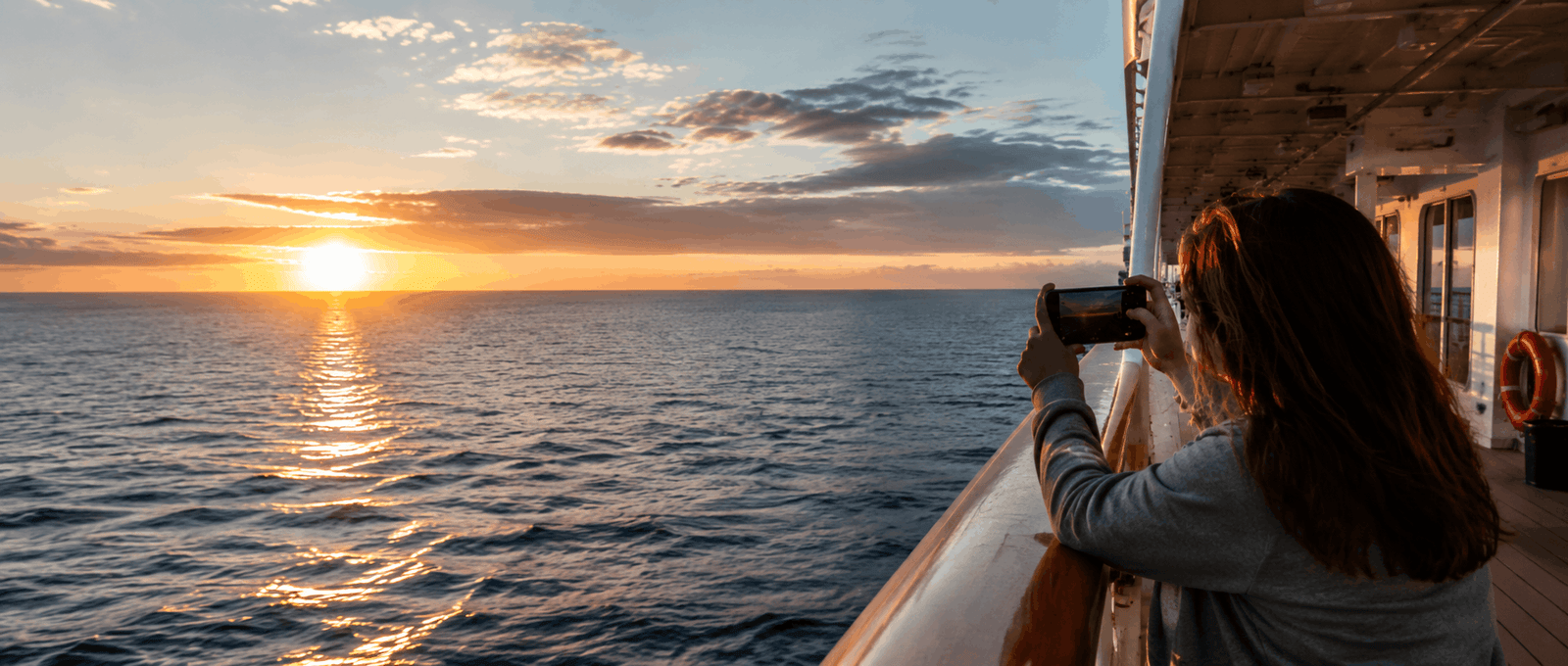
Cruising happens to be one of the best environments in the world for this effect because it removes almost every barrier that normally keeps strangers apart on land. You’re not rushing to a meeting. There are no daily errands constantly pulling your attention away. Instead, you are sitting at the same dinner table, watching the same show, and standing at the same railing as the cruise ship pulls into port. Proximity plus shared time plus shared novelty is the exact formula that turns strangers into stories.
That’s the emotional core of why sharing your cruise journey matters. It’s not a nice-to-have. It’s the mechanism by which an ordinary vacation becomes an unforgettable one.
There’s also a simpler, more human reason. Memories fade fast when there’s no one to help you hold onto them. A photo you took alone gets scrolled past. A story you can retell with someone who was actually there gets told for years, because you’re both keeping it alive. Shared memories have a second owner, which means they’re far less likely to disappear.
Cruises Are Built Around Shared Experiences
Cruise lines didn’t accidentally stumble into being social spaces. Ships are designed, deck by deck, to put people in each other’s paths.
Dining rooms seat you with people you’ve never met, sometimes for the entire length of the sailing. Traditional set dining is built almost entirely around the idea that a shared table produces a shared trip.
Shore excursions put a busload of strangers through the same jungle trek, the same snorkeling reef, the same cathedral tour, and by the end of it, half the bus is exchanging numbers.
Activities like trivia nights, pool games, and dance classes only work because someone else shows up. A trivia team of one isn’t a team.
Entertainment venues create a shared emotional beat. Hundreds of people laughing at the same comedian, gasping at the same acrobat, or singing along to the same closing number at a Broadway-style show walk out of that theater a little bit bonded, even if they never speak.
Group events, from sail-away parties to themed deck nights, exist purely to create a communal moment. There’s no “solo version” of a sail-away party. It only works because everyone is there together, watching the same horizon disappear.
Conversations onboard happen more easily than almost anywhere else in modern life. There’s a strange, wonderful permission that exists on a ship: you can strike up a conversation with someone in a hot tub, in line for the buffet, or at the railing during a sunset, and it doesn’t feel intrusive. It feels expected.
No other vacation format concentrates this many natural Social Cruise touchpoints into a few days. A cruise isn’t just a place where you can share your journey. It’s a place engineered, whether cruise lines say it out loud or not, to make sharing almost unavoidable.
Why People Create the Best Cruise Memories
Ask a hundred cruisers what they’d do differently on their next trip, and very few will say “pick a different ship.” Ask what they loved most about their last cruise, and the answers cluster around people almost every time.
Unexpected friendships are the number one thing cruisers bring up unprompted. The couple you met at the pool bar who ended up joining you for three ports. The solo traveler two cabins down who became your walking buddy on every excursion. These friendships form fast on a ship, faster than they typically would on land, because you’re already sharing meals, schedules, and downtime with the same group of people for days at a time.
Shared adventures stick because risk and novelty are two of the strongest memory triggers we have. Ziplining through a rainforest canopy with someone who was just as nervous as you is a completely different memory than doing it with a stranger who forgets your name an hour later. The adventure gets better because the fear and the thrill were witnessed by someone else.
Funny moments almost always need an audience. The ship rocking just as someone reaches for their cocktail. A crew member’s dry joke during the safety briefing. A shared mishap on a tender boat. These moments live on because someone else was there to laugh with you, not just at you.
Meeting people from different places adds a layer that few other vacations offer. On a single sea day, you might talk to a family from Manila, a retired teacher from Manchester, and a honeymooning couple from São Paulo. Every conversation adds a small window into a life you’d never otherwise glimpse, and that kind of perspective tends to stay with people long after the tan fades.
How Shared Experiences Make Cruises More Enjoyable
There’s a practical layer here too, beyond the emotional one. Shared experiences don’t just feel better in hindsight. They make the trip itself more enjoyable while it’s happening.
Feeling connected reduces the low hum of loneliness that can creep into even a beautiful vacation. A stunning sunset feels a little empty if there’s no one to turn to and say “look at that.” Sharing it, even with someone you met three hours earlier, fills that gap.
Discovering new activities becomes easier when other people are recommending what they loved. That hidden beach a fellow passenger mentioned at breakfast might never have made it onto your radar otherwise.
Trying new experiences feels lower-risk in a group. Most people won’t sign up for a solo scuba lesson, but they’ll happily join if someone else is going too. Shared courage is real, and cruises are full of chances to borrow it from the person next to you.
Creating stories together means you leave the ship with more than photos. You leave with inside jokes, shared references, and moments only a small group of people will ever fully understand, which is part of what makes them feel special.
Making lasting friendships extends the value of the trip well past the final disembarkation. Many cruisers stay in touch with people they met onboard for years, sometimes planning entire future cruises together.
Why Modern Travelers Want More Than Just a Vacation
Travel habits have shifted. A growing number of travelers, especially those planning cruises for the first time, aren’t just asking “where can I go?” They’re asking “who can I go with, and who will I meet when I get there?”
This is part of a broader move toward experience-based travel, where the value of a trip is measured less by the destination checklist and more by how it felt. A perfectly good beach means little without a story attached to it.
Social travel trends have accelerated this shift. Solo travel is more popular than ever, but “solo” increasingly doesn’t mean “alone the entire time.” It means traveling without a fixed companion while staying open to connection along the way, and cruises are perfectly suited to that mindset.
Meaningful connections have become something travelers actively plan for rather than leave to chance. People research which sailings tend to have a younger crowd, which cruise lines lean more social, and increasingly, which platforms can help them find fellow passengers before the ship even leaves port.
Community-focused travel reflects a broader cultural craving. After years of increasingly digital, isolated daily routines, more travelers are treating vacations as a chance to rebuild the kind of in-person connection that’s harder to find at home. A cruise, with its shared spaces and shared schedule, delivers that almost by design.
Solo Travelers and the Power of Shared Cruise Moments
Traveling alone and feeling alone are not the same thing, and cruising might be the clearest proof of that anywhere in the travel world.
Solo cruisers consistently report that cruising alone feels less isolating than almost any other type of solo trip. Part of that comes down to structure. There’s always a scheduled activity, a communal dining option, or a shared lounge nearby. You’re never stuck in a hotel room with no easy way to meet anyone.
Meeting other passengers happens naturally through shared meals, group excursions, and onboard events built specifically with solo travellers in mind, including solo meetups that many cruise lines now host on the first full day at sea.
Finding people with similar interests is easier than it sounds. Trivia teams, book clubs, fitness classes, and themed parties all act as natural filters. If you show up to a wine tasting, you’re already standing next to people who share at least one interest with you.
Creating confidence while traveling is one of the quieter, longer-lasting benefits of solo cruising. Striking up a conversation with a stranger at a bar back home can feel intimidating. Doing it on a ship, where everyone is a little more open and a little more willing to talk, is a low-stakes way to practice that skill. Many solo cruisers say they leave the ship more confident in social situations generally, not just on vacation.
For solo travelers specifically, sharing the cruise journey isn’t a bonus. It’s often the entire reason the trip feels worth taking in the first place.
Ways to Share Your Cruise Journey With Others
Sharing a cruise journey doesn’t have to be left to chance. There are concrete ways to increase the odds of meeting the right people and having those deeper moments.
Joining cruise communities, whether online forums, social groups, or apps built for cruisers, gives you a head start before you even pack a bag. You can find out who else is sailing, swap tips, and sometimes plan to meet up onboard.
Attending onboard events designed for connection, like welcome mixers, solo traveler meetups, or theme nights, puts you directly in a room with people who are also looking to connect.
Group excursions are one of the most reliable ways to bond quickly. Spending four hours on a catamaran with the same fifteen people creates more natural conversation than almost anything else on the ship.
Meeting passengers before sailing has become increasingly common as more travelers look to arrive already knowing a few faces. Group chats, roll calls, and social platforms built specifically for this purpose let you build a small circle before day one.
Participating in activities, even ones that feel a little outside your comfort zone, multiplies your chances of connection. The person who signs up for the pottery class, the dance lesson, or the trivia night tends to leave with more stories than the person who skips them.
How Technology Is Changing Cruise Connections
For most of cruising’s history, meeting people was entirely a matter of luck. You either ended up at a good dinner table or you didn’t. You either bumped into the right person at the pool bar or you spent the week wishing you had.
That’s changing.
Modern travelers connect differently than they did even ten years ago. Instead of waiting to see who they’re seated with, more cruisers now look for ways to find their people in advance.
Cruise communities built specifically around sailings, ship names, or departure dates let passengers introduce themselves to each other weeks before boarding.
Digital planning has become part of the pre-cruise ritual for a growing number of travelers, right alongside booking excursions and choosing a dining time. Planning who to meet is now as normal as planning what to see.
Finding people before trips removes the guesswork. Instead of hoping the ship’s dynamics work out in your favor, you can identify travelers with similar interests, similar itineraries, or a similar travel style ahead of time, and walk onto the ship already looking forward to seeing a familiar face.
This shift matters because it takes something that used to be entirely random and turns it into something travelers have real influence over. You don’t have to hope for a good seatmate anymore. You can go looking for one.
How Seaya Helps Travelers Create Better Cruise Memories
Great cruise memories often begin well before the ship leaves the dock, and that’s the gap Seaya was built to close.
Seaya exists because so many of the best cruise moments come down to who you happen to meet, and “happen to” is a lot to leave to chance on a trip you’ve been looking forward to for months. Instead of waiting to see who ends up at your dinner table, Seaya helps travelers meet people on a cruise before departure day even arrives.
For travelers sailing solo, that can mean connecting before sailing with a few other solo passengers on the same ship, so the first night doesn’t feel like starting from zero. For families or couples, it can mean discovering fellow passengers with kids the same age, or a similar taste in excursions, and arranging to explore a port together instead of separately.
Seaya also makes it easier to plan activities together ahead of time, whether that’s coordinating a shore excursion with a small group, finding others interested in the same specialty dining experience, or simply lining up a few names to look for once you’re onboard. What might have taken an entire sea day to sort out through trial and error can start happening before you’ve even finished packing.
At its core, the idea is simple: shared experiences are what make cruises memorable, and those experiences are easier to find when you’re not starting from a blank slate on embarkation day. Seaya doesn’t replace the spontaneity that makes cruising special. It just gives that spontaneity a better starting point, so travelers can spend less time hoping for connection and more time actually building cruise friendships that last well past the final port.
Tips for Creating More Meaningful Cruise Memories
Some of the best cruise memories are the ones you set yourself up for, even if they still feel like they happened by chance.
Be open to meeting people. The single biggest factor in how social a cruise feels usually isn’t the ship or the itinerary. It’s whether the passenger decided, even quietly, to be open to a conversation instead of avoiding one.
Try new experiences. The moments people talk about years later are almost never “I stayed in my cabin and read.” They’re the ones that came from saying yes to something slightly outside the comfort zone.
Join activities. Trivia, dance classes, cooking demos, and deck games exist for a reason. They’re low-pressure ways to end up standing next to someone you’ll actually remember.
Explore with others. A port visited with company almost always produces a richer story than the same port visited alone, even if the itinerary is identical.
Capture moments. Photos and quick notes matter, not because they replace the memory, but because they help you (and the people you shared it with) hold onto the details that fade fastest, like exact conversations or small inside jokes.
Stay connected after sailing. Exchanging contact information isn’t just a formality. Many of the strongest cruise friendships are the ones that continue with a message weeks later, a shared photo, or plans for a future sailing together.
The Future of Shared Cruise Experiences
Social cruising isn’t a passing trend. It’s a reflection of where travel as a whole is heading.
Growth of social cruising is visible in how cruise lines themselves are adapting, adding more solo cabins, more group-friendly excursions, and more onboard events built around connection rather than just entertainment.
More connected travelers are actively seeking trips that offer both structure and spontaneity, a combination cruising has always quietly offered but that more people are now deliberately looking for.
Community-based travel experiences are likely to keep expanding as more travellers realize that the “who” of a trip matters just as much as the “where.” Platforms that help passengers meet before boarding are part of a larger shift toward travel that’s planned around people, not just itineraries.
The ships will keep getting bigger, and the itineraries will keep expanding, but the core truth isn’t going to change. The best cruise memories will keep coming from the people on board, not just the ports they visit.
There’s also a generational shift worth noting. Younger travelers, in particular, are choosing cruises at rates that would have surprised the industry a decade ago, and connection is a big part of why. For a generation that grew up curating experiences to share, a vacation that’s easy to talk about, easy to bond over, and easy to relive with new friends holds obvious appeal. That’s pushing cruise lines to lean even further into social design, from redesigned lounges built for mingling to itineraries built around group activity rather than passive sightseeing. The travelers booking these sailings aren’t just buying a week at sea. They’re buying a week with the possibility of people worth remembering, and the cruise industry has taken notice.
FAQs
1. Why do shared travel experiences create better memories?
Experiences shared with others tend to feel more emotionally intense in the moment and are reinforced afterward through retelling, which makes them easier to recall vividly years later compared to experiences had alone.
2. How can I make my cruise more memorable?
Prioritize connection alongside sightseeing. Join group activities, say yes to shore excursions with others, and stay open to conversations with fellow passengers, since these are the moments most cruisers end up remembering most.
3. Is cruising a good way to meet people?
Yes. Cruises naturally place passengers together for meals, activities, and excursions over several days, which creates far more opportunities for organic connection than most other vacation formats.
4. How do you meet other passengers on a cruise?
Common ways include shared dining, group excursions, onboard events like trivia or mixers, solo traveler meetups, and increasingly, pre-cruise communities or apps that connect passengers before boarding.
5. Can you make lifelong friends on cruises?
It happens more often than people expect. The combination of shared meals, shared schedules, and shared adventures over multiple days creates the kind of fast bonding that can lead to friendships lasting well beyond the trip.
6. Are cruises good for social travelers?
Very much so. Cruises are built around communal spaces and group activities, making them one of the more social vacation formats available, especially compared to independent land-based travel.

For Christian, Seaya is the culmination of a career-long obsession with innovation. By leveraging his deep technical expertise to dismantle legacy constraints, Christian is transforming the way travelers connect at sea. He is dedicated to keeping Seaya at the vanguard of the “what’s next,” proving that the most powerful innovations happen when world-class tech meets a completely new frontier.
SUBSCRIBE NOW
Your Next Cruise Adventure Awaits
- News & articles