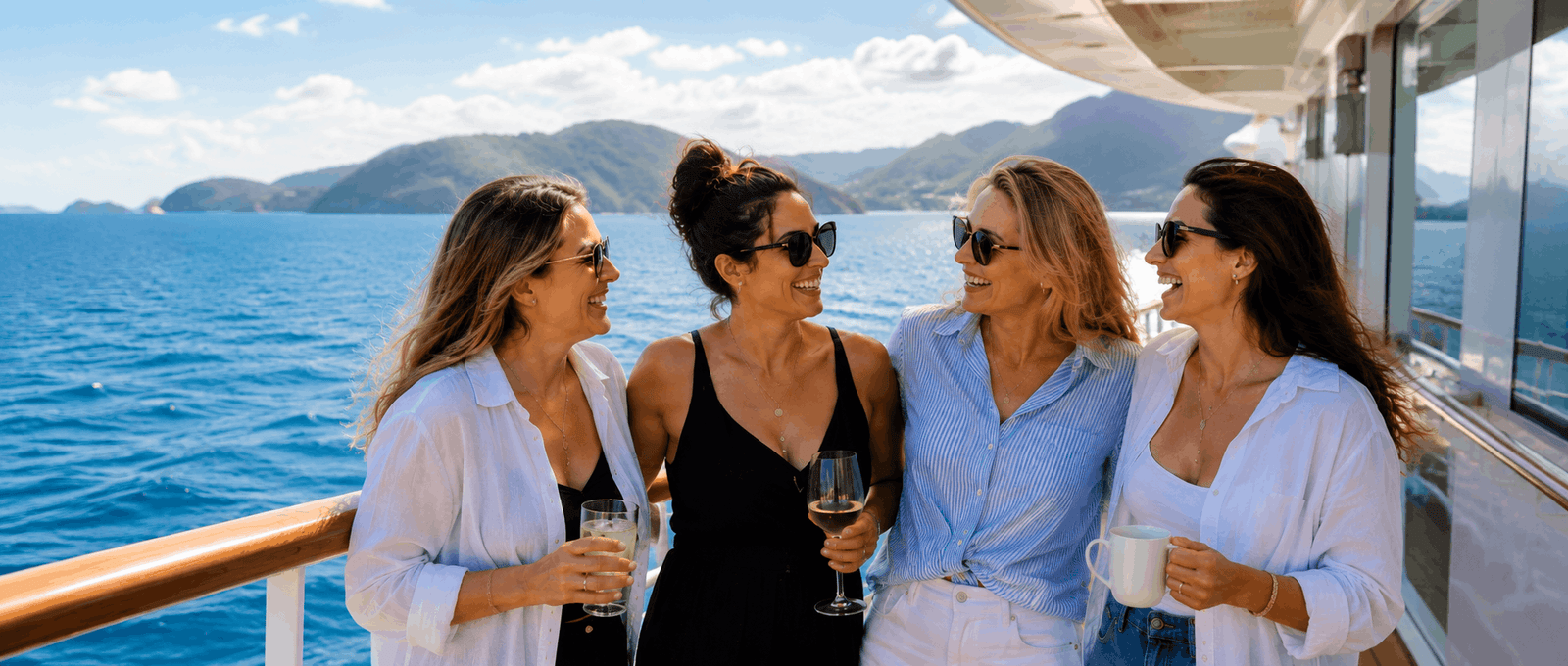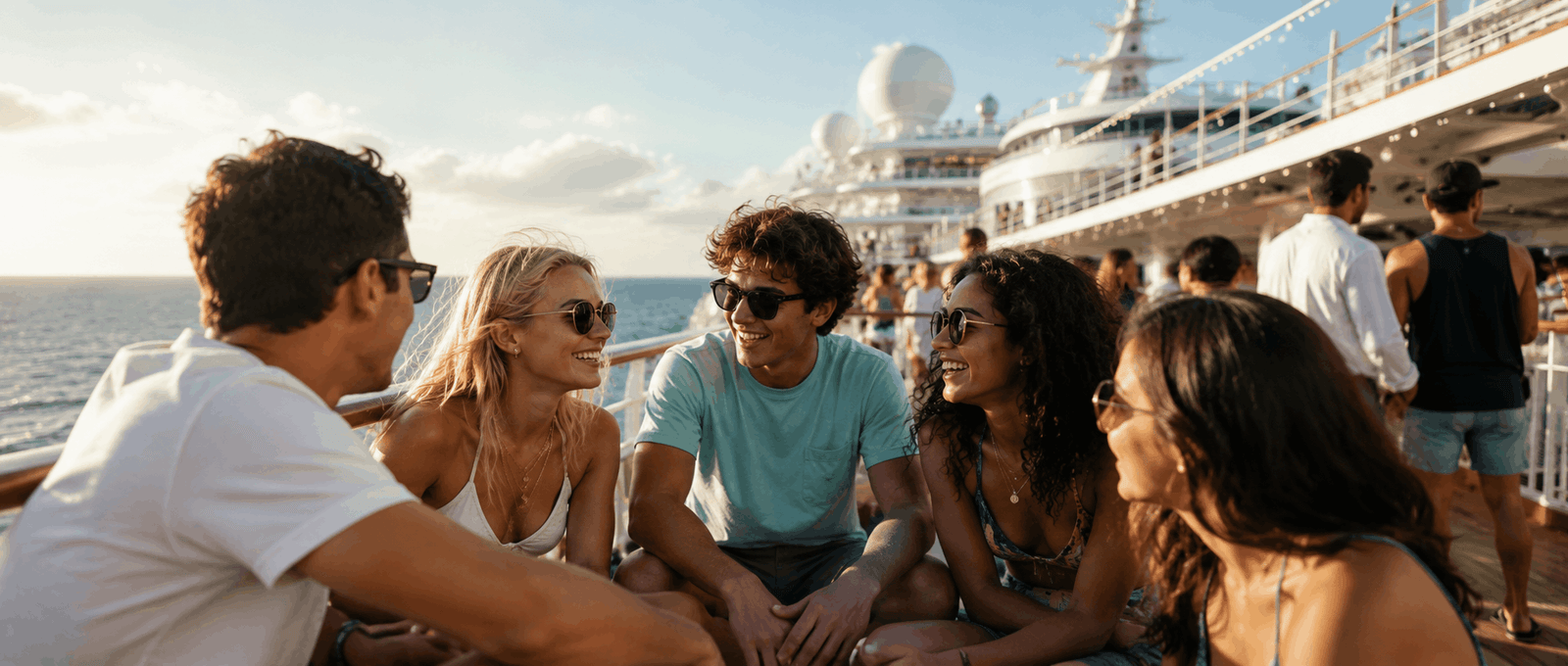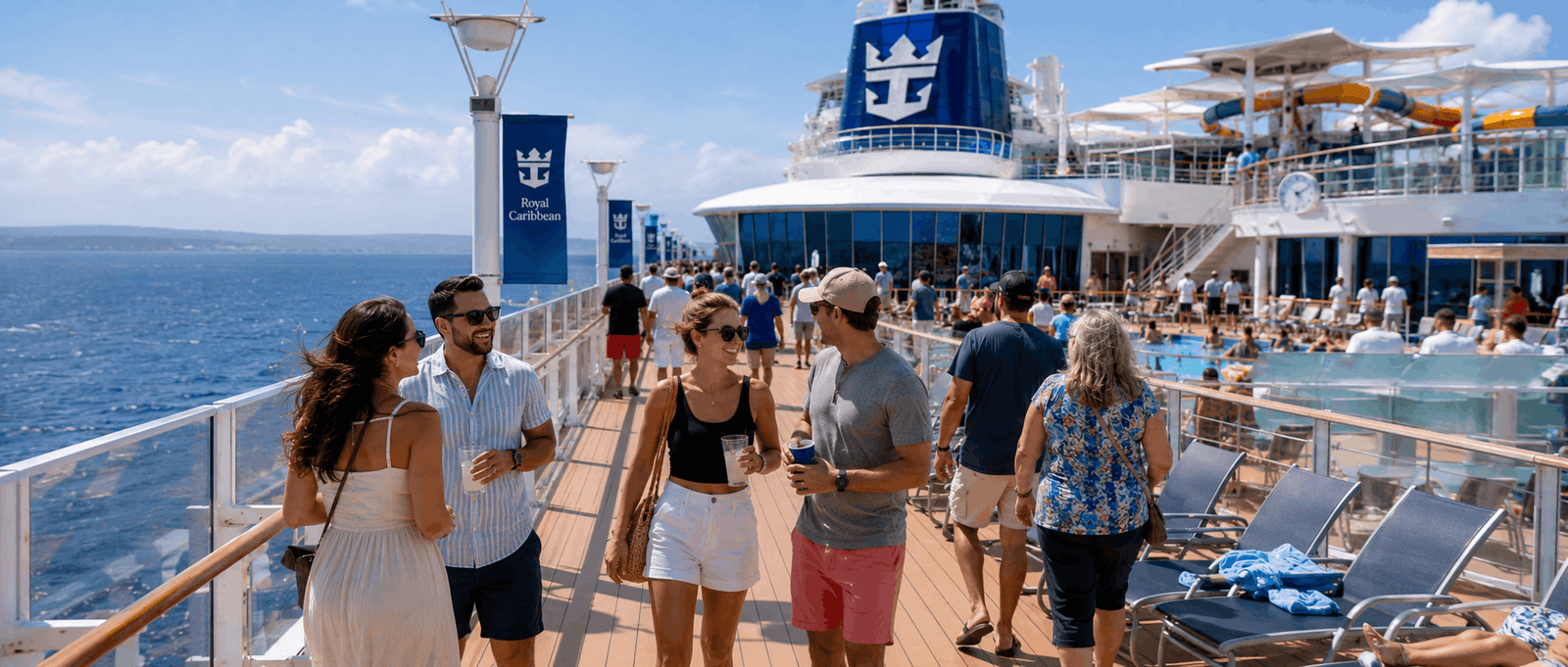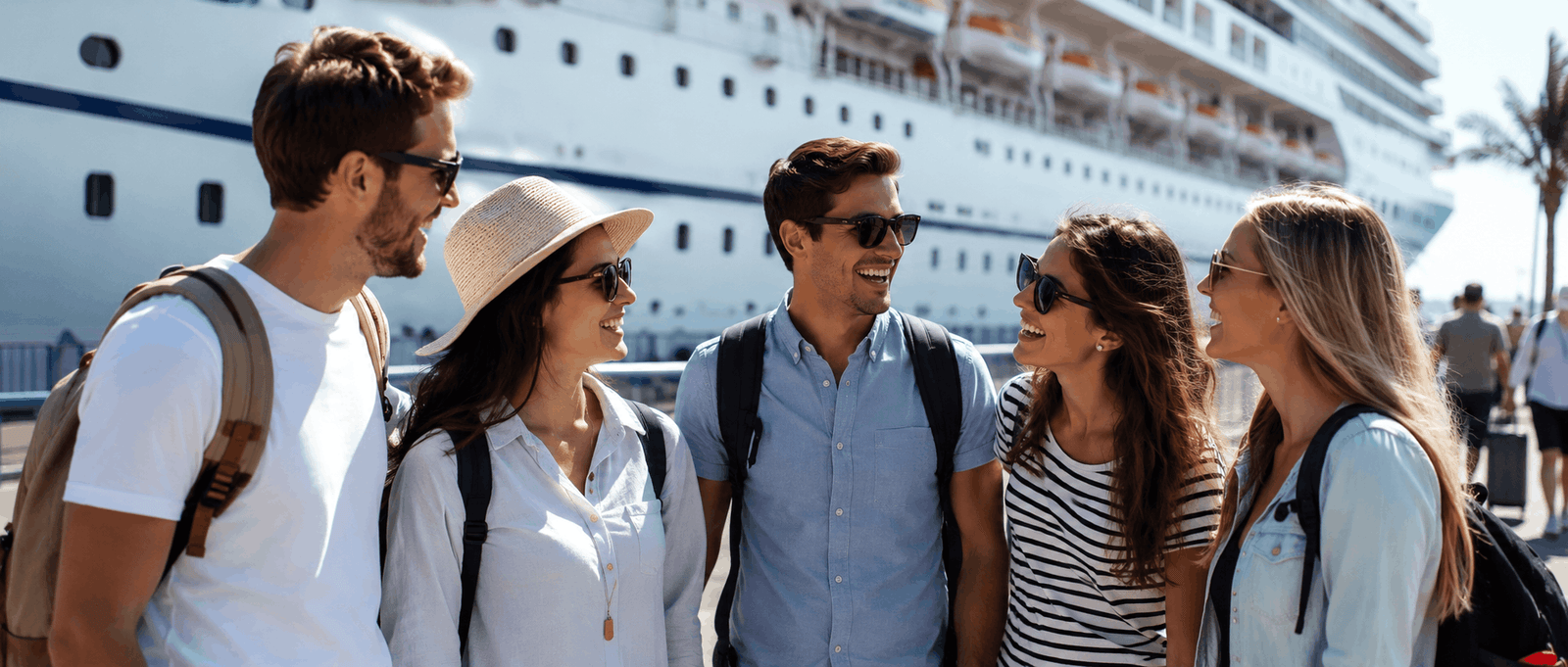
Picture this: you step onto a ship carrying 4,000 passengers, the gangway crowds behind you, and the atrium stretches out in every direction. It is exhilarating — and for many travelers, just a little overwhelming. The dining rooms are full of strangers, the pool deck is buzzing with unfamiliar faces, and somewhere in the back of your mind you wonder whether you will spend the next seven days mostly on your own.
It does not have to be that way. A growing number of cruisers have discovered that the secret to a genuinely social voyage is not luck — it is preparation. Meeting people on a cruise has changed dramatically in recent years, and travelers who connect before embarkation day consistently report richer, more memorable experiences than those who leave it entirely to chance.
This guide covers everything you need to know: why early connections matter, where to find them, how platforms like Seaya are reshaping social travel, and the practical steps that turn a ship full of strangers into a community you actually want to spend a week with.
Why Connecting Before the Cruise Changes Everything
There is a particular kind of anxiety that comes with the first day of a big cruise. Large ships, unfamiliar layouts, crowded public spaces, and the unspoken social pressure of mealtimes can make even confident travelers feel slightly adrift. Research consistently shows that familiar faces ease social anxiety in new environments — and on a cruise, that principle is especially powerful.
When you have already exchanged a few messages with someone before boarding, the dynamic shifts entirely. You are not introducing yourself cold over a noisy dinner table. You are reconnecting with someone you already know a little, and that familiarity carries real warmth. It makes the ship feel smaller in the best possible way — less like a floating resort and more like a neighborhood where you always have someone to grab a coffee with at the atrium bar.
There is also a practical dimension that experienced cruisers understand well. Private shore excursions are almost always cheaper and more personalized than ship-sponsored ones, but they require enough people to make them cost-effective. Specialty restaurant reservations fill up fast. The best entertainment packages often sell out before sailing. If you wait until day three to start making friends, you may find that the best opportunities are already gone.
Early connections do not just improve the social side of your trip — they make the logistical side smarter too.
The Rise of Social Travel and Pre-Cruise Networking
The idea of arranging social connections before a trip is not new, but the tools available to travelers have improved dramatically. A decade ago, the main option was a cruise line’s own message boards or large, noisy Facebook groups where complaints about cabin upgrades drowned out genuine conversation. Today, purpose-built platforms have made the process far more intentional and far less chaotic.
According to Cruise Industry News, the cruise industry is seeing sustained growth in solo bookings, with many lines now offering dedicated solo lounges and single-occupancy cabins to meet demand. That growth has accelerated the need for smarter social tools — solo travellers want companionship without the awkwardness of cold introductions, and they want to find it on their own terms.
Social travel, broadly defined as travel designed around shared experiences and deliberate human connection, has become one of the defining trends in modern tourism. Travelers are no longer satisfied with beautiful destinations viewed in isolation. They want stories, shared laughter, and the kind of friendships that make a trip genuinely memorable — sometimes even long after they have returned home.
Using the Seaya App to Find Cruise Companions
One platform that has gained real traction among cruisers is Seaya, an app designed specifically for travellers who want to build meaningful connections before their trip begins. Unlike general social media or sprawling cruise forums, Seaya is focused exclusively on travel-based connection — which means the conversations stay relevant and the people you meet are genuinely interested in the same kind of experience you are.
The platform lets users connect with people on the same itinerary, which immediately narrows the field in a useful way. You are not browsing through thousands of strangers hoping someone happens to be on your ship — you are connecting directly with fellow passengers who share your sailing dates and, often, your interests.
What sets Seaya apart from throwing your ship’s name into a Facebook search is the quality of interaction it encourages. The platform is built around authentic traveler profiles and respectful communication, which means conversations tend to feel more genuine and less like shouting into a void. For introverted travelers especially, the ability to build a little conversational history before boarding can make the first day feel far less daunting.
Many users report that by the time they step onto the ship, they already have dinner plans, a partner for a shore excursion in port, or simply a familiar name to look out for. That head start is surprisingly powerful.
Roll Calls and Social Media Groups: Still Worth Your Time
Before dedicated platforms like Seaya existed, the “Roll Call” was the gold standard for pre-cruise socializing, and it remains genuinely useful today. A Roll Call is essentially a thread — typically on cruise forums such as Cruise Critic — where passengers on a specific sailing introduce themselves, share their cabin numbers, and start organizing unofficial activities.
Most major sailings also have private Facebook groups created by passengers, and a quick search for your ship name and departure date will usually surface one. These groups are a good way to get a feel for the demographic mix of your cruise and to spot others with similar interests before you board.
The limitation of both Roll Calls and Facebook groups is signal-to-noise ratio. Large groups tend to fill quickly with logistics complaints, upgrade requests, and off-topic discussions that can make it hard to find genuine social connections. That is why many travelers now use these spaces as a starting point and then migrate meaningful conversations to more focused platforms.
A sensible approach is to join your ship’s Facebook group and Roll Call thread early, then use Seaya to deepen the connections that feel most promising. The two approaches complement each other well.
Practical Ways to Make the Connection Feel Natural
The travelers who build the best pre-cruise connections share one quality: they are specific. Posting “Hi, I’m on this cruise, anyone want to be friends?” rarely leads anywhere. But posting “I’m obsessed with trivia nights and 80s music — anyone want to put a team together for the cruise game shows?” will almost always get a response from the right people.
Specificity signals genuine personality, and genuine personality is what makes people want to spend time with you. Mention the shore excursion you are most excited about, the type of dining experiences you prefer, or the onboard activities you are hoping to try. These details give other passengers something real to respond to, and they act as a natural filter — you end up connecting with people who actually share your interests.
If you are comfortable organizing, consider proposing a low-key meetup on the first day. Something simple and specific works best: “Anyone want to grab a drink at the Schooner Bar at 4 PM on embarkation day?” gives people a concrete, no-pressure way to say hello in person. First-day meetups often become the foundation for friendships that last the rest of the cruise.
For solo travelers specifically, The Solo Travel Society recommends reaching out well before departure — ideally four to six weeks in advance — to give conversations time to develop naturally without pressure. A connection that has been building for a month feels comfortable. One made three days before sailing can feel rushed.
Making the Most of the First Day Onboard
The first day of a cruise is the social golden hour. Everyone is new, everyone is slightly disoriented, and everyone is quietly hoping to meet someone interesting. The travelers who take advantage of this window — by actually showing up to the meetups they arranged, by saying hello to the names they recognized from their online conversations, by being open and unhurried — tend to set the tone for the entire trip.
It helps to remember that most people feel at least a little awkward on day one. Even the most sociable passengers are navigating a new environment and calibrating the social temperature of the ship. Walking into that environment already knowing a few names gives you a genuine confidence advantage — not because you are performing confidence, but because you actually feel more comfortable.
When you do meet your pre-cruise connections in person, let the conversation breathe. You have already done some of the getting-to-know-you work online, so you can skip the most basic introductions and move directly into the things that actually matter — shared plans, shared curiosity, shared enthusiasm for whatever the cruise has in store.
Planning Shore Excursions and Group Activities Together
One of the most rewarding outcomes of building pre-cruise connections is the ability to plan genuinely personalized group experiences. Private tours in ports like Cozumel, Santorini, or Dubrovnik can be arranged through local guides at a fraction of the cost of ship-sponsored excursions — but they typically require a group of four to eight people to make financial sense.
When you have already connected with other passengers who share your travel style, putting together that group becomes easy. A cooking class in the Amalfi Coast. A private catamaran in the Caribbean. A guided walking tour through a historic city center at your own pace. These are the experiences that become the stories you tell for years — and they are far easier to arrange when you have done the social groundwork before setting sail.
Group dining reservations work the same way. The best specialty restaurants on large ships fill up quickly, often before embarkation. Travelers who have coordinated with cruise companions ahead of time can make reservations as a group, ensure they are seated together, and turn what might have been a solo dinner into one of the highlights of the trip.
Staying Safe When Meeting People Online
Any honest guide to pre-cruise socializing has to address safety, because connecting with strangers online — even through travel-focused platforms — requires basic common sense.
Use trusted platforms that encourage verified, authentic profiles rather than anonymous interactions. Seaya app, for example, is built around respectful communication and genuine traveler identities, which provides a meaningful layer of reassurance. Avoid sharing personal information — home address, passport details, financial information — early in a conversation, regardless of how friendly someone seems.
When you meet a pre-cruise connection in person for the first time, always do so in a public area of the ship. The pool deck, the atrium bar, or the main dining room are all appropriate first meeting spots. Let a trusted friend or family member know your travel plans and any scheduled meetups before you depart.
The UK Foreign Travel Advice and most national tourism boards recommend these same basic precautions for any form of social travel. Following them does not mean being suspicious of everyone — it simply means being sensible, so that your social instincts can operate freely within a framework that keeps you comfortable and secure.
Why Cruise Friendships Often Last Beyond the Trip
There is something about the specific conditions of a cruise that accelerates friendship in a way that is genuinely unusual. For five, seven, or ten days, a group of people shares the same meals, the same sunsets, the same slightly absurd formal night photographs, the same delight when a port exceeds expectations and the same good humor when it does not. Those shared emotional experiences create bonds faster than months of ordinary socializing back home.
Many travelers who connect before boarding — and spend the cruise as genuine companions — find that the friendship does not simply end when the ship docks. Research on travel friendships consistently shows that bonds formed during travel tend to be stronger and more durable than those formed in everyday contexts, precisely because travel strips away the usual social posturing and creates space for authentic connection.
Of course, not every pre-cruise conversation becomes a lasting friendship, and that is perfectly fine. Sometimes the value is simply in having a companion for dinner on the first night, or a partner for an excursion in port, or a familiar face at the farewell show on the last evening. That is enough. That is, in fact, quite a lot.
Conclusion
The question of how to meet people on a cruise has a much cleaner answer than it used to. You do not have to rely on luck, on sitting next to the right person at dinner, or on summoning the courage to introduce yourself to a table full of strangers. You can do the social work before the cruise even begins, and you can do it in a way that feels natural, intentional, and genuinely enjoyable.
Start early — ideally several weeks before departure. Be specific about your interests. Use your ship’s Roll Call and Facebook group as a starting point. And consider using a dedicated cruise app like Seaya to build the connections that matter most before embarkation day arrives.
The horizon really is better together. And with the right preparation, the best part of your next cruise might not be the destinations, the dining, or the entertainment — it might be the people you already knew before the ship left the dock.

For Christian, Seaya is the culmination of a career-long obsession with innovation. By leveraging his deep technical expertise to dismantle legacy constraints, Christian is transforming the way travelers connect at sea. He is dedicated to keeping Seaya at the vanguard of the “what’s next,” proving that the most powerful innovations happen when world-class tech meets a completely new frontier.
SUBSCRIBE NOW
Your Next Cruise Adventure Awaits
- News & articles
Related Blog