sheer scale of modern vessels — floating cities with thousands of passengers, dozens of restaurants, and activities at every turn — can also make the experience feel surprisingly anonymous. The good news is that a little preparation goes a long way. Learning how to meet people before a cruise before you even reach the terminal is the single most effective thing you can do to transform a pleasant holiday into a series of unforgettable shared memories.
Whether you are a first-time cruiser or a seasoned sailor looking to expand your social circle, this guide covers everything — from the best way to connect with fellow passengers in advance, to the onboard strategies and social etiquette that separate travelers who come home with stories from those who come home with photographs.
Why Making Cruise Connections Early Actually Matters
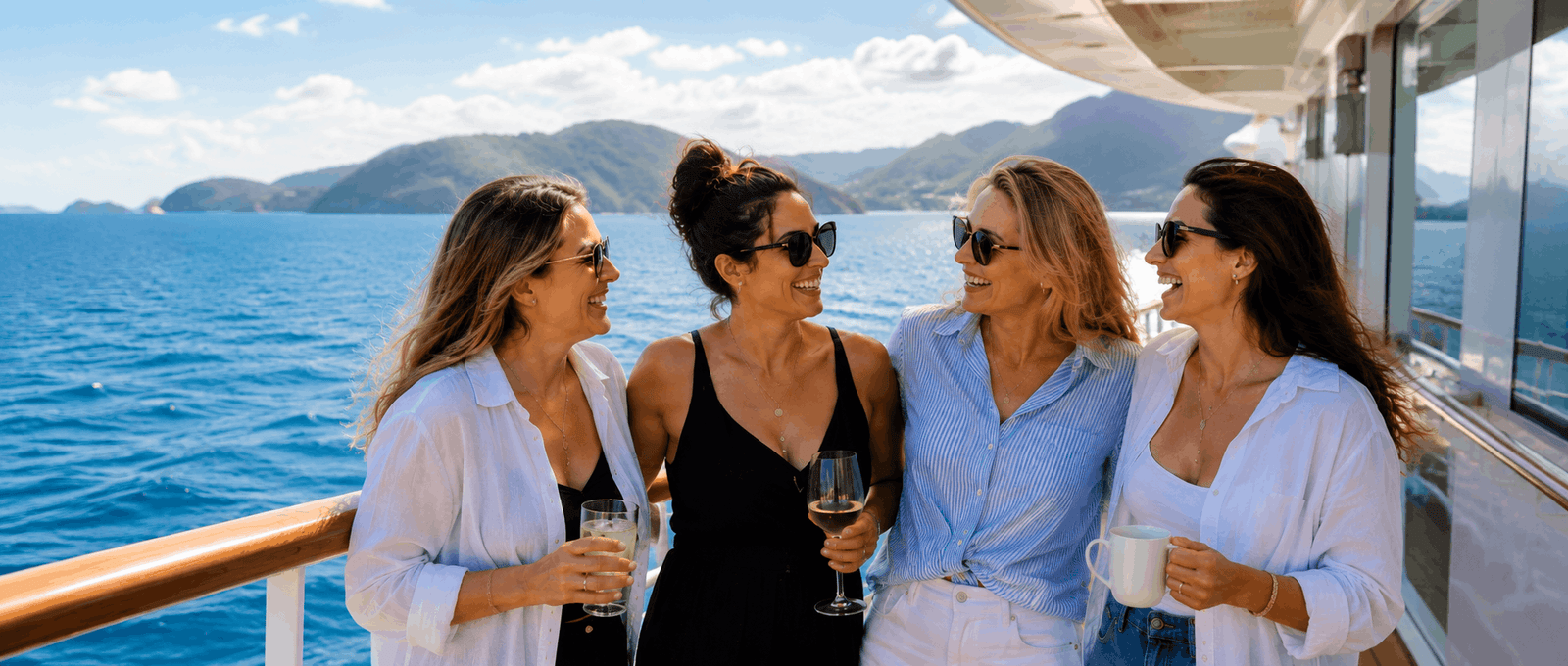
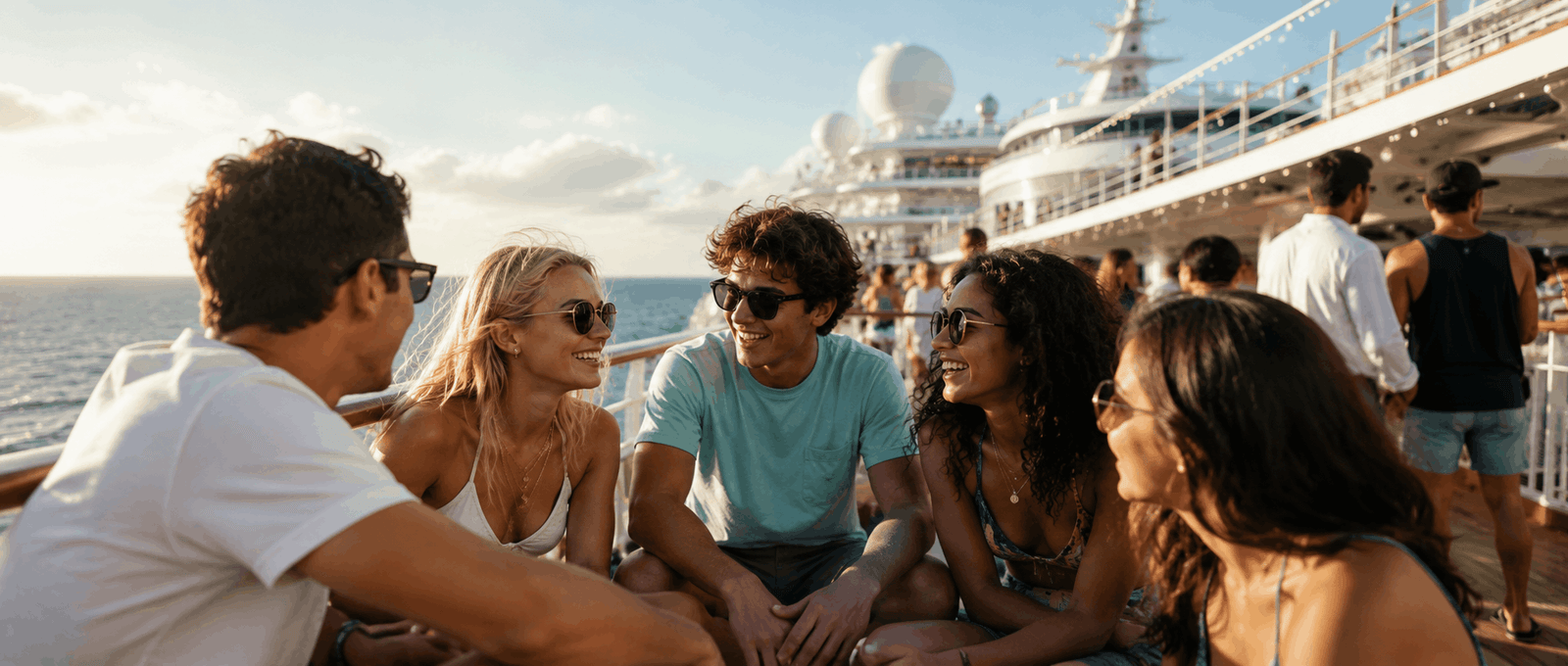
Cruising is unlike any other form of travel. Unlike a hotel stay where guests scatter across a city, a cruise keeps the same community together for days — sometimes weeks. You share mealtimes, pool decks, and port days with the same group of people. That repeated exposure is the raw material for genuine friendship, but only if you are willing to do a small amount of social groundwork before departure.
Many passengers actively look to find cruise companions to split the cost of private shore excursions or simply to have a reliable dinner companion on that first slightly disorienting night away from home. According to Cruise Critic, solo travelers in particular report that the overall experience improves dramatically when they arrive with even one or two pre-arranged connections. The “Sail Away” party is enjoyable, but by the time it starts the most socially savvy passengers have already been chatting for weeks.
The challenge, until recently, was that the tools available for making those pre-cruise connections were genuinely clunky. Passengers had to juggle scattered Facebook groups, hard-to-navigate forum threads, and direct messages across multiple platforms just to coordinate a simple first-night dinner. That friction stopped a lot of people from bothering at all.
How Seaya Changed the Way Passengers Connect Before a Cruise
The old approach — hunting down your ship’s unofficial Facebook group, sifting through months of forum posts, trying to keep track of conversations across three different platforms — worked, but it was exhausting. It placed the entire organizational burden on the traveler, and the experience was rarely enjoyable. Seaya was built to solve that problem from the ground up.
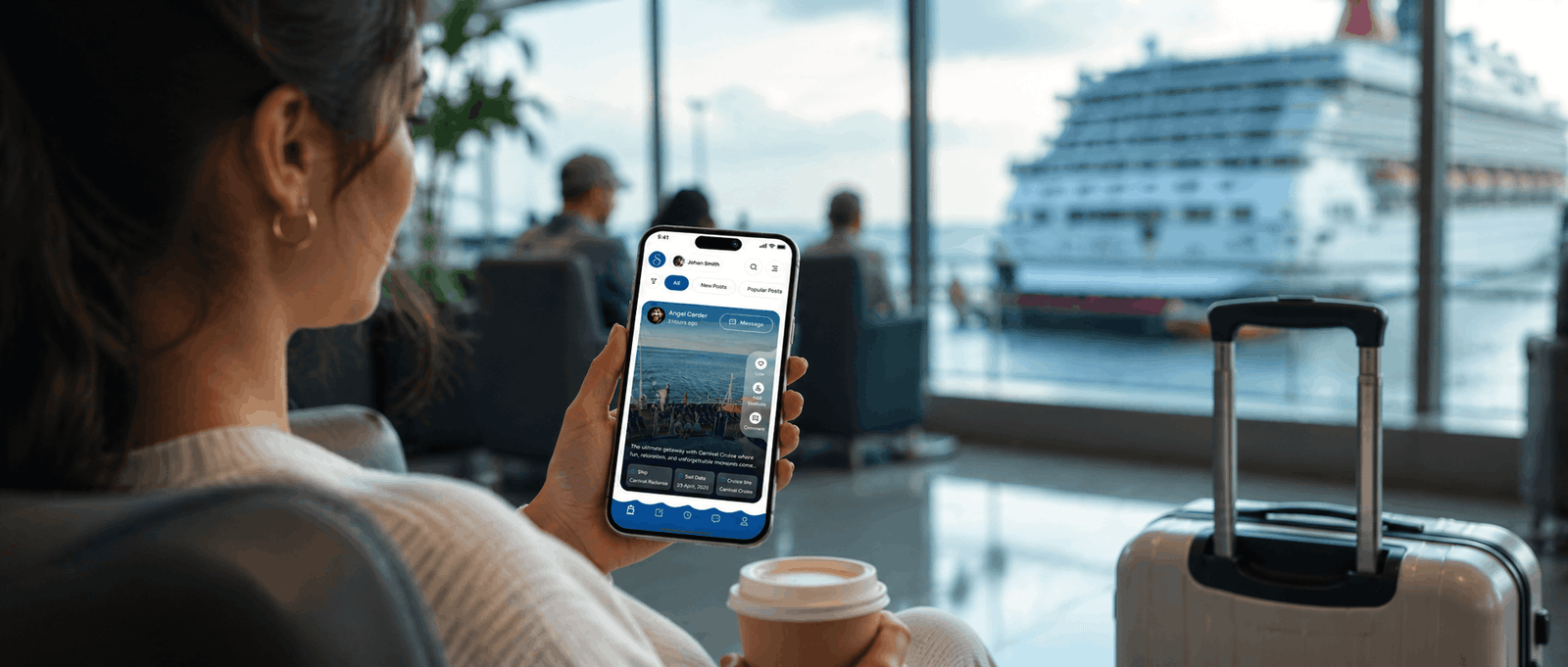
Seaya is a dedicated maritime social app that lets you browse profiles of passengers booked on your exact sailing. There is no noise from unrelated itineraries, no off-topic posts from other ships, and no need to manage separate accounts across different platforms. Everything — discovery, messaging, group coordination, and interest matching — happens in one place, designed specifically for the way cruise travel actually works. For anyone serious about arriving with friendly faces already in place, downloading Seaya at least 30 days before departure is the most efficient single step you can take.
What makes the platform genuinely different from the patchwork of forums and groups that came before it is the focus on compatibility. You are not simply broadcasting into a group chat and hoping the right people see it. You can find passengers who share your interests, your schedule preferences, and your general travel style — the people who are likely to become actual friends rather than just familiar faces at the buffet.
The itinerary-specific nature of the app means every conversation is immediately actionable. You are not talking to cruisers in the abstract — you are talking to the specific people who will be at the pool bar on Tuesday afternoon and debating which shore excursion to book on Thursday. That context changes the quality of the conversation entirely.
Onboard Strategies: How to Meet People before a Cruise Once You Arrive
Digital preparation sets the stage, but the real work happens on the ship itself. The first 24 hours are the most important window of the entire voyage. Passengers are still settling in, everyone is genuinely open and curious, and social barriers are at their lowest. Here is how to make the most of that period.
Join a Trivia Session on Day One
Trivia sessions are arguably the easiest social shortcut on any ship. Walk in, spot a table with two or three people, and ask if they could use an extra player. That single question has started more cruise friendships than almost any other activity on the daily program. The shared stakes — however low — create instant camaraderie, and by the end of a 45-minute round you will know more about your tablemates than you would from an hour of aimless poolside small talk.
Attend the Solo Travelers Lunch
Most cruise lines host a solo travelers lunch on the first sea day. Even if you are not traveling alone, these gatherings attract the most sociable and open passengers on the ship regardless of their travel situation. They are high-energy, low-pressure environments that consistently produce genuine connections that last well beyond the voyage itself.
Choose Your Shore Excursions Strategically
Small group tours are natural icebreakers. Whether you book through the ship or arrange something independently via GetYourGuide or Viator, spending several hours alongside a handful of other passengers — exploring a port city, navigating an unfamiliar transit system, tasting street food at a local market — creates the kind of bonds that a poolside conversation rarely manages. The shared experience of being slightly lost together in a foreign place is, it turns out, an excellent foundation for friendship.
Social Etiquette at Sea: The Unspoken Rules
Cruising attracts an enormously diverse range of travelers, and not everyone has the same agenda. Some passengers genuinely want a quiet, private holiday. Reading those signals early — and gracefully moving on when you encounter them — is just as important as being proactive in the first place.
The classic opening line — “Is this your first time with this cruise line?” — has survived decades for good reason. It is open-ended, non-intrusive, and gives the other person a natural on-ramp into a longer conversation if they want one. If the answers stay short and eyes drift back toward the horizon, that is a clear signal. Move on warmly and find your people elsewhere. On a ship of thousands, they are never far away.
When a connection does click, be specific about follow-up plans. Vague promises to “catch up later” rarely materialize on a large vessel. Exchange cabin numbers or Seaya usernames and agree on a concrete time and place — the atrium bar at seven, or the lido deck after the morning port call. Specificity is what converts a pleasant conversation into an actual friendship that outlasts the voyage.
A Special Note for Solo Travelers
Solo cruising has grown significantly in recent years, with many lines now offering purpose-built solo cabins and dedicated social programming. Resources like Solo Traveler World offer thorough guides on making the most of the experience. The social fundamentals remain consistent — start early, be intentional, lean into structured events — but solo travellers carry one genuine advantage: complete freedom. You can say yes to anything, change plans on a whim, and follow a conversation wherever it leads without coordinating with anyone.
The main dining room is often the most valuable social real estate for solo travelers specifically. If you choose traditional dining with assigned seating, you will share a table with the same group every night — an almost guaranteed path to at least one genuine connection over the course of a week-long voyage. Many solo cruisers report that their dining tablemates become the core of their entire social circle onboard.
Conclusion: A Social Cruise Is a Better Cruise
The secret to a truly memorable cruise is not a bigger cabin, a more luxurious ship, or a more exotic itinerary. It is the people you share it with. The combination of smart digital preparation and intentional onboard presence is what separates travelers who come home with photographs from those who come home with stories they will still be telling years later.
Seaya App have removed the friction that used to make pre-cruise social networking feel like a second job. You no longer need to manage scattered forum threads and Facebook groups across multiple platforms. Everything you need to find your fellow passengers, start a conversation, and coordinate a first-night plan is in one place — and it takes minutes, not hours, to get set up.
Download the app, spend 20 minutes browsing profiles of your fellow passengers, and show up on embarkation day with the quiet confidence of someone who already knows a few faces on the ship. Then let the experience do the rest.
A cruise is one of the rare environments in the world where total strangers — thrown together by a shared itinerary and a shared sense of adventure — routinely become lifelong friends. The gangway drops either way. You might as well walk onto it with someone already waiting to wave hello.

For Christian, Seaya is the culmination of a career-long obsession with innovation. By leveraging his deep technical expertise to dismantle legacy constraints, Christian is transforming the way travelers connect at sea. He is dedicated to keeping Seaya at the vanguard of the “what’s next,” proving that the most powerful innovations happen when world-class tech meets a completely new frontier.
SUBSCRIBE NOW
Your Next Cruise Adventure Awaits
- News & articles
Related Blog