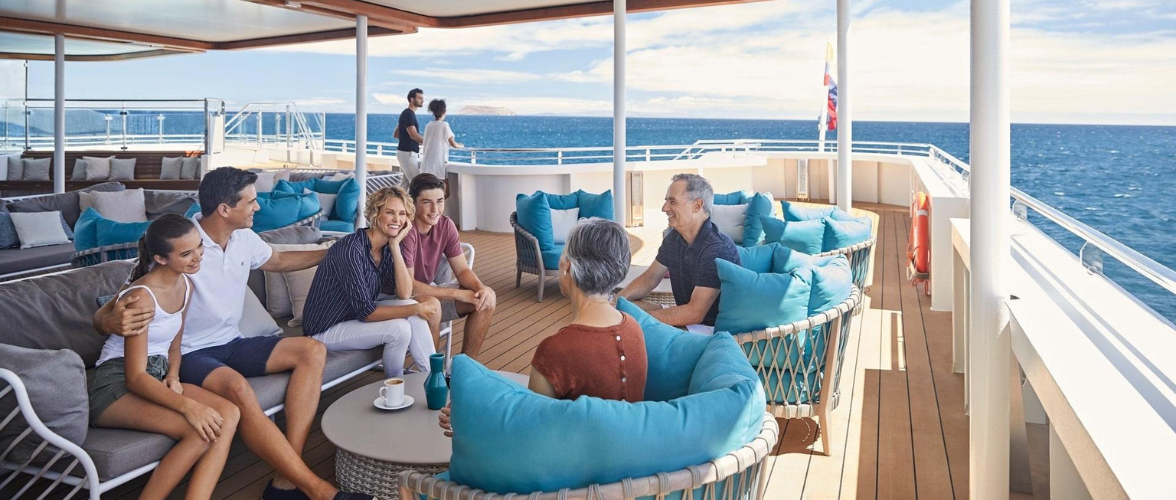
Cruises have evolved far beyond simple vacations—they are now social experiences where travellers from around the world connect, share stories, and build meaningful relationships. Whether you are standing at the buffet, sitting by the pool, or enjoying a Broadway-style show, you are surrounded by people who, in at least one important way, already share your taste: they chose this ship, this itinerary, this moment.
For many solo travellers, the highlight of a voyage isn’t the destination at all—it’s the cruise friends they meet along the way. But a question naturally follows: is it actually safe to meet strangers on a ship? And if so, how do you do it well?
In this guide, we’ll explore the reality of cruise ship safety, how to socialize naturally and confidently onboard, what red flags to watch for, and how the right tools—used at the right time—can make the whole experience more intentional and more rewarding.
Why People Seek Connection on a Cruise
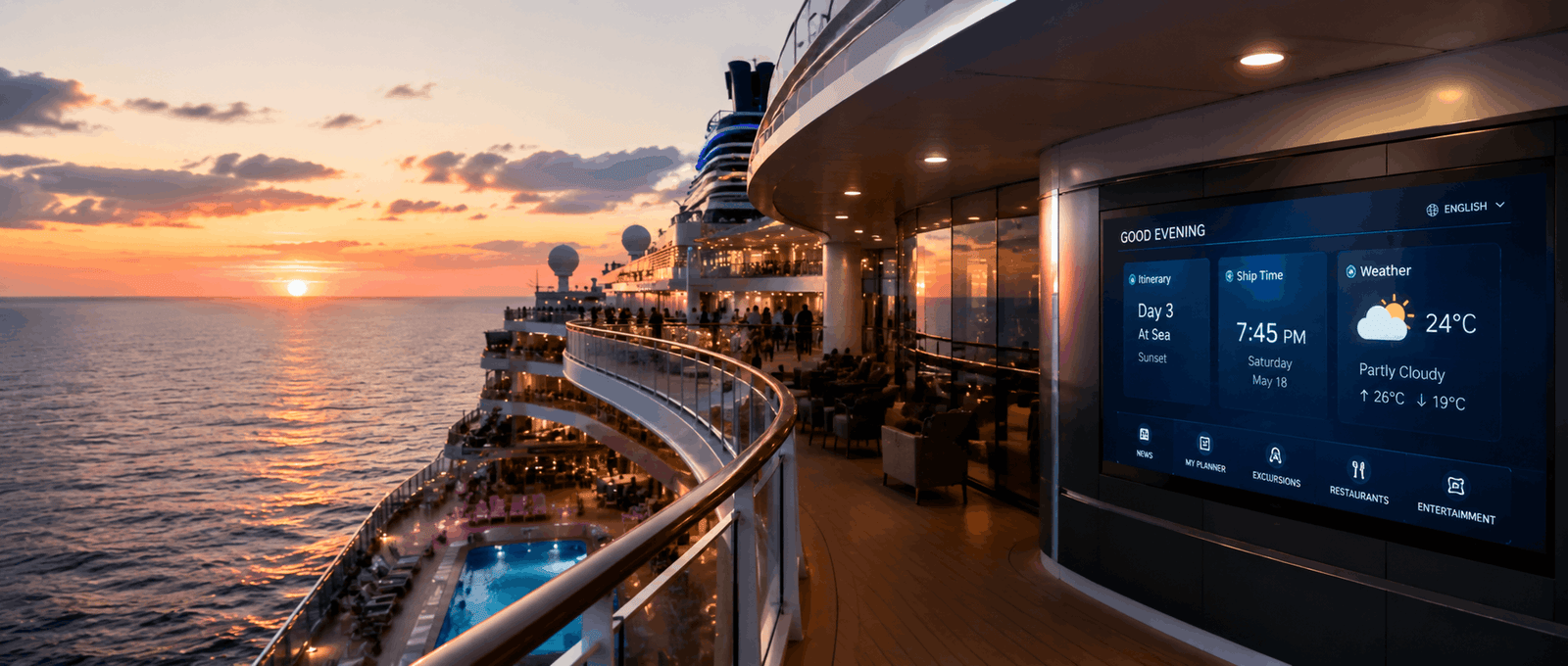
Cruise ships are uniquely engineered for social interaction. Unlike a hotel stay—where you check in, retreat to your room, and rarely see the same guest twice—cruising puts you in a shared, semi-enclosed environment for days at a time. You eat in the same dining rooms, watch the same sunsets, and navigate the same ports.
This structure creates a natural openness that is rare in everyday life. Solo travelers often want someone to explore a port with or simply share a meal without eating alone. Couples sometimes want to expand their social circle and meet other like-minded travelers. Even large groups can find the ship a little lonely if they don’t know how to plug into it.
The rise of dedicated platforms and communities for finding a cruise companion has made this desire more visible—and the process of acting on it far more intentional. What was once left entirely to chance is now something people actively plan for.
The Reality of Cruise Ship Safety
The short answer is yes—meeting people on a cruise is generally safe. But it’s worth being precise about what that means, because “generally safe” is not the same as “without risk.”
Cruise ships are controlled environments: passenger lists, keycard-controlled cabin access, 24/7 onboard security teams, and hundreds of cameras mean that the kind of complete anonymity you might encounter in a large city simply doesn’t exist at sea. Everyone aboard is manifested and tracked. That structural accountability matters.
At the same time, cruise ships are not crime-free—petty theft, harassment, and occasional assault do occur, as they do in any large community. The U.S. Coast Guard requires cruise lines to report crimes, and the FBI has jurisdiction over serious offenses on ships in U.S. waters. Knowing this isn’t cause for alarm; it’s cause for the same calibrated awareness you’d apply anywhere.
There’s also what researchers call the “vacation brain” phenomenon: when we relax, we lower our guard. The all-inclusive atmosphere, the free-flowing drinks, and the general spirit of celebration can compress the social distance between strangers faster than it would in ordinary life. That’s often a wonderful thing—and it’s also why a baseline of common sense matters.
How to Meet People on a Cruise (Safely and Naturally)
The best socializing on a cruise happens organically—but organic doesn’t mean passive. The travelers who make the most cruise friends are the ones who show up to things. Here is how to approach it.
Lean into organized activities
Most major cruise lines offer solo traveler mixers, shared dining tables, trivia nights, fitness classes, cooking demonstrations, and interest-based groups like photography clubs or book discussions. These are low-pressure entry points—you’re there for the activity, not the introduction, which makes everything feel more natural.
Keep early interactions in public spaces
When you’re first getting to know someone, stick to the lido deck, the atrium bars, the dining room, or the theater. These aren’t just pleasant places to spend time—they’re spaces where crew members are always nearby and other passengers can see you. Suggesting a drink in the public bar is easy and natural; it also gives you a comfortable exit if you want one.
Use shore excursions as connection accelerators
Shore excursions might be the single best way to find a cruise partner for activities. A guided snorkeling tour in Cozumel or a wine-tasting in Tuscany puts you in a small group united by a specific shared interest. The shared experience creates genuine common ground—and it does so in a structured, organized setting that feels far more comfortable than a cold introduction at a bar.
Trust your instincts, and know the exits
Safety starts with intuition. If a conversation feels off—if someone is pressing you too quickly for personal information, suggesting you move somewhere private, or simply giving you an uneasy feeling—the ship offers plenty of graceful exits. You’re never stranded. A crew member is rarely more than a few steps away, and you can always excuse yourself to “catch up with friends.”
Red Flags to Watch For
Not every interaction will feel right, and that’s okay. Be alert to:
- Pressure to meet in private spaces early in the acquaintance
- Requests for money, personal financial details, or cabin numbers
- Inconsistent or evasive stories about who they are or where they’re from
- Any behavior that ignores or tests your stated boundaries
None of these are reasons to be suspicious of everyone—most people on a cruise ship are simply on vacation. They are reasons to stay calibrated and move at your own pace.
Practical Safety Tips for Meeting New People
Keep these three practices in mind throughout your voyage:
- Keep your cabin number private. Your stateroom is your private sanctuary. There’s no need to share the number with someone you’ve just met. Arrange to meet in the lounge or atrium instead—it’s a natural, easy boundary to hold.
- Stay aware of your drink. On a ship where the all-inclusive atmosphere can encourage overindulgence, staying mindful of your consumption and not leaving a drink unattended is basic, universal travel wisdom. It applies here as much as anywhere.
- Use a check-in system. If you’re a solo traveler heading off the ship or to a less-trafficked area with a new acquaintance, let someone know—a crew member, a friend back home, or even a travel companion you’ve connected with onboard. A quick text saying “heading to the old town market with a couple from Deck 9, back by 4pm” costs nothing and adds a meaningful layer of accountability.
Finding a Cruise Buddy Before You Board
In the past, finding a cruise companion meant hoping for a lucky dinner table assignment. Today, many travelers begin that process months before they leave the pier.
The limitations of traditional “roll calls”
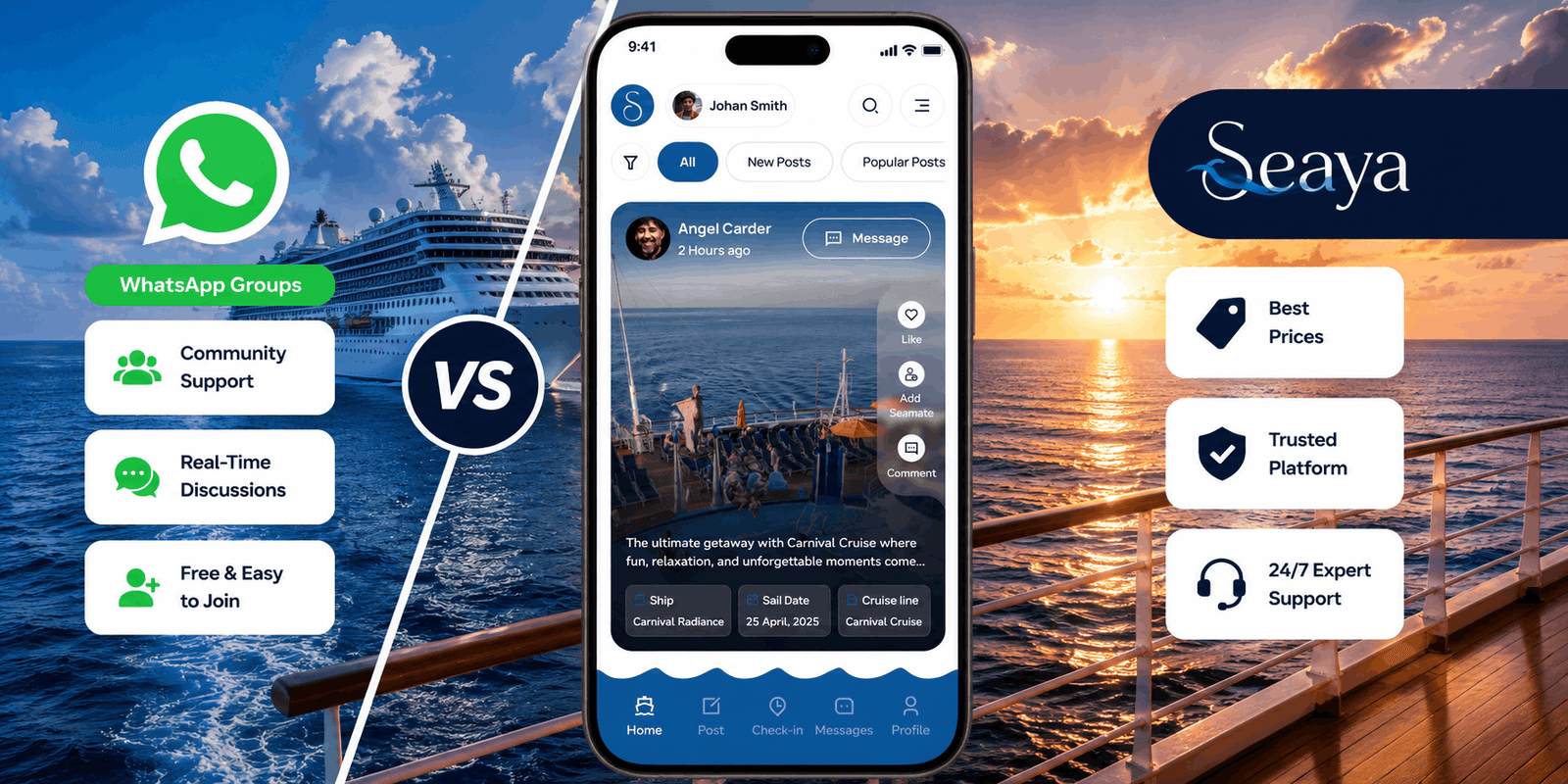
For years, cruisers have used Facebook groups and message board threads—often called “roll calls”—to connect with fellow passengers ahead of a sailing. These communities are genuinely useful for information: what’s the best shore excursion? Is the specialty dining worth it? But as a way to find a cruise friend with compatible interests, they’re hit-or-miss. Scrolling through thousands of comments to find someone who shares your schedule and your vibe is exhausting. And because these groups are largely unverified, you have no layer of accountability between you and a stranger.
Why structure and verification matter
This is the gap that purpose-built platforms for the cruise community are filling. When you connect with someone through an app designed specifically around verified bookings and shared sailing dates—rather than a 50,000-member Facebook group that covers every ship at sea—the dynamic changes. You’re not shouting into the void. You’re talking to a smaller, more focused group of people who are verifiably on your exact voyage.
That’s the thinking behind Seaya. The app was built to solve a specific coordination problem: most cruisers want to find a cruise buddy who matches their particular rhythm—someone to hit the gym with at 7am, or grab a late-night slice with after the show. But the existing tools (generic social media groups, hoping at dinner) weren’t built for that level of specificity. By organizing connections around a passenger’s actual ship and sail date, Seaya makes the transition from online chat to onboard meetup feel organized and intentional rather than random. It’s a smaller, more accountable space—which also makes it a safer one.
What a Good First Day of Cruise Socializing Actually Looks Like
Picture this: you’ve already connected with a few people on your sailing through Seaya App before you board. On embarkation day, you grab lunch at the buffet and spot one of them at a nearby table. You introduce yourself. It’s easy—you’ve already broken the ice online. You agree to meet for trivia at 7pm.
At trivia, you meet two more people—a retired couple from Ohio who know every 1980s music question on the board. You invite them to join your shore excursion the next day. By Day 3, you have a loose but genuine social circle: people to eat with, people to explore ports with, and people to share the kind of stories that only happen at sea.
None of this happened by accident. It happened because you showed up, engaged with the structured activities the ship offered, and started the process before you even walked up the gangway.
Conclusion: Connection Is Part of the Journey
Is it safe to meet people on a cruise? Yes—when you approach it with the same calibrated awareness you’d apply to any social situation, plus a few cruise-specific habits. Stay in public spaces early on. Trust your gut. Keep your cabin number to yourself. Use a check-in system if you’re heading somewhere unfamiliar with someone new.
And start early. The best time to meet your future cruise friends isn’t on Day 3—it’s before you board. Whether you use structured ship activities, shore excursions, or a dedicated platform like Seaya to find someone who matches your specific vibe, the travelers who come home with the best stories are almost always the ones who decided, in advance, to be open to them.

For Christian, Seaya is the culmination of a career-long obsession with innovation. By leveraging his deep technical expertise to dismantle legacy constraints, Christian is transforming the way travelers connect at sea. He is dedicated to keeping Seaya at the vanguard of the “what’s next,” proving that the most powerful innovations happen when world-class tech meets a completely new frontier.
SUBSCRIBE NOW
Your Next Cruise Adventure Awaits
- News & articles
Related Blog