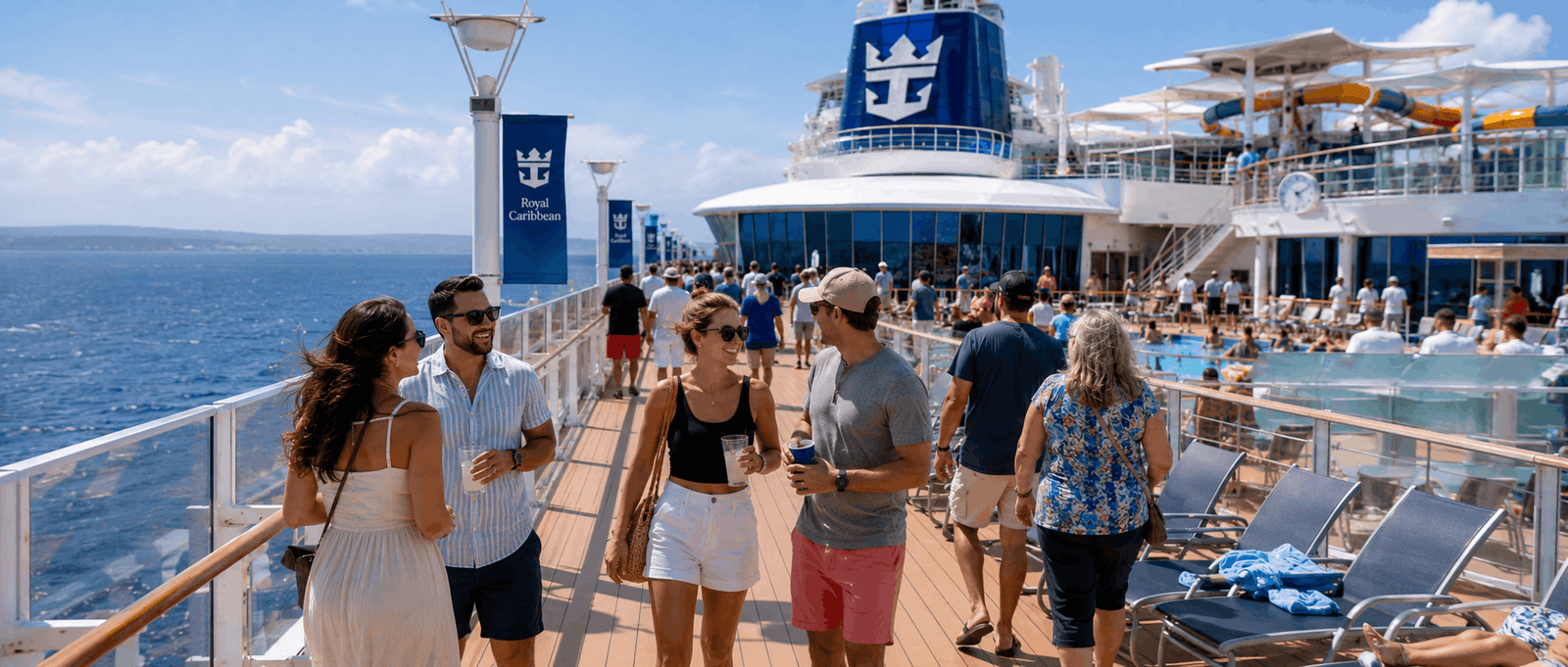
Walking onto a cruise ship for the first time is an assault on the senses. You see towering water slides, smell the salt air, and hear the faint beat of Caribbean music from the lido deck. It feels like the ultimate social playground. Yet, for many, the initial excitement is quickly met with a surprising sense of isolation.
While the goal is often to make friends on a cruise, the sheer scale of modern vessels can make genuine connection feel nearly impossible. This disconnect is exactly why platforms like seaya.io exist. We aim to bridge the gap between being surrounded by thousands of people and actually finding a meaningful cruise companion. Understanding why these social barriers exist is the first step toward breaking them down.
The Invisible Barriers to Connection
The Problem Most passengers arrive with a “Field of Dreams” mentality: they believe that if they board the ship, friendships will just happen. They expect organic encounters at the buffet or the pool to blossom into vacation-long bonds. However, this rarely happens without significant effort.
The Reality Modern cruise ships are “siloed” by design. Activity schedules are packed, transit areas are crowded, and most people move in predetermined patterns. If you don’t share a specific scheduled event with someone, the odds of seeing them twice in a crowd of 5,000 are mathematically slim. This “anonymity in a crowd” is the primary reason people struggle to connect with cruisers.
The Solution Options
- The High-Effort Route: Force yourself to talk to every person in the elevator or at the bar.
- The Scheduled Route: Rely entirely on ship-organized mixers, which can often feel forced or awkward.
- The Proactive Route: Use digital tools to identify and meet people on a cruise based on shared interests before you even step on the gangway.
1. The Silo Effect: Why Groups and Families Stay Isolated
One of the biggest hurdles to social expansion is the “Comfort Zone” of your own travel party.
The Magnetic Pull of the Familiar
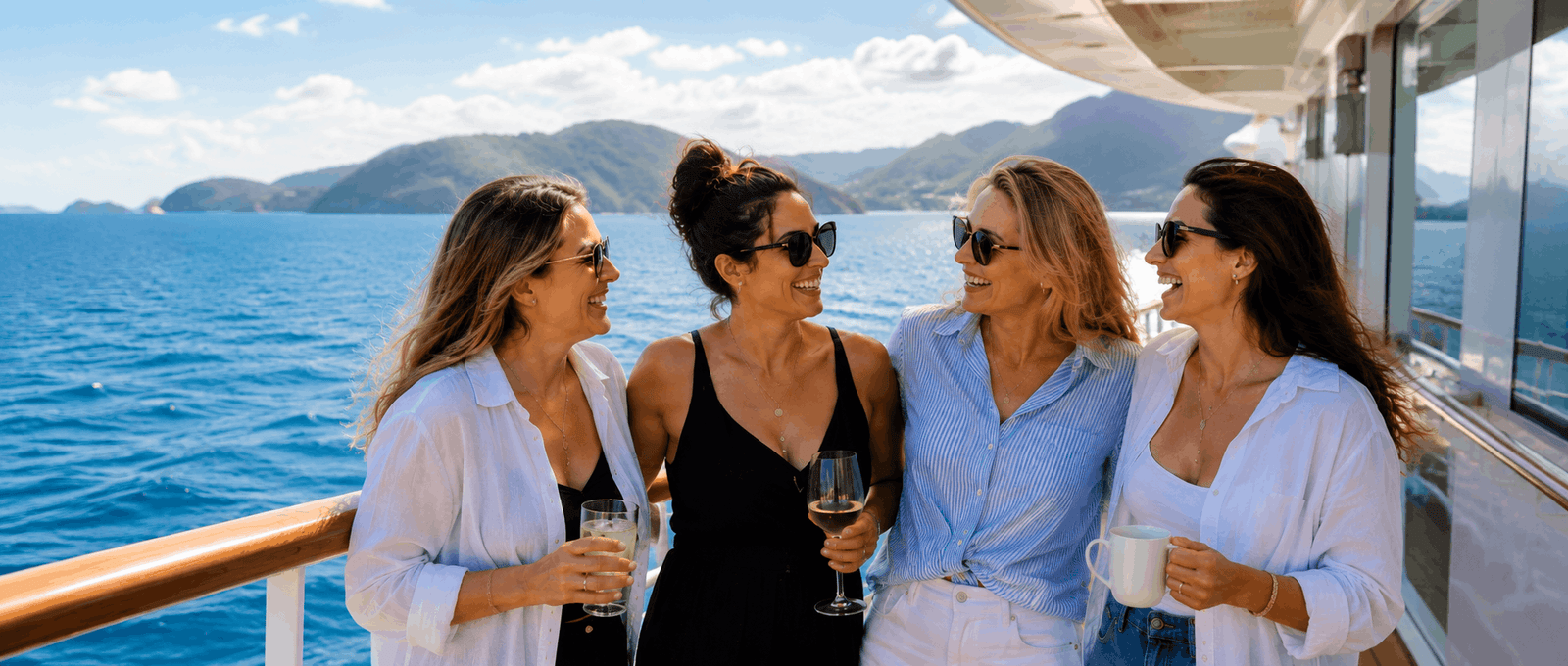
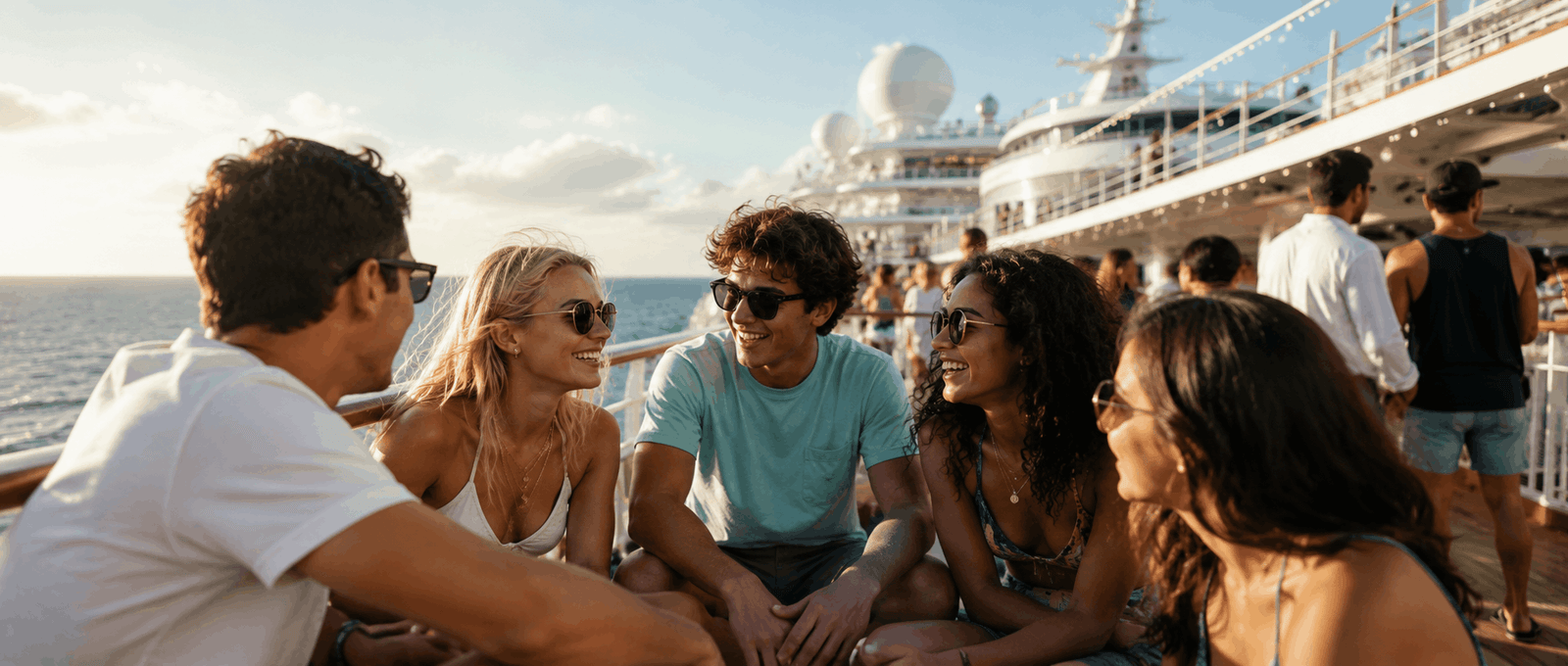
Groups of friends on cruise often become self-contained units. They eat together, lounge together, and explore ports together. While this is great for bonding with existing friends, it creates an invisible “Do Not Disturb” sign for outsiders. To make friends on a cruise as a group, you must intentionally break your own perimeter.
The Family Routine Trap
Families are often slaves to the “Daily Planner.” Between kids’ club drop-offs, nap times, and early dinners, there is very little “white space” for social interaction. Parents often want to meet other adults but find themselves trapped in child-centric zones where conversation is constantly interrupted.
2. The Anonymity of Large-Scale Ships
As ships get larger, the “neighborhood” feel of cruising has diminished. On a small ship, you see the same fifty people every day. On a mega-ship, you are a ghost in a machine.
The Lack of Social “Anchor Points”
On older, smaller vessels, the piano bar or the library served as a consistent meeting spot. On modern ships, there are twenty bars and five pools. This fragmentation means you never spend enough time in one place to become a “regular.” Without that repetition, it is difficult to move past a simple “hello.”
Overcoming the “Bystander” Mentality
Because there are so many people, most travelers assume everyone else is already “sorted” for friends. They don’t want to intrude. This hesitation is the silent killer of cruise social life. Using one of the best cruise social apps helps remove this barrier by signaling that you are, in fact, open to meeting new people.
3. Digital Solutions for a Physical Problem
The most effective way to solve the “Silo Effect” and “Anonymity” is to move the introduction to a digital space.
Why Pre-Planning Matters
Waiting until day four of a seven-day cruise to start looking for a cruise companion is a recipe for disappointment. Most social groups are already solidified by then. By using apps to find cruise companions like Seaya, you can identify people who share your specific vibe—be it morning yoga or late-night poker—long before the “Sail Away” party starts.
Transparency and the Seaya App
At seaya.io, we prioritize a transparent, human-centered approach. Our app isn’t about “matching” in a romantic sense; it’s about social logistics. It allows you to see who is on your specific sailing and what they are interested in. It turns a ship of 5,000 strangers into a manageable list of potential friends.
Real-World Scenarios: From Isolation to Community
The “Missed Connection” Example James, a solo cruiser, spent his first three days eating alone because he chose “Anytime Dining.” He saw a group of people his age at the pool every day but didn’t know how to approach them. On day four, he realized they were all part of a “Solo Travelers” group on the Seaya app. Once he joined the digital chat, he was invited to dinner that night. He spent the rest of his cruise with a group of six new friends.
The “Interest-Based” Connection The Sarahs (a group of four friends) wanted to find more people to join their team for the “Quest” game show. Instead of shouting in the lounge, they used a cruise social app to post a “Teammates Wanted” notice. They connected with a couple who had been feeling shy, and the six of them ended up winning the competition and sharing a celebratory bottle of champagne.
Actionable Takeaways for Your Next Voyage
- Set a “Day One” Goal: Commit to introducing yourself to three people before the first night’s dinner. The earlier you start, the more “equity” you build in your social circle.
- Be a “Regular” Somewhere: Pick one coffee shop or one bar and go there at the same time every day. Familiarity breeds comfort, and comfort breeds conversation.
- Leverage Digital Visibility: Download and set up your seaya.io profile at least two weeks before your cruise. This gives you time to see the social landscape of your sailing.
Conclusion: Turning the Tide on Social Isolation
Struggling to meet others on a cruise isn’t a personal failure; it’s a side effect of how modern cruises are built. The reality is that the environment is working against you. However, by recognizing these barriers—the silo effect, the anonymity of scale, and the lack of anchor points—you can take control of your experience.
Whether you are looking for a cruise companion for a specific excursion or just want to connect with cruisers who share your interests, being proactive is the key. Your next great friendship shouldn’t depend on a lucky seat at the buffet.

For Christian, Seaya is the culmination of a career-long obsession with innovation. By leveraging his deep technical expertise to dismantle legacy constraints, Christian is transforming the way travelers connect at sea. He is dedicated to keeping Seaya at the vanguard of the “what’s next,” proving that the most powerful innovations happen when world-class tech meets a completely new frontier.
SUBSCRIBE NOW
Your Next Cruise Adventure Awaits
- News & articles
Related Blog