Most first time cruisers pack the same way: open the biggest suitcase they own, think vaguely about the beach, throw in everything that seems warm-weather-adjacent, and figure the rest out when they get there. By day two they are at the ship’s gift shop paying $14 for a bottle of sunscreen, wearing the wrong shoes for the excursion they booking three months ago, and wondering why they brought four things they have not touch it.
The smarter approach is to pack for three things simultaneously: the universal basics that every cruise requires, the specific climate of where your ship is actually going, and the specific activities you have plan at each port. A cruise to Norway in October and a cruise to the Bahamas in July are completely different packing problems that happen to share a ship. Treating them the same way is the source of most first timer packing regrets.
This guide walks through all three layers in order. Read it once, then go back and focus on the sections that match your destination and your plans. By the time you zip your bag, you will know exactly what is in it and why.
Start With the Universals: What Every Cruise Requires
Regardless of where you are sailing, certain things belong on every cruise packing list. Start here before you think about destination or activities.
Documents are the foundation. You need a valid passport for nearly every international cruise, and it will valid for at least six months beyond your return date. US citizens on closing-loop cruises that depart and return to a US port can technically sail with just a government-issue ID and an original birth certificate, but a passport is strongly recommending even then. A medical emergency that forces you to fly home from a foreign port mid-cruise requires a passport, full stop. Bring one. Make physical and digital copies of everything, store the copies separately from the originals, and email scan versions to yourself as a backup. This same logic applies to your travel insurance policy, booking confirmation, and any shore excursion tickets.
Travel insurance itself belongs on this list not as something you pack but as something you must need to sort before you leave. Medical care aboard a cruise ship is billed privately and can be expensive. Medical evacuation from a ship at sea is significantly more so. A policy that covers emergency medical care, evacuation, and trip interruption is one of the smartest decisions you can make before any cruise.
On the clothing side, every cruiser needs a light indoor layer regardless of where the ship is going. Cruise ships are aggressively air condition, and the contrast between the 85-degree pool deck and the 68-degree main dining room can be jarring. A breathable linen shirt, a light cardigan, or a packable layer you can throw on. Need to take off is something experience cruisers never leave home without. You also need at minimum one formal or smart casual outfit for dress code nights. Check your specific cruise line’s policy before you pack, but most lines have at least one evening where jeans and a t-shirt will not get you into the main dining room.
For tech, the single most useful thing you can bring is a multi-outlet travel adapter. Cabins typically have one or two outlets and that is never enough for a couple or a family charging phones, cameras, and accessories overnight. A portable power bank is equally valuable for long shore days away from your room. Round this out with a waterproof phone pouch, which costs almost nothing. Protects your phone on beach days and water excursions.
Finally, bring more of the basics than you think you need. Motion sickness medication is worth packing even if you have never had issues on a boat before. Open ocean sailing can surprise people. Having Dramamine on hand and not needing it is far better than the reverse. A small first aid kit with pain relievers, antacids, blister bandages, and anti-diarrheal medication covers the most common shipboard complaints. Bring extra supply of any prescription medication in case your return travel is delayed.
Layer Two: Pack for Your Destination’s Climate
Once your universals are covered, the next layer is climate-specific. This is where packing lists diverge significantly based on where you are actually sailing.
Warm Tropical Destinations: The Caribbean, Bahamas, Mexico, Hawaii, Bermuda
Tropical cruises are what most people picture when they think about cruising, and the packing priorities reflect the environment: hot, humid, sun-drench, and occasionally showery in the afternoons. Sun protection is your most important category here, and most first timers underestimate how much sunscreen they actually need. A family of four can go through a full bottle in a single beach day. Bring significantly more than you think and make sure at least some of it is reef-safe formula, which is now require or strongly encouraged at most snorkelling and diving destinations in this region.
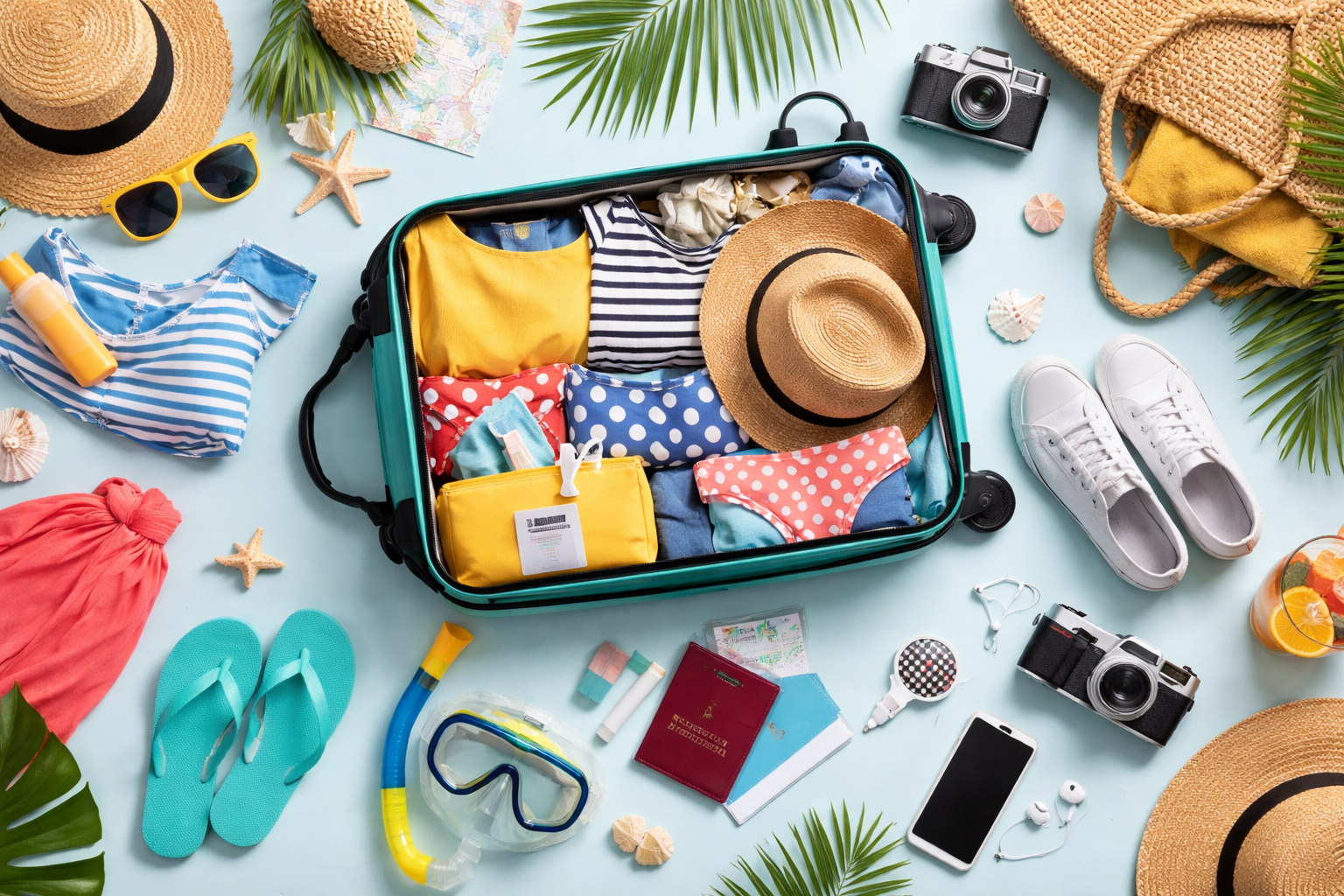
A wide brim hat and a UV-protective rash guard are not optional extras; they are essentials. The sun in the tropics hits differently than what most travelers experience at home, and a rash guard worn during a full day of snorkeling prevents the kind of back burn that ruins the second half of the trip. Pack two to three swimsuits so you always have a dry one available, along with a couple of coverups for moving between the pool deck and the dining areas. Water shoes with a grip sole are worth the luggage space if you plan to snorkel, as entry points at reef sites are often rocky and uneven.
Insect repellent with DEET belongs in your tropical cruise bag, particularly for any excursions that take you into jungle, rainforest, or mangrove environments. A lightweight packable rain jacket rounds things out. Tropical showers are usually brief and warm, but they are real, and being soaked in a port town with no shelter nearby is not the afternoon you are doing plan.
Mediterranean and Southern Europe: Greece, Italy, Spain, Croatia, Turkey
Mediterranean cruising is defined by heat and beauty and cobblestones. Summer months from June through September are hot and dry, with spring and fall bringing milder temperatures and occasional rain. The sun is strong regardless of the season, so sunscreen and sunglasses still belong in your bag. But the bigger packing consideration in this region is terrain and dress codes.
Ancient sites in the Mediterranean involve serious walking on uneven stone surfaces. Comfortable, broken-in shoes are non-negotiable. Sandals might work for a leisurely afternoon in a port town. Also, they are miserable on a three hour walking tour through ruins or a hike up to an acropolis. Bring one pair of closed-toe walking shoes you have actually worn before, not ones fresh out of the box.
Mediterranean ports also have a higher density of churches, mosques, and religious sites than almost any other cruise region, and most of them require covered shoulders and knees for entry. A lightweight scarf, a linen cardigan, or a pair of loose trousers that can slip on over shorts is all you need, but you must have something. Arriving at the entrance to a cathedral or a mosque with bare shoulders and being turned away is a common and avoidable disappointment. Tuck a modest layer into your day bag every time you go ashore in this region and you will never have the problem.
Alaska and the Pacific Northwest
Alaska is one of the most spectacular cruise destinations in the world and one of the most punishing to pack incorrectly for. The cruise season runs from May through September, with temperatures typically ranging from the low 40s to the low 60s Fahrenheit depending on the month and location. Rain is not an occasional inconvenience in Alaska. It is a near-constant companion, and your ability to enjoy the destination depends heavily on whether you came prepared for it.
A waterproof rain jacket, and we mean genuinely waterproof rather than just water resistant, is the single most important item in your Alaska packing list. Pair it with waterproof rain pants for any serious outdoor excursions like kayaking or glacier walks. Underneath, the strategy is layering: moisture-wicking base layers, a fleece mid-layer for warmth, and the waterproof shell on top. This system lets you add and remove layers as conditions change, which they will, often multiple times in a single day.
Waterproof hiking boots are essential. Warm wool socks in multiple pairs. A hat and gloves even in the summer months, because standing on the deck watching a glacier calve in a 45-degree wind with no hat on is a uniquely miserable experience that ruins an otherwise extraordinary moment. Binoculars are one of those items Alaska cruisers consistently wish they had brought. Whale watching, bear spotting on the shore, and close-up views of glacier faces are all significantly better through a good pair of binoculars than without them.
Northern Europe: Norway, Iceland, the British Isles, Scandinavia
Northern European cruising demands many of the same layering strategies as Alaska, with some regional variations. Summer months in this region can actually be surprisingly mild and occasionally warm, but the weather shifts rapidly and the wind off the water can be biting regardless of the air temperature. A heavy waterproof outer layer, multiple insulating mid-layers, and waterproof boots are your foundation. Bring a compact travel umbrella for port days, though be aware that strong coastal winds make large umbrellas impractical.
One thing that surprises many cruisers doing Northern European itineraries in summer: sunscreen is still necessary. In midsummer at high northern latitudes, the sun barely sets. The UV exposure across a long outdoor day adds up more than most people expect. Pack it and use it.
Asia-Pacific: Japan, Southeast Asia, Australia, New Zealand
Asia-Pacific cruise itineraries span an enormous range of climates and cultural contexts. Southeast Asian routes through Vietnam, Thailand, and Singapore share much in common with tropical Caribbean packing: high heat, high humidity, strong sun, and frequent rain. Japan cruises are heavily dependent on the season, ranging from cold and snowy in winter to hot and humid in summer. Australia and New Zealand span subtropical to temperate climates depending on where specifically you are calling.
What unifies Asia-Pacific itineraries more than climate is cultural context. Temple visits are common across much of this region and almost universally require covered shoulders and knees. Slip-on shoes are genuinely practical because many Asian cultural sites require removing footwear at the entrance. Hand sanitizer and stomach medication deserve particular attention here given that food hygiene standards. Also, water quality vary significantly across ports in this region. Bring more of both than you think you will need.
Layer Three: Pack for What You Are Actually Doing
Climate tells you what to wear. Your excursion plans tell you what to bring. These are related but distinct questions, and failing to answer the second one is how people end up doing a rainforest hike in flip flops or a snorkeling excursion without water shoes.
Beach and Swimming Days
Beach days are the most forgiving in terms of gear, but they still have their requirements. Multiple swimsuits are important because nothing dries as fast as you want it to in high humidity, and wearing a wet swimsuit to lunch is its own particular misery. A rash guard matters more than people think for full days on the water. A dry bag for your phone, wallet, and any electronics is cheap insurance against the wave that catches you off guard. If you plan to snorkel, consider bringing your own mask. Rental gear at port excursion operators is heavily used and often poorly fitted, and a well-fitted mask that does not leak makes an enormous difference in the experience.
Hiking and Nature Excursions
The number one mistake on hiking excursions is footwear. Broken-in trail shoes or hiking boots are the difference between a great day and a painful one. Wear them around your neighborhood for a week before the cruise so you know exactly how your feet will respond. Beyond shoes, moisture-wicking clothing, a small daypack, a water bottle, and a light rain layer cover most hiking scenarios. Bring insect repellent and energy snacks for longer hikes, and do not assume the excursion operator will provide water even if they say they will.
Cultural and City Tours
City tours involve significantly more walking than most people budget for, and they do it on hard surfaces like cobblestone and tile that punish unprepared feet. Comfortable broken-in walking shoes are the priority. A small crossbody bag or anti-theft daypack is smarter than a regular backpack in busy tourist areas where pickpocketing is more common. Download a translation app for offline use if you are visiting ports where English is not widely spoken. And bring local currency because smaller vendors, market stalls, and street food sellers often do not take cards.
Water Sports: Kayaking, Paddleboarding, Snorkeling, Diving
Active water sports require a swimsuit you can actually move in, which sounds obvious until you are trying to kayak in something that was designed for lying on a beach. A rash guard, water shoes, and a dry bag for valuables are the foundations. If you want to capture underwater footage, a GoPro or a waterproof phone case that allows photography is worth bringing. Reef-safe sunscreen is non-negotiable for any snorkeling or diving excursion in protected marine areas.
Cold Weather Adventures: Glacier Walks, Whale Watching, Dog Sledding
Cold weather excursions punish under-preparation more than any other category. A waterproof outer layer, warm insulating layers underneath, waterproof gloves, a hat that covers your ears, and waterproof boots are the baseline. For glacier environments specifically, bring hand and foot warmers. The disposable chemical variety are inexpensive and take up almost no space in your bag, but they are genuinely invaluable when you are standing on a glacier in the wind waiting for a photograph. Bring extra camera batteries too because cold drains them much faster than you expect.
Why Generic Packing Lists Fall Short
Every packing guide is built on general advice. It covers typical destinations, common excursions, and average conditions.
But your cruise isn’t average.
Your sailing has specifics no general guide can fully capture:
- The exact snorkeling conditions at your port
- Whether your excursion is worth the price
- Which beach is quiet vs. overcrowded by 10 a.m.
- Where locals actually recommend eating
These details can completely change what you pack—and how you plan.
Where the Real Information Comes From
The most valuable cruise insights come from two types of people:
- Travelers who have already done your exact itinerary
- Fellow cruisers actively researching the same trip
The challenge is finding them before you board—when that information actually matters.
How Seaya Solves This Problem
Seaya connects you with passengers on your exact sailing before embarkation.
Once you add your cruise:
- You become discoverable to your Seamates (people on your ship)
- You can ask real questions about excursions, ports, and logistics
- You get insights beyond what cruise descriptions include
Instead of guessing, you can:
- Ask which excursion is actually worth booking
- Learn what a glacier hike is really like
- Find out which beach to visit on your first port day
Why It Gets More Valuable Over Time
Seaya keeps a record of every cruise you take.
That means:
- Your profile becomes more useful with each trip
- Future cruisers benefit from your experience
- You get better recommendations from others over time
Start Before You Board
Finalize your packing, then download Seaya and connect with your fellow passengers.
Because the best version of your cruise starts before the ship leaves the dock.
Five Questions to Ask Before You Close the Bag
Run through these before your final zip:
- Have you checked your cruise line’s dress code for formal nights and packed at least one appropriate outfit?
- Have you looked up the actual weather forecast for your destination during your exact travel dates (not just the general climate)?
- Have you reviewed every excursion you’ve booked and confirmed you have the specific gear each one requires?
- Have you made both digital and physical copies of all important documents and stored them separately from your main bag?
- Have you set up your Seaya profile and connected with your Seemates so others can find you?
If you can answer “yes” to all five, you’re ready—go enjoy your trip.
Seaya is the world’s first cruise-based social media app, connecting passengers before, during, and after every sailing. Download the app at seaya.io or go directly to the Apple App Store to start building your cruise community today.

For Christian, Seaya is the culmination of a career-long obsession with innovation. By leveraging his deep technical expertise to dismantle legacy constraints, Christian is transforming the way travelers connect at sea. He is dedicated to keeping Seaya at the vanguard of the “what’s next,” proving that the most powerful innovations happen when world-class tech meets a completely new frontier.
SUBSCRIBE NOW
Your Next Cruise Adventure Awaits
- News & articles
Related Blog